
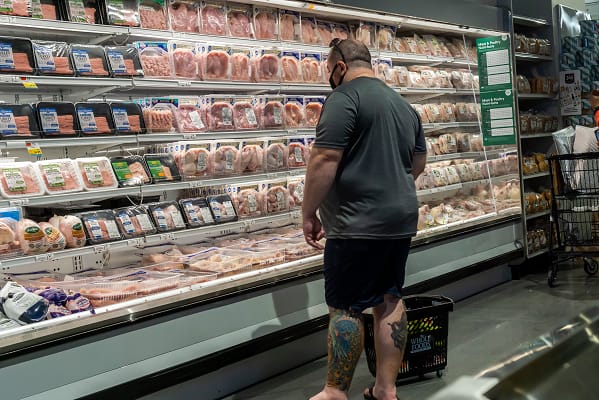
UK food prices are on course to be 50 per cent higher by November than at the start of the cost-of-living crisis, according to new research warning that inflationary pressure on groceries is becoming entrenched.
The analysis, published by the Energy and Climate Intelligence Unit (ECIU), described the projected rise as a “grim milestone”, suggesting that nearly two decades of typical food price increases could be compressed into just over five years.
It would mark a near-quadrupling of the pace of food inflation compared with the pre-crisis trend, the think tank said.
The ECIU attributed the surge to a combination of extreme weather linked to climate change, global supply chain disruption, and continued exposure to volatile fossil fuel markets, which it said had intensified pressure across the food system.
Staple items have already seen steep rises. Pasta, frozen vegetables, chocolate, eggs and beef have all increased by 50-64 per cent, while olive oil has risen by 113 per cent, reflecting its sensitivity to energy costs, fertiliser inputs and climatic shocks in key producing regions.
According to the analysis, households have already faced an average £605 increase in food bills over 2022 and 2023 alone, with energy shocks accounting for £244 of that total.
More recently, the ECIU said a small group of “climate-impacted” products — including butter, milk, beef, chocolate and coffee — have driven much of the continued upward pressure on inflation, rising more than four times faster than other food categories.
The Food Foundation warned that the ongoing squeeze is pushing low-income households to the breaking point.
Its executive director, Anna Taylor, said rising prices were leaving families with “nowhere left to cut except the food on their plate”.
“When that happens, people skip meals, children go hungry, and diet-related illness rises,” she said. “This conflict is the latest shock in a series, and there will be more. The question for government isn’t just how to respond to this crisis — it’s whether we’re finally going to build a food system resilient enough to withstand the next one.”
Official figures from Worldpanel by Numerator show grocery inflation currently running at 3.8 per cent year-on-year, with analysts warning that recent geopolitical tensions in the Middle East have yet to fully feed through to supermarket prices.
Despite sustained cost pressures, there are early signs of changing consumer behaviour. Data from the Waste and Resources Action Programme (WRAP) suggests that self-reported food waste has fallen slightly, with the proportion of key items such as bread, milk, chicken and potatoes thrown away dropping from 21 per cent to 18.8 per cent since 2024.
However, WRAP said food waste remains a significant household cost, ranking fifth among consumer concerns behind prices, diet quality, animal welfare and ultra-processed foods.
WRAP chief executive Catherine David said the average family of four was still wasting around £1,000 a year on food that could have been eaten.
The findings add to growing concern that the cost-of-living crisis is evolving from a temporary shock into a more persistent feature of household budgets, with food remaining one of the most visible and unavoidable areas of strain.


Leave a Comment