
London is Europe’s venture capital hub, with the majority of the continent’s deals originating there and funds consistently flowing into artificial intelligence and fintech year after year. Yet, fashion remains overlooked as a standalone asset class, despite fashion and textiles contributing an estimated £62 billion to the UK economy and supporting 1.3 million jobs, or one in every 25 jobs in the country. The broader creative industries added £145.8 billion in gross value in 2024, growing at more than four times the rate of the wider economy, with over half centred in London. Still, within this creative economy, venture capital still flows primarily to technology, leaving the fashion industry facing a challenge in capturing investors’ attention.
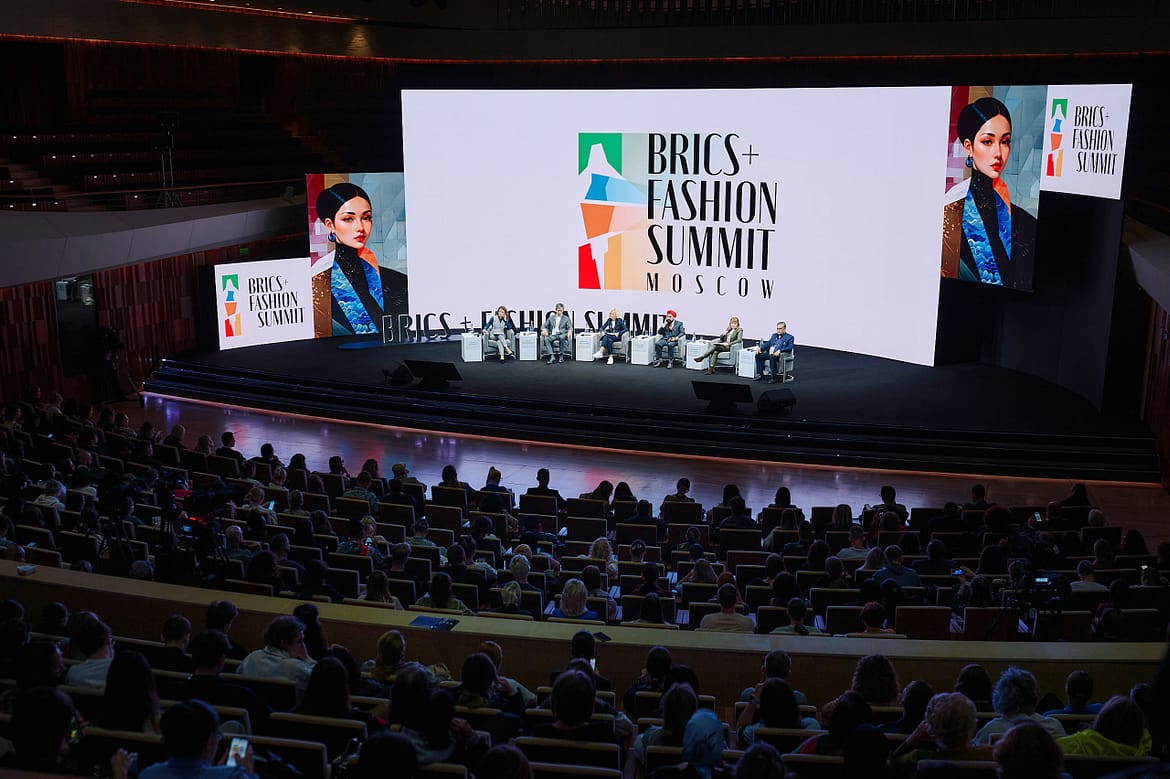
Why does this disparity persist, and what might shift the balance? These questions will be explored at the upcoming BRICS+ Fashion Summit. The event, scheduled in Moscow from 28 to 30 September, will also examine whether fashion can compete with startups for investment. The discussion will look at the metrics investors apply to fashion projects, the role of ESG criteria, and how fashion can demonstrate its investment potential alongside fintech and AI-powered solutions.

BRICS+
Fashion’s complexity presents a considerable hurdle. The cyclical nature of trends and unconventional KPIs make it a highly unpredictable field, where conventional valuation models can fall short. Tery Carola, President and CEO of Seychelles Fashion Week and a BRICS+ Fashion Summit speaker, points to one of the reasons: “Fashion is not yet consistently reported as a separate economic sector, making its employment, revenue and export contribution difficult to quantify – an important data gap for future industry development”. This leads to a fundamental question: how should a brand’s value be measured – in financial terms, cultural meaning or reputational capital – and what matters more to an investor: predictable returns, high-risk innovation or a designer’s creative potential?
Mmantlha Sankoloba (Botswana), CEO Botswana Exporters and Manufacturers Association, explains where the investment challenge begins: “Without predictable demand it is difficult to attract investment, scale production or strengthen supply chains”. This turns the usual startup logic on its head: capital typically comes in anticipation of future growth, whereas in fashion, investors often seek clear evidence of existing demand before committing.
Susan Sabet (Egypt), Board Member and Secretary General of the Egyptian Fashion and Design Council, and another Summit expert highlights another barrier that investors primarily consider: “The single largest barrier for local designers to scale internationally is the ability to grow production while maintaining consistent quality and competitive pricing”. The remedy lies in access to seasoned manufacturers and supply-chain partners – a connection the Summit facilitates – enabling brands to increase output without sacrificing quality.
While London boasts a concentration of capital, expertise, and investment infrastructure, fast-growing economies present the kinds of emerging demand and brands European markets are seeking. The BRICS+ Fashion Summit offers investors access to the creative industries of fast-growing economies, while enabling brands to tap into capital, distribution networks, and new markets.
The Moscow Summit gives participants access to professional networks across Asia, Latin America, Africa and the Middle East – regions where tomorrow’s demand is taking shape and a new generation of brands is emerging that could attract investors. This is particularly important considering that new connections and opportunities for collaboration have always been valuable assets in their own right – as Eda Meltem Yılmaz, Founder and President of Antalya Fashion Week and a Summit speaker, notes: “Finding reliable business partners, entering international retail networks, and building a sustainable brand in new markets require long-term investment and strong professional relationships”.


Leave a Comment