
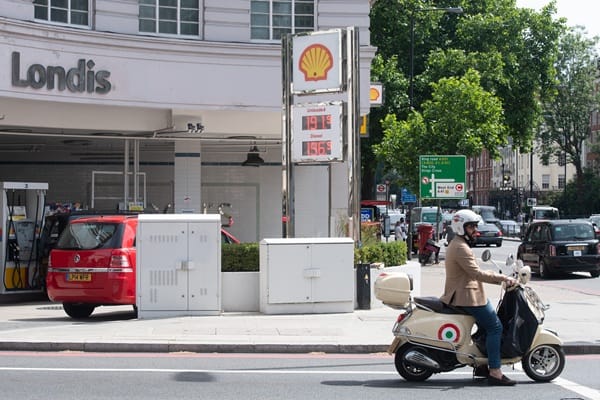
UK drivers are facing a fresh squeeze at the pump after diesel prices climbed to a record high, with more than one in four forecourts already charging at least £2 a litre.
The national average price of diesel reached 199.53p a litre, surpassing the previous record of 199.18p set a day earlier, according to analysis of the Government’s Fuel Finder tool by New AutoMotive.
More than 2,200 forecourts are already charging £2 or more for diesel, highlighting the uneven but increasingly widespread impact of soaring fuel costs on households and businesses.
At least one forecourt in 559 of the UK’s 650 constituencies is now charging more than £2 a litre. In 148 constituencies, at least half of forecourts have crossed the £2 threshold.
The increases have come as oil prices have risen sharply amid the US-Iran war, with crude prices remaining above $100 a barrel for much of September. The surge has fed through to petrol and diesel prices, putting additional pressure on household budgets and transport-intensive businesses.
For a family running an average-sized car with a 55-litre tank, filling up at the current average price costs about £110. A driver covering 9,200 miles a year could spend roughly £1,970 on diesel — around £340 more than at the beginning of July.
The latest price is the highest recorded for diesel and exceeds levels reached in June 2022, when the aftermath of Russia’s invasion of Ukraine pushed the average to 199.09p a litre.
Ben Nelmes, chief executive of New AutoMotive, said the latest increase represented a significant pressure on household finances.
“That is a real hit to household budgets, and with the average price now above the all-time record, millions of drivers will be wondering how much worse this gets,” he said.
“Many drivers will be wondering whether this is the time to get an electric car – Ministers should use every tool in the box to help them to escape rising diesel prices and go electric.”
The pressure is particularly acute in parts of Scotland. Drivers in Na h-Eileanan an Iar face an average diesel price of 211.9p a litre, while 11 of the area’s 12 forecourts are charging more than £2.
Even in Watford, the constituency with the lowest average price in the analysis, diesel costs 191.2p a litre — substantially above levels seen in July.
There are concerns that the national average could cross the £2 mark if oil prices remain elevated and the conflict between the US and Iran continues.
Ginny Buckley, chief executive of Electrifying.com, said the surge was a “painful reminder” of the extent to which British motorists remain “exposed” to geopolitical shocks.
“People simply want to get to work, take their kids to school and live their lives without watching the price at the pump spiral because of another geopolitical shock,” she said.
Buckley argued that electric vehicles offered drivers an opportunity to reduce their exposure to petrol and diesel price volatility, potentially delivering significant savings in motoring costs.
The impact also extends beyond private motorists. Simon Smith, chief executive of Voltempo, said higher diesel prices were putting additional pressure on the haulage industry and could feed through into the wider economy.
“Electric HGVs give operators another option and, with the right infrastructure and energy strategy, the opportunity for much greater control and certainty over their long-term running costs,” Smith said.
With diesel now approaching £2 a litre nationally, the latest surge demonstrates how quickly geopolitical tensions can translate into higher costs for British households and businesses — and leaves motorists facing further uncertainty over how high prices could go.


Leave a Comment