
UK ministers are drawing up contingency plans for a “reasonable worst-case scenario” in which prolonged disruption to the Strait of Hormuz triggers a shortage of carbon dioxide (CO₂), raising concerns over potential knock-on effects across key sectors of the economy.
According to reports, government planning assumes that if CO₂ supplies were to become severely constrained, priority allocation would be given to critical services, including healthcare and civil nuclear energy, where the gas is used in essential processes such as preserving blood supplies, organs and vaccines, as well as supporting elements of power generation.
The scenario is understood to form part of wider resilience planning linked to the ongoing geopolitical instability involving Iran and the impact of disruption on global energy and industrial supply chains.
Lord Toby Harris, Chair at National Preparedness Commission, said: “The reality is that these are pressures that will become more and more intense if this particular crisis goes on.
“We all have to prepare for the unexpected, and the likelihood is that shocks of this sort are going to become more common, more frequent in the future.
“What you don’t want is people rushing to the stores, panic buying, stripping the shelves, which means those who are fractionally slower are going to miss out.
“But other countries provide household advice which says, think about what you would need to sustain your household for two days, three days, maybe even a week and encouraging people – not everyone will be able to do it, some people haven’t got the money – what would you put aside and what’s a sensible thing to put aside.”
Lord Harris told BBC Radio 4’s World at One: “Every household which is better prepared, that is one less household the government has to worry about.
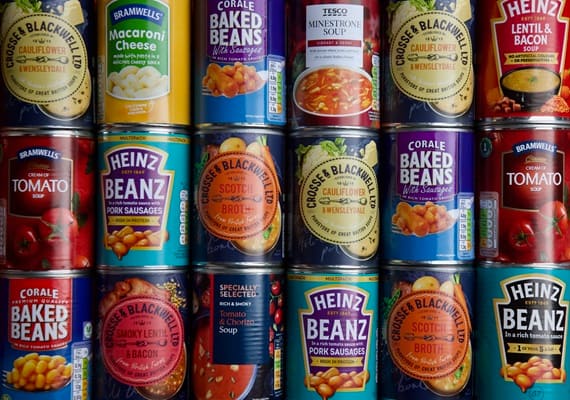
“The absolute minimum are to ensure you have a working torch, make sure you have a fully stocked first aid box, perhaps a wind-up radio, and of course some tinned food, some staples and so on.”
CO₂ is a widely used industrial gas with applications across multiple sectors, including food processing, agriculture, and hospitality. It is used in packaging, refrigeration, and slaughter processes, meaning any sustained shortage could have cascading effects across the food production system.
Under the contingency framework, officials are reported to be considering allocation mechanisms that would prioritise life-critical services first, with other industries potentially facing restricted access depending on supply conditions.
Farmers, food and drink manufacturers, and hospitality operators are therefore identified as among the sectors most exposed to disruption in a constrained supply environment. Industry groups have previously warned that even short-term interruptions to CO₂ availability can quickly affect production schedules, storage capacity and distribution.
The planning reflects broader concerns within government about the resilience of UK supply chains in the face of global shocks, particularly where multiple dependencies—such as energy prices, shipping routes, and industrial gas production—interact simultaneously.
Officials stress that the scenario represents a precautionary planning exercise rather than a prediction of imminent shortages. However, it highlights the potential for geopolitical instability to create indirect pressures on domestic industries well beyond the immediate energy sector.


Leave a Comment