
Iran has warned the US that its economy could face severe fuel shortages as tensions between Tehran and Washington escalate, with Iranian officials threatening an “asymmetrical” response and renewed disruption to one of the world’s most important oil-shipping routes.
Mohammad Reza Aref, Iran’s first vice-president, urged Americans to prepare for potential disruption to fuel supplies.
“The Americans should start thinking about stockpiling gasoline and fuel. Dark months await the American economy.”
Aref said recent US attacks had fundamentally altered Iran’s approach to national security.
Writing on X, he said: “America’s new crimes against the Iranian nation have changed our security equations and defence doctrine.”
He added: “From now on, our response will be ‘asymmetrical,’ ‘multi-layered,’ and ‘depriving the aggressor of security.’”
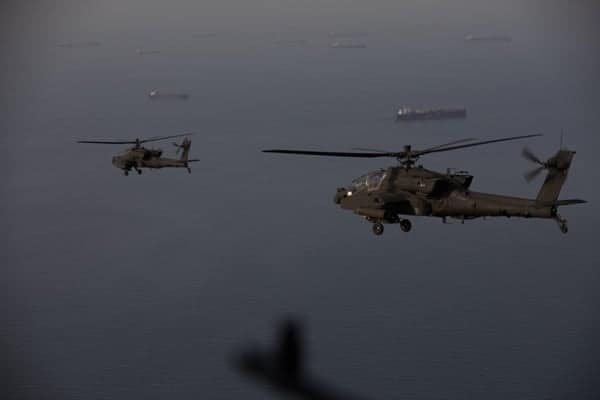
The warning comes as renewed fighting between the US and Iran raises fresh concerns over the security of shipping through the Strait of Hormuz, through which a substantial proportion of global oil supplies normally pass.
US president Donald Trump said on Wednesday that Washington could attack Iran “at any time”, although he said he did not expect the latest fighting to continue for “too long”.
Trump has also claimed that the US has “almost total control” of the Strait of Hormuz.
The US is much less dependent on imported Iranian crude than in previous decades, but a sustained disruption to the Strait could still have significant consequences for American consumers and businesses because of its impact on global oil prices.
US Energy Information Administration data show that the US imported an average of 490,000 barrels of crude oil a day from the Persian Gulf in 2025.
America’s reliance on Gulf oil has declined substantially as domestic production has expanded. But any major interruption in traffic through Hormuz could still push global prices sharply higher because of the sheer volume of crude and refined products that normally passes through the waterway.
Oil markets have already responded to the latest escalation.
Brent crude rose above $96 a barrel on Thursday, while US West Texas Intermediate approached $92, with both benchmarks reaching their highest levels in six weeks.
The price surge follows a series of military exchanges across the region.
On Tuesday, Iran launched retaliatory strikes against US military positions across the Middle East after Trump threatened to hit the country “much harder”, increasing fears that the conflict could widen.
Iranian state media reported attacks on a US base in Erbil, in Iraq’s autonomous Kurdistan region, and a Marine base in Jordan’s Aqaba, following a US strike in southern Iran.
The Iranian Red Crescent said shrapnel from one of the strikes killed four people, including a child, during a wedding celebration in Kuhestak, Sirik. At least 35 people were reported injured.
US Central Command said it had completed a wave of attacks on Iranian military targets after the Islamic Revolutionary Guard Corps attempted to target commercial shipping in the Strait of Hormuz and American service members.
Capt Tim Hawkins, a Centcom spokesman, said the US was aware of reports from Iranian state media concerning the retaliatory strikes.
“The US military never targets civilians, unlike the IRGC,” he added.
Jordanian armed forces said they had intercepted 13 ballistic missiles, destroying 10, while three landed in remote areas.
Bahrain separately said its air-defence systems had intercepted and destroyed Iranian drones over its territory.
The Bahraini Ministry of Interior issued three “potential threat” warnings within five hours as governments across the region remained on heightened alert.
The US strikes hit about 100 military targets, according to American officials, including two Iranian tankers.
US military sources said the operation formed part of a new “tanker for tanker” policy approved by Trump and first reported by Axios.
The strategy represents an escalation in Washington’s efforts to deter Iran from targeting commercial shipping and to impose a direct cost on Tehran’s ability to disrupt maritime trade.
For oil markets, the central risk remains the Strait of Hormuz.
The waterway links the Persian Gulf with the Gulf of Oman and the Arabian Sea, and any prolonged disruption could affect crude supplies well beyond the US-Iran confrontation.
Iran’s latest warning suggests Tehran is seeking to translate its military vulnerability and proximity to the Strait into economic leverage, while Washington is attempting to preserve freedom of navigation through the waterway.
The result is a growing risk premium in energy markets, with higher crude prices threatening to feed into inflation, transport costs and consumer spending well beyond the immediate region.
For the US Federal Reserve and other major central banks, a sustained oil shock would further complicate the policy outlook by raising headline inflation even as geopolitical disruption weighs on economic activity.
The conflict has therefore moved beyond a conventional military confrontation. Energy markets, shipping routes and the cost of living are increasingly becoming part of the contest between Washington and Tehran.





Leave a Comment