
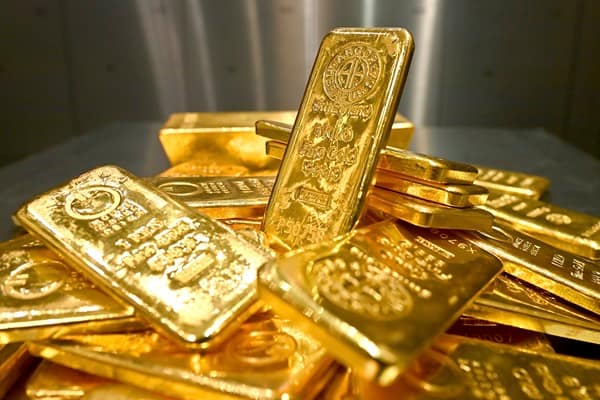
Gold’s decline below the psychological $4,000 level is far more than a routine price correction or a short-lived technical pullback. In my view, it signals a fundamental shift in how financial markets are pricing global risk.
Despite escalating geopolitical tensions across the Middle East—events that have historically fuelled demand for gold as the ultimate safe-haven asset—investors are now focusing on a more influential driver: the growing likelihood of renewed monetary tightening by the Federal Reserve amid fears of a fresh inflationary wave fuelled by rising energy prices.
This change in market behaviour is one of the most significant developments investors should recognise. The traditional relationship between geopolitical risk and gold has not disappeared, but it is now being filtered through inflation expectations and the outlook for U.S. monetary policy.
The increasing threats to critical global energy routes, whether through the Strait of Hormuz or the Red Sea, represent much more than a potential disruption to oil supplies. They imply a broad repricing of global inflation expectations.
Sustained increases in crude oil prices inevitably feed into transportation costs, manufacturing expenses, and supply chains, creating renewed inflationary pressures just as markets had begun to price in a gradual moderation of U.S. inflation. As a result, investors are no longer assuming that geopolitical tensions automatically benefit gold. Instead, they are assessing how these developments could influence central bank decisions—particularly those of the Federal Reserve.
Although recent U.S. inflation reports showed encouraging signs of moderation in both the Consumer Price Index (CPI) and the Producer Price Index (PPI), those positive signals have been quickly overshadowed by geopolitical developments. Markets understand that a prolonged rally in oil prices could easily reverse much of the progress made in bringing inflation under control.
Consequently, expectations that interest rates will remain higher for longer have strengthened, while some investors have even begun pricing in the possibility of another rate hike later this year. This shift has translated directly into a stronger U.S. dollar and higher Treasury yields, both of which continue to weigh heavily on gold prices.
In my opinion, recent U.S. economic data have reinforced this narrative. Retail sales came in stronger than expected, initial jobless claims remained historically low, highlighting labour market resilience, and comments from Federal Reserve officials—including Lorie Logan and Jeffrey Schmid—maintained a distinctly hawkish tone. Taken together, these factors suggest that the Federal Reserve currently has little incentive to rush toward monetary easing. On the contrary, if energy prices continue to climb, policymakers may be forced to maintain restrictive monetary conditions for even longer. Under such circumstances, gold faces a significantly less supportive macroeconomic environment than it did only a few months ago.
Nevertheless, I do not believe that the recent decline marks the beginning of a prolonged bear market for gold. Rather, I view it as a temporary repricing process before the market establishes a new equilibrium. Despite recent weakness, gold continues to possess the structural characteristics that make it an effective hedge against sovereign risk, persistent inflation, and geopolitical uncertainty. Furthermore, central banks worldwide remain significant net buyers of bullion, providing long-term structural support for prices. For that reason, I believe any additional downside should be viewed as a gradual accumulation opportunity rather than the end of the broader bullish cycle that has developed over recent years.
From a technical perspective, I consider the $ 3,940–3,950 region a highly significant support zone. This area coincides with a major liquidity pocket that could attract renewed buying interest, particularly if markets begin recognizing that geopolitical tensions may ultimately threaten global economic growth more than they fuel inflation. Conversely, a sustained recovery above $4,000 would represent the first meaningful indication that bullish momentum is returning. A decisive breakout above the $4,032–4,045 resistance zone would further confirm that the corrective phase has likely ended, opening the door to a renewed advance toward higher levels and, potentially, a retest of the historical highs over the medium term.
I also believe that many investors make the mistake of linking gold’s performance to a single economic or political event. Today’s gold market is influenced by a far more complex set of variables, including oil prices, U.S. Treasury yields, the strength of the U.S. dollar, inflation data, Federal Reserve expectations, and the evolving geopolitical landscape in the Middle East. Evaluating the market through only one of these lenses can easily lead to flawed conclusions. Rising geopolitical tensions alone are no longer sufficient to drive gold higher if they simultaneously strengthen the dollar and push real yields upward. The opposite is equally true.
Looking ahead, I believe the coming weeks will be critical in determining gold’s next major direction. Should oil prices continue to climb while U.S. economic data remain resilient, gold could remain under pressure as markets continue to price in a more hawkish Federal Reserve. However, if economic indicators begin to show signs of slowing growth or energy prices retreat, investors are likely to quickly revive expectations for future rate cuts, providing a catalyst for a stronger recovery in gold.
Ultimately, I do not interpret gold’s break below $4,000 as a signal that the long-term bullish trend has ended. Rather, I see it as a crucial stress test of the market’s ability to reassess competing macroeconomic risks. What is unfolding today is not simply a battle between gold and geopolitical uncertainty—it is a contest between gold, the U.S. dollar, and Federal Reserve policy. Until greater clarity emerges, I expect elevated volatility to persist, with downside risks dominating the short term while maintaining a cautiously optimistic outlook for a renewed medium- and long-term uptrend, provided gold successfully defends its major support levels and markets gradually conclude that the Federal Reserve’s tightening cycle is approaching its final stages.


Leave a Comment