
Brands spent over $21 billion on influencer marketing in 2023. A big chunk of that went to macro-influencers and celebrities. And a big chunk of that underperformed.
Here’s what the data keeps showing: micro-influencers — influencers with 10,000 to 100,000 followers — consistently outperform larger accounts on engagement, cost efficiency, and conversions. Not by a little. By a lot.
67% of marketers already prioritize micro-influencers over bigger names. The brands still chasing follower counts are leaving money on the table.
This article breaks down exactly why micro-influencers deliver better ROI, where macro falls short, and how to build a micro-influencer strategy that compounds results over time.
The engagement gap is real
Nano influencers (under 10K followers) hit up to 11.9% engagement on TikTok and 2.19% on Instagram. Micro-influencers land slightly below that but still far above macro territory.
Macro-influencers? Their engagement rates hover between 1–3% on most platforms. The bigger the audience, the more passive it becomes. This pattern is consistent across markets — UK influencers in the micro tier follow the same trend, with smaller, more tightly engaged communities consistently outperforming larger accounts on interaction rates.
This isn’t just a vanity metric. Engagement rate is the closest proxy you have for how much an audience actually cares. More comments, saves, and shares mean more purchase intent. Higher engagement rates correlate directly with higher conversion rates — which is the whole point.
The reason is simple. Micro-influencers build tighter relationships with niche communities. Their followers actually read captions, reply to stories, and trust recommendations.
Cost efficiency: More influencers, more content, same budget
A single macro-influencer post can run $5,000 to $50,000+. For that same budget, you could work with 10 to 50 micro-influencers at $100–$1,000 per piece of content.
That’s not just more content. It’s more creative angles, more audience segments, and more data points to optimize from.
Think about it from a performance marketing lens. If you run one ad creative, you’re guessing. If you run 20 creatives across different influencers and audiences, you’re testing. And testing is how you find winners.
Authenticity drives conversions
92% of consumers trust peer recommendations over branded content. Micro-influencers sit closer to “peer” than “brand” in the audience’s mind.
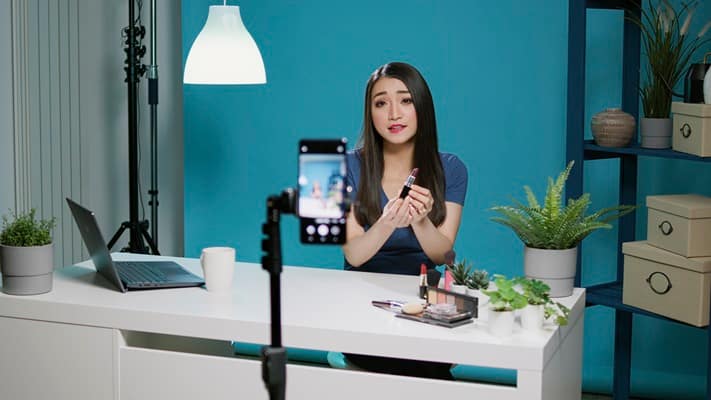
Their content looks like something a friend would post. It’s shot on a phone, in a real kitchen or bathroom, with real lighting. That’s not a limitation — it’s the whole advantage.
Macro-influencer content often looks polished, produced, and clearly sponsored. Audiences have learned to scroll past it. The more professional the post looks, the more it triggers ad blindness.
Micro-influencers don’t have that problem. Their audience followed them because they trust their taste, opinions, or expertise in a specific niche. When they recommend a product, it doesn’t look like a paid promotion. It leads to more saves. More DMs asking “where did you get that?” More clicks that actually convert.
Lower risk, better diversification
Putting $20,000 behind one macro-influencer is a bet. If their content underperforms, if their audience doesn’t match your buyer profile, or if they get caught in a controversy — that’s your entire campaign budget gone.
Spreading the same $20,000 across 20 micro-influencers is a portfolio. Some will overperform. Some will be average. But the overall campaign risk drops dramatically.
67% of marketers already prioritize micro-influencers, and risk management is a big reason why. When you work with multiple smaller influencers:
- No single point of failure. One underperforming creator doesn’t tank the campaign.
- More data, faster. You see which influencers, formats, and hooks drive results — and double down.
- Audience diversity. Each creator reaches a different slice of your target market. More coverage, less overlap.
This is the same logic behind diversifying an ad account. You wouldn’t run one ad set with one creative and one audience. You test. Micro-influencers let you apply that same thinking to influencer marketing.
The bottom line
The data is clear: micro-influencers deliver better engagement, stronger trust, and more efficient spend than macro-influencers. And the gap isn’t closing.
The brands winning at influencer marketing aren’t chasing the biggest names. They’re building systems — testing dozens of micro-influencers, finding top performers, and scaling what works.



Leave a Comment