
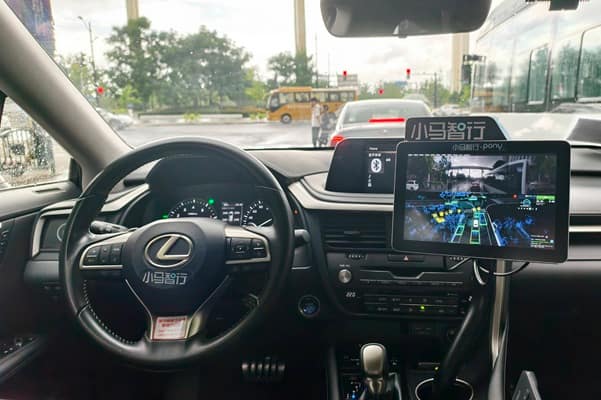
The UK’s largest trade union has demanded urgent new legislation to protect taxi and private hire drivers from what it warns could be “severe disruption” to jobs and earnings as driverless vehicles begin to enter Britain’s roads.
Unite raised the issue at its annual conference in Blackpool, where delegates backed calls for ministers to introduce legal safeguards ahead of the rollout of autonomous transport services.
The motion reflects growing concern within parts of the transport sector that rapid advances in self-driving technology could displace tens of thousands of workers, particularly in urban areas where ride-hailing services are most established.
Ministers have already signalled that they are preparing for the wider introduction of autonomous vehicles later this decade, with pilot schemes expected to expand as safety standards and regulatory frameworks are finalised.
But union leaders argue that the pace of change risks leaving drivers exposed.
They are calling for statutory protections to prevent job losses, as well as measures to ensure that any productivity gains from automation are not achieved at the expense of worker incomes.
Unite representatives warned that without intervention, taxi and private hire drivers could see their livelihoods gradually eroded as driverless fleets are deployed by major technology and transport firms.
The union said that while technological change in transport is inevitable, it must be managed in a way that does not create “disposable labour markets” or undermine long-standing employment patterns in the sector.
Ali Haydor, Private Hire Driver and GMB Congress Delegate said: “We hear a lot from those on the right of politics about people not working and relying on benefits, but replacing human workers will potentially push thousands into unemployment and poverty.
“The gig economy firms present driverless taxis as progress – they tell us this technology will increase efficiency, reduce costs and benefit society, but progress for whom?
“Technology will continue to develop, but workers should not be expected to carry all the risks while companies take all the rewards.”
Drivers, it argued, face particular vulnerability due to the industry’s relatively low barriers to entry and high exposure to competition from app-based platforms.
Supporters of autonomous vehicle technology say it has the potential to reduce congestion, improve road safety and lower costs for consumers, particularly in densely populated cities.
They also argue that new roles will emerge in fleet management, maintenance and remote supervision of driverless systems.
However, critics warn that such transitions rarely guarantee equivalent levels of employment, particularly for workers currently reliant on flexible or gig-based income.
The Blackpool motion adds to growing political pressure on the Government as it seeks to balance investment in emerging technologies with concerns about job security and regional employment.
Transport policymakers have previously suggested that regulation will need to evolve alongside innovation, rather than attempting to block it outright.
But Unite’s intervention indicates that unions are preparing for a more confrontational debate over how quickly autonomous vehicles should be allowed to reshape Britain’s transport economy.
As one delegate put it during the conference discussion, the question is no longer whether driverless cars are coming — but who, if anyone, will be protected when they arrive.


Leave a Comment