
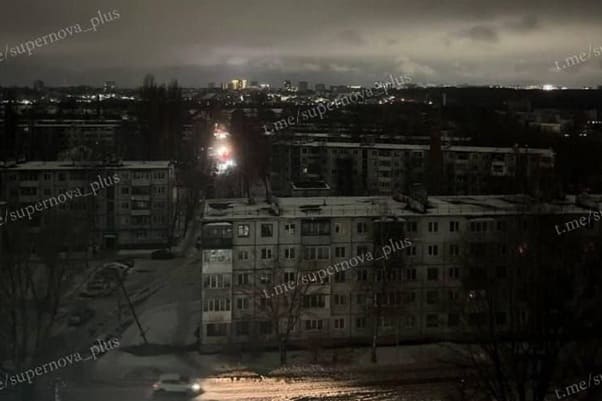
Over the last three days (Feb. 13–15, 2026), the “peace” narrative around Ukraine has collided head-on with the reality of missiles, drones, blackouts, and political mixed messages, all while world leaders gathered at the Munich Security Conference (MSC).
If this is what a path to peace looks like, it’s arriving to the soundtrack of AC/DC’s Shoot to Thrill, with some bombastic Tony Stark-style soundbites thrown in for effect, leaving many asking the obvious question: why doesn’t this feel much like peace?
At MSC on Feb. 14, President Volodymyr Zelenskyy delivered what amounted to a warning shot at the diplomacy itself.
Talks are happening, yes, but the pressure, he argued, is being applied in the wrong direction.
“Sometimes it feels like the sides are talking about completely different things,” he said, stressing that the U.S. and partners too often talk about concessions “only in the context of Ukraine, not Russia.”
Zelenskyy’s message in Munich was blunt: any deal that doesn’t come with enforceable security guarantees is not peace , it’s an intermission. Radio Free Europe/Radio Liberty described the speech as an “impassioned plea” for weapons and “real security guarantees,” with Zelensky calling Putin a “slave to war.”
The timing was deliberate. Ukraine is days away from the fourth anniversary of the full-scale invasion on Feb. 24, and the winter campaign against energy infrastructure is still biting, even as temperatures thaw and yet another Russian winter strategy designed to break Ukrainian resilience has failed, despite billions spent, spring now only weeks away.
Reuters reporting from Feb. 15 underlined just how intense that pressure remains. Zelensky said Russia launched roughly 1,300 attack drones, 1,200 guided aerial bombs, and dozens of ballistic missiles at Ukraine over the past week alone. That is not the behaviour of a country preparing for compromise, more like a country trying to force one.
Then came the political whiplash. On Feb. 13, U.S. President Donald Trump told reporters that “Russia wants to make a deal,” and that Zelensky “is going to have to get moving… He has to move.” The message landed in Europe like a cold bucket of water: the White House pushing Kyiv to hurry, while Ukraine is still being hit day after day.
Zelensky acknowledged that pressure publicly. He said he felt “a little bit” of pressure from Trump, while arguing the U.S. has the leverage to force a ceasefire, and should use it. The subtext in Munich was impossible to miss: Kyiv is being asked to “make peace” on a battlefield that is still actively on fire, against an aggressor that continues to deliberately target civilians and infrastructure.
Against that backdrop, Zelensky met U.S. Secretary of State Marco Rubio on Feb. 14 on the sidelines of MSC. According to the Kyiv Independent, they discussed the battlefield situation, Russian strikes, support for air defence, especially missiles, and the upcoming trilateral peace talks in Geneva (Feb. 17–18). Rubio, trying to project steadiness amid the noise, said the negotiations had narrowed “down to the hardest questions,” according to RFE/RL.
But the Trump orbit’s messaging didn’t sound steady. It sounded split-screen, an untidy mess of badly orchestrated mixed signals, something that has become familiar from a White House also under pressure at home.
On one side, Trump is telling Zelensky to “move” because “Russia wants to make a deal.” On the other, Republican Senator Lindsey Graham is publicly calling for escalation: he wants the U.S. to provide Tomahawk cruise missiles so Ukraine can strike the infrastructure Russia relies on to produce drones and sustain its war machine. Whatever one thinks of Graham’s proposal, the combined effect is obvious. It creates the impression of an administration ecosystem pulling in different directions at once: hurry into a deal, but also consider giving Ukraine weapons designed to hit deep.
Meanwhile, the war didn’t pause for Munich.
On Feb. 15, Reuters reported that a Ukrainian drone strike damaged Russia’s Black Sea port of Taman in the Krasnodar region, injuring two people and sparking multiple fires. Ukraine’s General Staff said it struck the port complex, and Reuters noted Ukraine had resumed attacks on Russian energy infrastructure after a U.S.-brokered moratorium expired.
And those weren’t the only long-range strikes in the air. Russia also reported Ukrainian drones hitting residential and industrial sites in Volgograd on Feb. 13, with injuries reported by regional authorities. In the border regions, Belgorod has repeatedly featured in blackout and damage reports. Reuters described “serious damage” there earlier this month, and other reporting has cited partial blackouts linked to strikes on energy facilities.
Then came the “yesterday” factor that can’t be ignored: the scale of Ukrainian drone activity targeting Russia has surged again. Russian officials on Feb. 15 claimed large numbers of drones were intercepted across multiple regions, including the Moscow region, with some reportedly “en route to Moscow.” These are Russian claims and can’t be independently verified in real time, but separate reporting citing Interfax said Moscow-bound drones were downed throughout the day. Either way, the headline reality is the same: the air war is expanding, not contracting, something that’s been happening anyway since Trumps inauguration.
💥 There was a blackout in Bryansk after a drone attack. https://t.co/0IuWvf50iR pic.twitter.com/Ua41Avgz79
— Shaun Pinner (@olddog100ua) February 16, 2026
So where does that leave the “peace” push?
Russia no longer acts with impunity, it no longer dictates outcomes by force of arms alone, which is obvious now to many, including Ukrainians. they has shown, again and again, that Moscow’s will can be contested, its infrastructure reached, its airspace challenged, and its narrative broken. All you have to do is think back to 2022 to see how far this has shifted. The battlefield is no longer just the front line, it is the skies over ports, the energy grid, the logistics hubs, and the political assumptions that once said Russia could simply impose its will and be obeyed.
Any maximal Russian demands require leverage, and right now, Ukraine’s leverage isn’t up for debate. It is clearly visible, measurable, and increasingly growing while the longer this drags on, the clearer it becomes that Russia’s position is not hardening, but eroding: economically strained, politically defensive, and increasingly forced into repression at home and damage control abroad. A state that was meant to win in days is now managing decline in years, shrinking the audience for its failures, failures that not even Russia’s propaganda juggernaut can hide anymore.
Munich didn’t look like the prelude to peace, it looked like the moment the old balance of power finally caught up with reality.
This war has changed for sure, and for the first time in a long time, it’s Russia, not Ukraine, that looks like it’s starting to lose control of where this ends.


Leave a Comment