
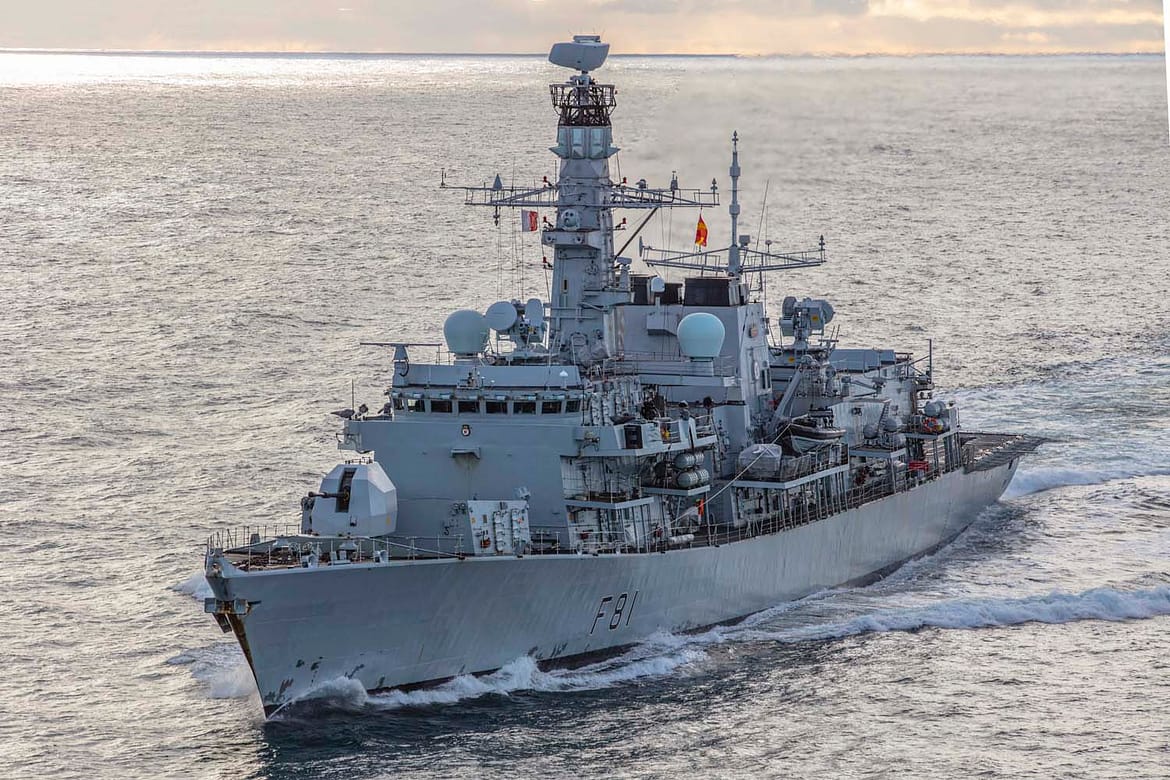
Britain has been compelled to hand over its leading role in a crucial NATO naval force to Germany due to a shortage of operational warships in the Royal Navy.
Critics have labelled this a humiliating setback for the UK’s defence credibility.
With the Type 45 destroyer HMS Dragon deployed to the eastern Mediterranean as part of security operations related to the war in Iran, the UK did not have enough vessels to fulfil its leadership role in the Standing NATO Maritime Group One (SNMG1)—a rapid-reaction force that operates in the North Atlantic, Baltic, and High North.
Consequently, this role has now been assumed by the German frigate Sachsen, which will serve as the group’s flagship and carry UK personnel. The German Embassy in London praised the development as a sign of strong cooperation; however, critics argue it highlights a stark reality: the Royal Navy no longer has the capacity to meet all its alliance commitments.
“This is a national embarrassment,” said a Conservative MP, pointing to the shortages of ships and lengthy maintenance periods. “Britannia most definitely does not rule the waves anymore.”
This situation underscores long-standing concerns about the UK’s naval strength. While official figures suggest the Royal Navy has dozens of ships on paper, many major surface combatants are either deployed, undergoing maintenance, or otherwise unavailable—leaving only a few vessels ready for operational tasks on short notice.
Allied navies, including those of Finland, Sweden, and Estonia, have long conducted independent interdiction operations. Meanwhile, British planners spent months debating legal authority to act against Russian “shadow fleet” tankers, which are linked to rising oil revenues for Moscow. This led to delays and gaps in Britain’s naval presence at a time of heightened global tension.
This defence setback occurs against the backdrop of a broader geopolitical crisis sparked by the conflict in Iran—an era in which maritime security, control of chokepoints such as the Strait of Hormuz, and robust naval capacity are viewed as vital to national and allied interests.
Despite assurances from the Ministry of Defence that the UK will maintain command of the NATO maritime group and fulfil its commitments, critics will highlight the reality of relying on a foreign warship to lead a premier alliance force as evidence that Britain’s military capability has failed to keep pace with its strategic ambitions.


Leave a Comment