
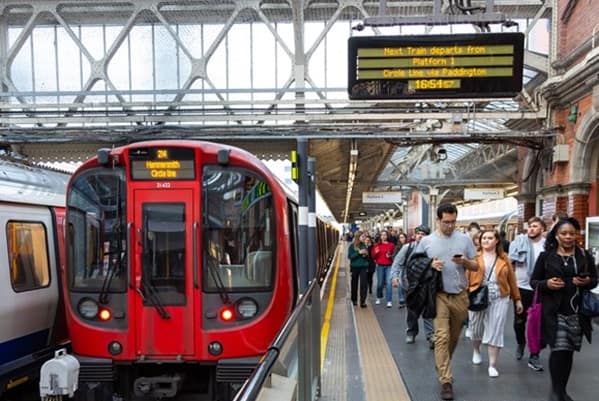
Planned strikes by London Underground drivers due to begin this week have been suspended following last-minute talks between Transport for London and the RMT union, sparing commuters across the capital from major disruption.
The industrial action, which was due to begin with a 24-hour stoppage at midday on Tuesday, followed by a second walkout on Thursday, had threatened widespread travel chaos across large parts of the Tube network.
However, the RMT confirmed on Monday that the strikes had been called off after what it described as a significant shift in negotiations by London Underground management.
An RMT spokesman said the employer had moved “at the 11th hour”, allowing further discussions over concerns relating to new working arrangements, fatigue and safety.
“The dispute is not over, and more strike action will follow if we fail to make sufficient progress,” the union warned.
The row centres on proposals by Transport for London to introduce a voluntary four-day working week for Tube drivers.
Under the proposals, most drivers would see their working week reduced from 36 hours to 35 hours while maintaining existing pay levels. TfL argues the change would improve work-life balance while helping modernise staffing patterns across the network.
But union officials have raised concerns about the structure of the proposed shifts, warning that longer working days could increase fatigue and pose safety risks.
The RMT has instead pushed for a 32-hour working week across four days with no reduction in salary.
Nick Dent, director of customer operations for London Underground, welcomed the suspension of industrial action, describing it as “good news for London”.
“Our proposal for a voluntary four-day week is designed to improve both work-life balance for drivers and the reliability of service for customers,” he said.
“We look forward to further discussions on the implementation of these proposals with all of our trade unions.”
Although this week’s strikes have been withdrawn, the dispute remains unresolved. Fresh walkouts are now scheduled for 2 June and 4 June should negotiations fail to produce an agreement, although planned action later in June has already been suspended.
The dispute highlights continuing tensions over working practices and staffing across the transport network, despite a broader easing in industrial unrest compared with previous years.
TfL insists participation in the new working arrangements would remain voluntary and that drivers wishing to retain existing five-day patterns would still be able to do so.
Claire Mann, TfL’s chief operating officer, previously said the proposals would bring London Underground more closely into line with working practices used elsewhere in the rail sector while offering drivers greater flexibility.
For commuters, the cancellation provides temporary relief after months of intermittent strike threats across Britain’s transport system. But with the union warning the dispute is far from resolved, the prospect of renewed disruption to London’s Underground network remains firmly on the table heading into the summer.





Leave a Comment