
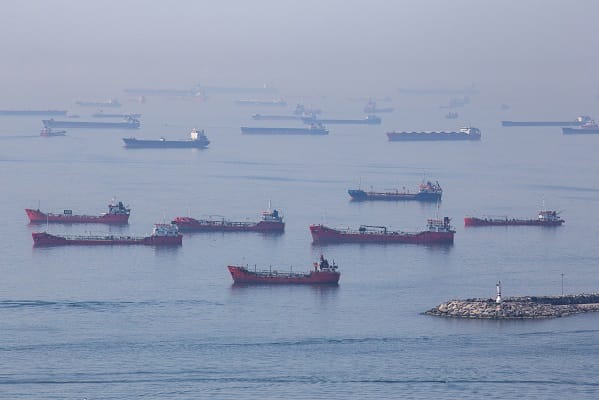
Donald Trump has suggested that the Strait of Hormuz could reopen without direct intervention from the United States.
He argued that countries reliant on this crucial shipping route should take responsibility for restoring navigation.
In a phone interview, the U.S. President expressed his belief that the conflict with Iran may be nearing its conclusion, as American strikes continue to target Iran’s military capabilities. “We’re not going to be there too much longer,”
Trump stated, adding that U.S. forces are focused on eliminating what he described as Iran’s remaining offensive capacity.
His remarks come as the fighting between Israel and Iran enters its fifth week, with ongoing missile exchanges and continued U.S. involvement in strikes on Iranian targets.
The President indicated that the closure of the Strait of Hormuz—a critical artery for global energy supplies—might not ultimately require American naval intervention. I think it’ll automatically open,” he said. Let the countries that are using the strait go and open it.
The waterway, through which approximately one-fifth of the world’s oil supply passes, has been shut for more than a month, causing shockwaves in global energy markets and heightening concerns about maritime security in the Gulf.
Trump declined to provide specific details about recent U.S. strikes near Isfahan, Iran, which is home to key nuclear facilities, but mentioned that the attacks resulted in significant damage. He cited footage shared on social media showing large explosions and described the strikes as effective. When pressed for details on specific targets, he stated, “I’d rather not say,” suggesting that more information would be released in due course.
#Analysts suggest that the President’s comments reflect a growing expectation in Washington that regional powers—especially those most dependent on Gulf shipping routes—may need to take on a greater share of the responsibility for securing them.


Leave a Comment