
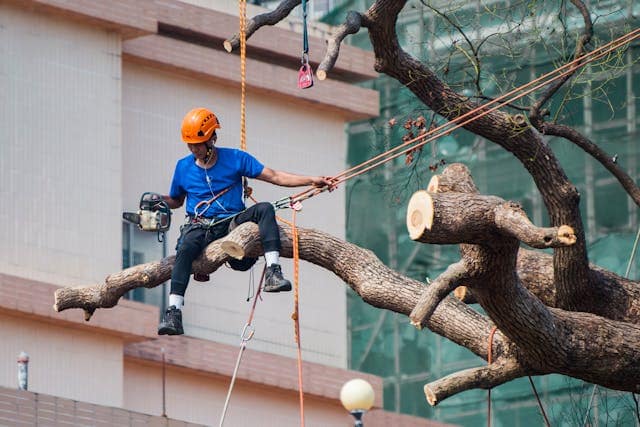
UK tree surgery operators face a working at height safety conversation that affects both worker outcomes and the broader sector reputation. Mobile Elevating Work Platforms (MEWPs) sit at the centre of much modern arboriculture, and the sector continues to receive targeted enforcement attention from the Health and Safety Executive. The choice of preventive investment sits at the intersection of statutory compliance, equipment and PPE discipline, and operator culture. The right approach reads each operator’s specific risk profile before specifying a prevention plan.
The same disciplined evaluation that informs other operator decisions translates to arboriculture safety. The HSE figures show tree surgery is the second most common sector for MEWP-related fatalities across recent reporting cycles. UK operators running structured working at height and MEWP-operator programmes typically see meaningful reduction in incident frequency. A MEWP is a Mobile Elevating Work Platform used to provide temporary access for people or equipment to inaccessible areas. The decision rewards a few hours of structured preparation before booking a training provider.
Why has tree surgery safety become more strategic for UK operators?
Three structural shifts have moved tree-surgery-safety investment into more strategic territory for UK operators. The first is the enforcement-tightening environment. Targeted HSE campaigns on tree work have produced material visit and prosecution activity across recent years.
The second is the insurance-discipline shift. Modern UK insurers increasingly require documented evidence of working-at-height training and MEWP-operator certification. The third is the tender-eligibility shift. Local authorities and large estate clients increasingly require safety-management evidence to qualify for bid lists.
The Health and Safety Executive’s overview of upper-limb disorders is one of several regulatory frameworks UK operators reference. The same kind of operational thinking visible in coverage of Sadiq Khan’s London tree-planting package translates to thoughtful safety investment for the operators delivering that work.
What should UK tree surgery operators verify before investing?
Six checks belong on every tree-surgery-safety review. The table below summarises what UK operators should weigh before commitment.
| Check | Why it matters | What to confirm |
| Trainer credentialing | Recognised qualification | RoSPA or City and Guilds-aligned course |
| Course-specific scope | Match to role profile | MEWP, climbing, chainsaw, rescue covered |
| Hands-on assessment | Practical evaluation included | On-site practical demonstration |
| Schedule flexibility | Match to operating calendar | Out-of-season delivery available |
| Documentation | HSE-aligned records | Completion certificate plus refresher schedule |
| Refresher cadence | Knowledge retention | 12-to-24 month refresher cycle |
A training provider that produces clear answers across these six points signals a programme worth retaining. A provider that deflects on any of them signals a generic course that may not match the specific tree-work profile. The Acas health and wellbeing at work guide covers the broader employer-relations framework.
Which tree surgery categories reward specialist programmes most?
Three tree-surgery categories reward dedicated safety investment more than the others:
- Urban tree-removal operations with vehicle traffic and pedestrian footfall where MEWP placement and traffic-management interact closely
- Domestic-and-estate tree-work where the access constraints, drop-zone management, and ground-crew coordination drive incident risk
- Storm-response and emergency tree-work where time pressure and unstable trees produce elevated risk profiles

Photo by Jonathan Cooper on Pexels
UK tree surgery operators comparing prevention programmes benefit from reviewing recent local incident patterns. Online courses typically cost £30 to £90 per delegate. Blended in-person delivery runs £250 to £800 per delegate. Specialist providers describe the realistic reduction in incident frequency over rolling windows. The same kind of operational thinking visible in coverage of London property investment protection translates to thoughtful safety investment.
What common mistakes surface in UK tree surgery safety?
Several patterns recur. The first is choosing on price alone. The cheapest course often skips meaningful practical-assessment time.
The second is treating training as a one-off compliance event. Knowledge retention from a single training session typically fades within 12 to 24 months without reinforcement.
The third is overlooking the equipment-and-PPE investment. Workers’ tools, fall-arrest systems, and PPE shape risk independent of training.
The fourth is forgetting the RIDDOR-reporting pathway. Late or missed reporting carries enforcement consequences. The fifth is signing without confirming the documentation pathway.
What is the bottom line for UK tree surgery operators?
The tree-surgery-safety decision rewards UK operators that plan rather than improvise. The window for thoughtful preparation typically runs from the annual safety review through to the training-provider comparison phase. The right approach coordinates the training, the equipment investment, the refresher cadence, and the RIDDOR-reporting pathway rather than treating each as a separate engagement.
Whether the operator runs a single-vehicle SME, a regional tree-care firm, or a national arboriculture business, the criteria translate cleanly. The first provider conversation should answer specific questions about credentialing, course scope, hands-on assessment, and documentation. UK operators that run real comparison processes early end up with cleaner long-term outcomes than operators that default to whichever provider was first recommended. Pre-engagement preparation pays back across the full project portfolio, often producing a 15 to 30 per cent reduction in incident frequency across rolling 24-month windows.
Frequently Asked Questions
Why is tree surgery a high-risk MEWP sector?
Tree surgery combines elevated-platform work with falling-object risk, chainsaw operation, and unstable-tree exposure. The combination produces a higher per-worker incident rate than many other MEWP sectors. Working in storms, on damaged trees, or near power lines raises the risk profile further. Specialist training and rigorous procedure together address the multi-layered risk.
How much does tree surgery safety training cost?
Online MEWP and working at height courses typically cost £30 to £90 per delegate. Blended in-person delivery runs £250 to £800 per delegate depending on equipment complexity and assessment depth. Larger operators typically negotiate volume discounts at 25-plus delegate enrolments. The cost is small relative to the cost of a single serious incident.
What are the penalties for tree surgery non-compliance?
Tree-surgery non-compliance can lead to HSE enforcement action including improvement notices, prohibition notices, and material fines. Serious cases can result in unlimited fines on conviction. Reputational damage on public records can also affect tender bids and customer relationships. Most enforcement responds to patterns of non-compliance rather than isolated events.
How often should UK tree surgery operators refresh training?
Most tree-surgery-safety training benefits from refresher delivery every 12 to 24 months. Higher-risk roles (MEWP operation, climbing) often warrant 12-month refresher cycles. New starters typically receive operational-induction-level training within the first 24 hours of starting. The HSE expects operators to maintain documented training records aligned with the role profile.





Leave a Comment