
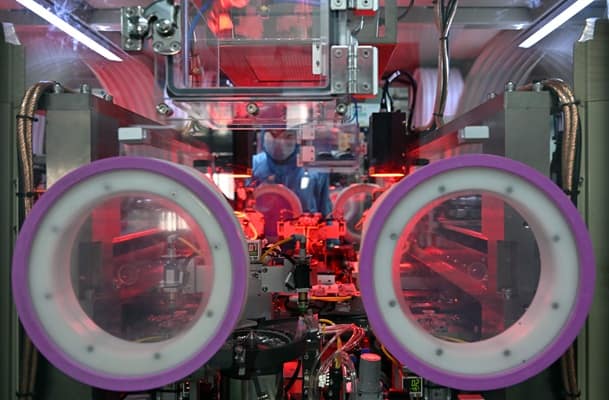
The development of modern technologies is inextricably connected with the use of materials that possess unique operational characteristics. Quartz glass, which represents amorphous high-purity silicon dioxide, occupies a special place in this group. Its outstanding thermal, optical, and chemical properties make it an irreplaceable component in the production of semiconductor integrated circuits, fiber-optic systems, laser technology, and scientific equipment. The relevance of this study is conditioned by the acceleration of the technological race and, as a consequence, the tightening of requirements for the purity and precision of materials. The goal of the present article is to conduct a comprehensive analysis of the factors determining the growing demand for precision quartz glass and to substantiate the forecast of its further implementation in advanced industrial sectors.
Physicochemical foundations of the application of quartz glass
The basis for the wide application of quartz glass is the totality of its physicochemical properties. First of all, this is high thermal resistance and an extremely low coefficient of thermal expansion. This property allows quartz products to withstand sharp temperature changes up to 800–1000 °C without destruction, which is of great importance for processes occurring at high temperatures, for example, in the production of semiconductors [1].
The next significant property is chemical inertness. Quartz glass is resistant to the influence of most acids and aggressive chemical reagents, with the exception of hydrofluoric acid. This ensures the purity of technological processes, preventing contamination of the final product. In the production of microelectronics, where even minimal impurities can lead to the rejection of an entire batch of wafers, such purity is a fundamental requirement.
Finally, optical transparency in a wide range of wavelengths, from the ultraviolet to the infrared region of the spectrum, opens wide possibilities for the use of quartz glass in optoelectronics, lithography, and laser systems. The ability to transmit ultraviolet radiation makes it an irreplaceable material for the production of photomasks in the photolithography process [2].
Precision quartz glass in the semiconductor industry
The semiconductor industry acts as the largest consumer of high-purity quartz glass. Numerous components made of quartz are used in the technological cycles of silicon wafer and microchip production: boats and wafer carriers, tubes for diffusion furnaces, quartz rings for plasma etching, and reactors. In these processes, which occur at temperatures above 1000 °C in aggressive environments, quartz provides the necessary sterility and stability of the tooling geometry [3].
The trend toward transistor miniaturization and the transition to new technological nodes measured in nanometers directly influence the growth of requirements for the quality of quartz components. Any microscopic defects or impurities on the surface of the tooling can lead to defects on the silicon wafer. This stimulates demand not only for the material itself but also for services of its precision processing, including polishing, cutting, and complex forming performed by master glassblowers and modern CNC machines.
Application in optics, aerospace, and medical industries

DiMarket
Apart from semiconductors, precision quartz glass finds application in other science-intensive fields. In telecommunications, it serves as the basis for the production of optical fiber, ensuring data transmission over long distances with minimal signal loss.
The aerospace industry uses quartz glass for the manufacture of spacecraft windows, protective screens, and telescope mirrors. Its ability to withstand extreme temperatures and radiation exposure while at the same time preserving its optical properties is the determining factor here.
In medicine and biotechnology, cuvettes for spectrophotometers, components for laser surgical installations, and laboratory glassware for especially clean environments are made from quartz. Transparency to ultraviolet radiation allows its use in sterilization systems and for carrying out photochemical reactions.
Analysis of market trends and technological challenges
Analytical reports confirm the steady growth of the global quartz glass market. It is forecast that the compound annual growth rate (CAGR) will amount to from 6% to 8% in the period from 2025 to 2030 [4]. The drivers of this growth are the deployment of 5G networks, the development of artificial intelligence, the increase in electric vehicle production, and the expansion of solar energy. All these directions require the expansion of capacities for the production of modern semiconductors.
At the same time, the production of precision quartz products is associated with technological difficulties. The high melting temperature of silicon dioxide, about 1700 °C, requires significant energy consumption. The processing of quartz, due to its hardness and brittleness, requires specialized equipment and a high qualification of personnel. The role of the professional glassblower, capable of creating complex non-standard products for scientific experiments, is not only preserved but is also transformed, integrating with modern methods of automated design and production.

The Business Research Company
The synthesis of the theoretical analysis of the properties of quartz glass and practical examples of its application convincingly proves that the demand for this material in high-tech industries will steadily grow. The unique combination of thermal resistance, chemical inertness, and optical transparency makes it without alternative for many critically important production processes, first and foremost in the semiconductor industry.
To satisfy the growing demand, manufacturing companies must invest in the modernization of quartz processing technologies and in the training of highly qualified personnel capable of working with this complex material. Further research in the field of materials science may be directed toward the creation of composite materials based on quartz with even more advanced characteristics, which will open new horizons for its application.
List of references
|


Leave a Comment