
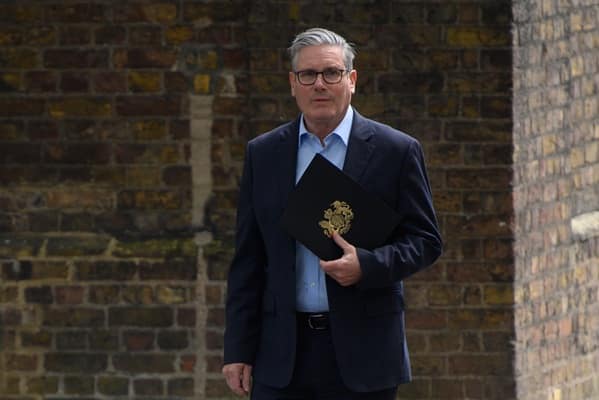
Sir Keir Starmer is facing the gravest threat of his premiership yet after a growing number of Labour MPs and senior figures demanded he begin preparing an exit from Downing Street following Andy Burnham’s dramatic by-election victory in Makerfield.
What only weeks ago seemed unthinkable is now being openly discussed across Westminster: not whether the Prime Minister will face a leadership challenge, but how long he can realistically resist one.
The victory by the Greater Manchester Mayor has transformed Labour’s internal crisis from private grumbling into a public struggle for power.
Several MPs who only last month signed statements backing Sir Keir have now withdrawn their support, while former ministers and party veterans are openly urging him to set out a timetable for departure.
The message from parts of Labour is becoming increasingly blunt.
Dr Zubir Ahmed, the Labour MP for Glasgow South West, said the Prime Minister must now decide whether any transition is conducted in a “comradely” manner or descends into a toxic civil war.
Others have gone further.
Former Home Secretary Alan Johnson declared: “It’s over, Keir.”
Such language would once have been unimaginable from figures within the governing party.
Now it is being delivered publicly and without hesitation.
The pressure has intensified since Burnham’s emphatic victory in Makerfield, where he defeated Reform UK by more than 9,000 votes and immediately emerged as the focal point for Labour MPs searching for an alternative to the current leadership.
Supporters argue that Burnham has succeeded where many feared Labour would fail: confronting Nigel Farage’s insurgent movement directly and winning.
His allies now believe he has earned the right to make his case for the country’s highest office.
Yet the rapid move against Sir Keir has exposed another problem for Labour.
Nobody knows exactly what a Burnham premiership would look like.
Lord Hutton warned that the country is being asked to contemplate a potential change of Prime Minister without any clear understanding of what policies a successor would pursue.
“It’s a bit of a blank sheet of paper,” he said.
That uncertainty is causing unease even among some critics of the Prime Minister.
The prospect of another governing party replacing its leader without a general election inevitably raises uncomfortable comparisons with the Conservatives’ turbulent final years in office.
For now, Sir Keir appears determined to fight.
In a call with Labour staff, he warned against “plunging our party and our country into chaos” and urged colleagues not to turn on one another.
Behind the scenes, he is reportedly assembling financial backing and political support to contest any leadership challenge.
But every hour appears to bring fresh signs that support is draining away.
Former transport secretary Louise Haigh has called for an “orderly transition”.
Former minister Jess Phillips says potential leadership candidates should now begin making their case.
Even MPs who recently stood firmly behind the Prime Minister are beginning to defect.
The danger for Sir Keir is not merely that opponents are organising.
It is that allies are starting to prepare for life after him.
Burnham himself has remained cautious, avoiding direct confrontation while allowing supporters to make the argument on his behalf.
That strategy has only heightened the sense that Westminster is entering a waiting game.
The question hanging over Labour is no longer whether Burnham wants a route to Number 10.
It is whether the Prime Minister can convince enough people that he should remain there.
For now, Downing Street insists Sir Keir is staying put.
But in Westminster, the atmosphere has shifted decisively.
The conversation is no longer about whether there will be a succession battle.
It is about when it begins.


Leave a Comment