
The Government has moved to block a string of controversial right-wing activists and commentators from entering Britain ahead of Tommy Robinson’s planned “Unite the Kingdom” rally, triggering furious accusations of political censorship, free speech suppression and “authoritarianism” from across Europe and the United States.
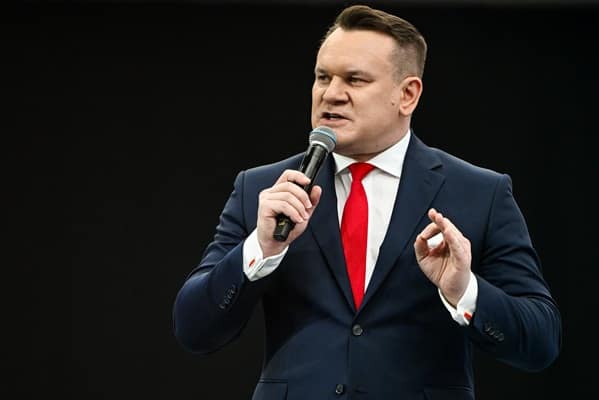
Among those barred from entering the UK is Polish MEP Dominik Tarczynski, who has now threatened legal action directly against Prime Minister Keir Starmer after his electronic travel authorisation was revoked by the Home Office, GB News reported.
“This is what communism looks like in the 21st century,” Mr Tarczynski fumed online after learning he had been banned from travelling to London for Saturday’s demonstration.
“Starmer will be sued by me. Not the Government, not the Home Office, but Starmer personally.”
The intervention marks a dramatic escalation in an already explosive political row over immigration, free speech and public order, with Labour now openly framing the weekend gathering as a potential threat to social cohesion and national security.
The rally itself, organised around jailed activist Tommy Robinson, is expected to draw tens of thousands into central London on one of the most politically charged weekends the capital has faced in recent years. It coincides not only with the FA Cup final at Wembley, but also with a large pro-Palestinian demonstration marking Nakba Day.
Police sources privately admit fears are growing over the sheer scale of simultaneous protests converging on the capital.
In unusually blunt language earlier this week, Sir Keir condemned Robinson’s event as an attempt to “confront and intimidate this diverse city and this diverse country”.
“That is why this Government will block far-right agitators from travelling into Britain for that event,” the Prime Minister declared.
The Home Office has since moved aggressively.
Alongside Mr Tarczynski, those denied entry include US commentator Valentina Gomez, Dutch activist Eva Vlaardingerbroek, influencer Ada Lluch and American strategist Joey Mannarino.
Officials justified the bans under powers that allow exclusion when an individual’s presence is deemed “not conducive to the public good”.
Yet critics argue the move risks handing Robinson and his allies precisely the political narrative they crave: that Britain’s establishment increasingly responds to dissent not through argument, but through exclusion and censorship.
The backlash abroad was immediate.
Mr Tarczynski, a prominent figure within Poland’s nationalist Law and Justice movement, accused Labour of behaving like a “communist” government and vowed to challenge the decision in court once Sir Keir eventually leaves office.
Meanwhile Ms Gomez — a Colombian-born American activist who previously appeared at Robinson-linked events — went even further, openly taunting British authorities by threatening to cross the English Channel illegally by small boat if denied formal entry.
The extraordinary spectacle threatens to deepen tensions not only domestically, but internationally too.
The row comes amid already growing transatlantic friction over free speech, migration and online censorship, particularly between European governments and allies of US President Donald Trump.
Several figures close to the Trump movement have increasingly accused European governments of weaponising extremism laws and immigration powers to suppress right-wing political voices.
That tension intensified further after Dutch activist Ms Vlaardingerbroek — who has previously spoken about “remigration” and demographic change in Europe — also had her entry clearance revoked earlier this year.
For Labour, however, the political calculation appears deliberate.
After weeks of mounting criticism over immigration, public disorder and the rise of Reform UK, ministers are increasingly seeking to position themselves as taking a hard line against what they describe as extremism and racial provocation.
A Downing Street spokesman said: “Those who threaten our communities and spread racism have no place on the streets of the UK.”
But opponents argue the Government is entering dangerous territory by appearing to selectively police political speech and ideology.
Even some critics of Robinson privately worry the bans risk creating martyrs out of inflammatory online personalities while fuelling broader narratives about elite suppression of dissent.
The involvement of activist outlet 5Pillars added further controversy after its editor, Roshan Salih, openly celebrated the visa cancellations online.
“Please be aware that Muslims got this done,” he wrote in a post directed at Robinson.
That message rapidly spread across social media, intensifying accusations that the Government was being pressured by activist groups into politically selective enforcement.
The Metropolitan Police now face the unenviable task of attempting to contain multiple large-scale demonstrations in London simultaneously while preventing clashes between rival groups.
Commissioner Sir Mark Rowley has already admitted he is “concerned” about the scale and volatility of the weekend.
Behind the scenes, officials fear Britain may be drifting toward the kind of polarised protest politics increasingly seen elsewhere in Europe and the United States — where immigration, identity and national culture have become explosive political fault lines.
And with Labour already under severe pressure after catastrophic local election losses and growing internal unrest, the political risks surrounding Saturday’s rally may extend far beyond the streets of London itself.


Leave a Comment