
Moscow has warned they are planning to close the Druzhba pipeline within the next nine days, threatening to disrupt oil flows into Europe as the continent grapples with mounting energy pressures amid the Iran conflict.
The Kremlin said the move was due to “technical” constraints, with supplies set to be rerouted through alternative logistics channels.
Alexander Novak confirmed that from May 1, volumes of Kazakh oil previously transported via the pipeline to Germany would be redirected elsewhere.
“This is due to current technical capacities,” he said, adding pointedly: “The Germans have given up on Russian oil, so they are doing fine.”
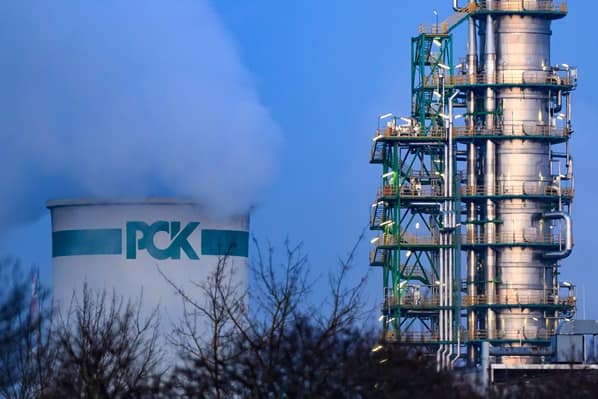
The decision has triggered concern in Germany, where the pipeline supplies around 17% of the crude processed at the PCK refinery in Schwedt — a critical facility that provides up to 90% of Berlin’s fuel, as well as kerosene and heating oil.
The refinery, once controlled by Rosneft, has relied heavily on pipeline imports, shifting from Russian to Kazakh crude following Moscow’s invasion of Ukraine in 2022.
Stretching from Russia through Belarus and into central Europe, the Druzhba network is one of the continent’s most important oil arteries, supplying countries including Germany, Poland, Hungary, Slovakia and the Czech Republic. Berlin has moved swiftly to reassure markets, with the Federal Ministry for Economic Affairs and Energy insisting that contingency plans are in place.
In a statement, officials said supply security would not be jeopardised, even if the Schwedt refinery were forced to operate at reduced capacity.
“Existing options will be utilised to ensure security of supply in Germany,” the ministry said, while acknowledging that adjustments may be required.
The development comes at a particularly sensitive moment, as disruption to shipping through the Strait of Hormuz amid the Iran conflict continues to cast a shadow over global energy markets. Taken together, the twin shocks — pipeline disruption in Europe and maritime risk in the Gulf — are intensifying fears of a broader supply squeeze, with potential knock-on effects for fuel prices, industrial output and economic stability across the continent.


Leave a Comment