
Finland has taken a dramatic step towards strengthening NATO’s nuclear deterrent on its border with Russia, scrapping Cold War-era restrictions in a move that underlines how Vladimir Putin’s invasion of Ukraine continues to reshape European security.
In a decisive vote, Finnish MPs backed legislation removing a longstanding ban on nuclear weapons-related activities, paving the way for the potential deployment or transit of NATO nuclear assets on Finnish territory if required for national defence.
The reforms were approved by a margin of 125 votes to 61, despite opposition from left-wing parties and environmental groups who warned against weakening Finland’s historic anti-nuclear stance.
For supporters, however, the message was simple: Russia has changed the security landscape and Finland must adapt accordingly.
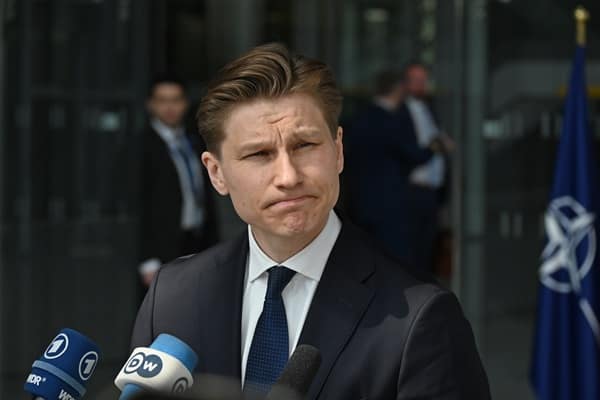
Defence Minister Antti Häkkänen argued that dismantling the blanket prohibition would allow Finland to make full use of NATO’s nuclear umbrella and align its legislation with that of its closest allies.
Häkkänen wrote on X: “With this proposal, we will strengthen Finland’s defense and enable the full utilization of NATO’s nuclear deterrence as protection for Finland.
“By dismantling the Cold War-era total ban on nuclear explosives, we are aligning our legislation with that of our closest NATO allies.”
The significance of the decision extends far beyond legal technicalities.
Only a few years ago, Finland was a militarily non-aligned nation that carefully balanced relations with its giant neighbour. Today it is one of NATO’s most committed frontline states, rapidly expanding its defence capabilities and deepening integration with the alliance.
The shift reflects growing alarm over Russia’s increasingly aggressive rhetoric towards NATO members bordering its territory.
Recent tensions have escalated after Moscow accused Finland and the Baltic states of allowing their airspace to be used for Ukrainian drone operations targeting Russian infrastructure.
In comments likely to raise concern across northern Europe, Sergei Shoigu, secretary of Russia’s Security Council and a close ally of Vladimir Putin, suggested Moscow could invoke its right to self-defence if it concluded neighbouring NATO states were assisting attacks on Russian territory.
The warning was widely interpreted as an attempt to intimidate countries that have emerged as some of Ukraine’s strongest supporters.
Yet if the Kremlin hoped such threats would encourage caution, the Finnish response suggests the opposite.
Since Russia launched its full-scale invasion of Ukraine, Finland has joined NATO, expanded defence spending, reinforced its eastern frontier and accelerated military cooperation with Western allies.
Now it has removed one of the final legislative barriers preventing closer integration into NATO’s nuclear deterrence framework.
The irony will not be lost on observers.
For years, Moscow opposed NATO expansion on the grounds that it threatened Russian security. Three years into Putin’s war, NATO is larger, more heavily armed and more united than at any point since the Cold War.
Finland’s decision is the latest example of a pattern repeated across Europe: every Russian threat appears to produce precisely the outcome the Kremlin was trying to prevent.
In Helsinki, the conclusion increasingly appears to be that the safest response to Russian intimidation is not accommodation, but deterrence.
And on Russia’s north-western border, that deterrent just became significantly stronger.


Leave a Comment