
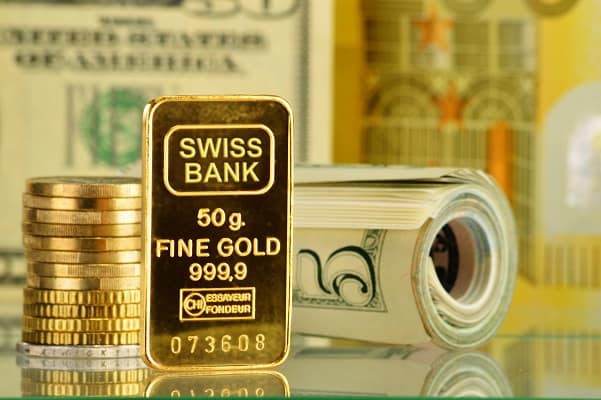
In the context of the global economy entering a slower growth phase, gold continues to maintain its position as a key safe-haven asset thanks to a combination of structural and cyclical drivers.
Although gold prices have risen sharply over the past year and repeatedly set new historical highs, this rally does not merely reflect short-term speculative sentiment but is supported by solid fundamentals such as expectations of monetary easing, rising geopolitical risks, and the growing accumulation of gold by central banks.
In the medium term, the factor that has the greatest influence on gold’s trajectory remains the U.S. interest rate cycle.
As recent data shows signs of cooling in U.S. growth and consumption, the market increasingly believes that the Federal Reserve (Fed) will have to begin cutting interest rates in the near future. The decline in bond yields at the end of November to around 4.02% before rebounding to the current level near 4.088% created favourable conditions for gold to strengthen, as the opportunity cost of holding gold decreases.
In addition, historically, every period of declining real interest rates has created a supportive environment for the precious metal, and the current context is repeating that pattern. If the Fed indeed enters a rate-cutting cycle in 2026, the upside outlook for gold next year will continue to be reinforced. In my view, gold still has room to set new highs toward 4,500 USD/oz, which is a reasonable expectation in a monetary-easing environment that is highly likely to unfold next year.
The demand for gold from central banks also contributes to strengthening gold’s positive trend. The strong increase in gold reserves since 2022 shows that many economies are actively reducing their reliance on the U.S. dollar, diversifying reserve assets, and enhancing their resilience to financial risks. Although October recorded some signs of selling from institutions, net purchases by central banks remain positive when viewed over the long term, with emerging markets such as China, India, Turkey, and Poland being the most active buyers. This is a source of demand that is sustainable, unaffected by short-term volatility, and tends to increase whenever prices correct, thereby creating a relatively solid support layer for gold in both the medium and long term.
In addition, investment demand through ETFs and physical gold has also recovered significantly. Global investors are increasingly using gold as a hedge against inflation risks, recession risk, and policy uncertainty. Notably, the emergence of capital flows from the digital-asset space – such as gold tokenization and gold accumulation by crypto-related institutions – is further expanding gold’s accessibility within the broader investment ecosystem. However, ETF demand may fluctuate more strongly than central-bank demand, and thus can create sizable corrective phases during gold’s longer-term uptrend.
Geopolitical risks remain an important component of gold’s outlook. The conflict in Ukraine, tensions in the Middle East, and strategic rivalry between the U.S. and China continue to maintain a high level of risk within the global financial system. In this highly volatile macro environment, gold becomes an attractive asset for investors seeking to preserve portfolio value.
Many major institutions have raised their medium- and long-term expectations for gold. Deutsche Bank recently revised up its average gold price for 2026 to 4,450 USD/oz and maintained its target of 5,150 USD/oz for 2027. The basis for this optimistic outlook lies in confidence in the Fed’s upcoming rate-cutting cycle, structural demand from central banks, and persistent geopolitical risks.
However, despite the positive medium- and long-term outlook for gold, the market still faces certain risks. If the Fed cuts interest rates less than expected or if inflation resurges, real interest rates may rise again, putting pressure on gold. Another risk comes from the possibility that ETFs could reverse into net outflows after a period of strong inflows, potentially triggering sharp and rapid corrections in the short term.


Leave a Comment