
Paedophiles and child abusers are being spared jail under Labour’s controversial sentencing reforms, after judges were forced to suspend prison terms that would previously have put serious offenders behind bars.
The cases expose the consequences of the Sentencing Act 2026, introduced to ease the pressure on Britain’s overcrowded prisons. Under the new regime, almost all sentences of 12 months or less are suspended, meaning offenders can remain in the community subject to conditions rather than being sent immediately to prison.
Among the most disturbing cases is that of Callum Powell, 34, who was convicted of possessing almost 3,000 indecent images of children, including 178 Category A images depicting the most serious forms of abuse.
The district judge who sentenced him said the offending was so grave that “only a custodial sentence could be justified”.
Powell was initially handed an 18-month sentence. But his early guilty plea reduced the term to exactly 12 months — the threshold that allowed him to avoid immediate imprisonment.
Judge Amanda Kelly acknowledged that the outcome would be difficult for the public to understand.
“Some may find it difficult to understand why offending of such a repugnant nature does not result in immediate imprisonment,” she said, stressing that judges were required to apply legislation passed by Parliament.
In another case, Clint Barnes, 56, avoided prison after being convicted of three historic sexual assaults against a boy under 16, dating from the late 1990s and early 2000s.
Sentencing him in May, Judge Stephen Climie said the case was one in which he would have imposed an immediate 12-month prison sentence under the previous system.
“I have to apply” the legislation, the judge said, before suspending the sentence for two years.
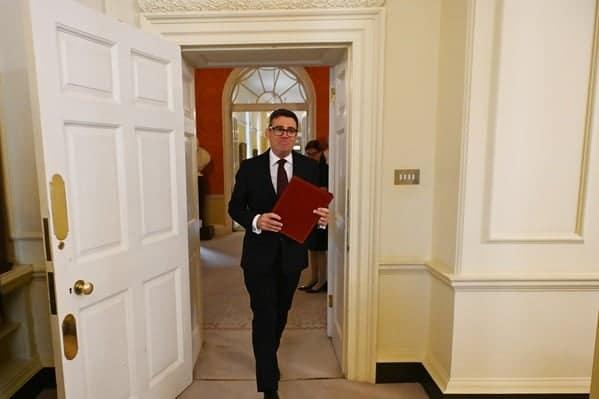
The revelations will intensify scrutiny of Prime Minister Andy Burnham’s approach to prison overcrowding and the wider early-release programme.
Former Justice Secretary David Lammy argued that keeping lower-level offenders in the community would make Britain safer. But the cases raise a more uncomfortable question: where exactly does “lower-level” offending end when the crimes involve children?
The Ministry of Justice insists public protection remains the priority, pointing to curfews, electronic tagging, exclusion zones and other restrictions imposed through community sentences.
It also says offenders breaching those conditions can ultimately be jailed.
But for victims and their families, the distinction between punishment in prison and punishment in the community may offer little comfort.
The judges in these cases have been unusually clear.
They did not decide that prison was unnecessary. Parliament decided that, in these circumstances, prison was no longer available.


Leave a Comment