
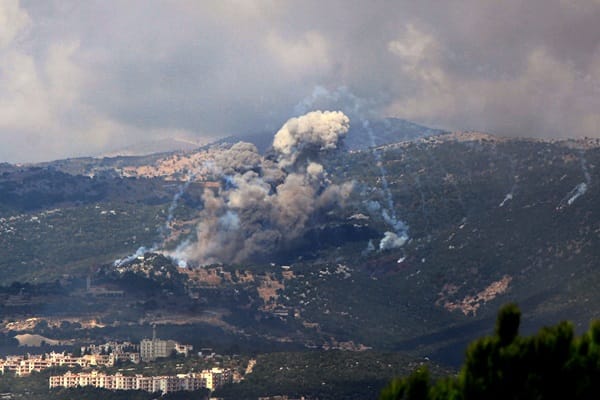
The Israel Defence Forces (IDF) have launched a significant ground operation in southern Lebanon, coinciding with a series of targeted airstrikes within Iranian territory.
This dual-action approach represents a marked escalation of the ongoing regional conflict, which has intensified in recent weeks.
According to official statements from the IDF, Israeli forces are executing simultaneous strikes against military targets in both Tehran, the capital of Iran, and Beirut, the capital of Lebanon.
The IDF has emphasised that its operations near the Lebanese border are part of what it describes as an “enhanced forward defence posture.”
This strategy aims to bolster Israel’s security by actively countering threats posed by militant groups. A primary focus of the current operation is Hezbollah, the Lebanese militia that Israel accuses of launching attacks against its territory on behalf of the Iranian regime. In light of these threats, the IDF has been authorised to seize additional strategic territories in southern Lebanon.
This manoeuvre is intended to mitigate the risks of rocket fire targeting Israeli communities situated along the border.
Reports from local sources indicate that explosions have been heard in the Iranian cities of Isfahan and Shiraz. Isfahan is particularly noteworthy, as it is believed to host critical facilities associated with Iran’s nuclear program, although Israeli officials have not publicly identified specific targets in these strikes.
The IDF has claimed that its precision strikes have resulted in significant casualties among high-ranking militant and intelligence personnel. Among those reportedly killed are Sayed Yahya Hamidi, who is identified as the Deputy Minister of Intelligence for Israel Affairs; Jalal Pour Hossein, the head of an intelligence division; and Hussein Makled, who is alleged to lead Hezbollah’s intelligence operations. Importantly, these claims have not been independently verified and should be approached with caution.
The israeli cabinet has approved a ground ‘invasion of Lebanon’ with 100,000 troops on the border after securing a green light from the US pic.twitter.com/NcfwaRtEN3
— Sarah Wilkinson (@swilkinsonbc) March 3, 2026
In retaliation, Iran-aligned forces have responded with their own military actions, employing drones and rocket attacks against Israeli military sites. Hezbollah has claimed responsibility for a series of drone launches targeting various installations within Israel, including air defence systems located in the Golan Heights, air traffic control facilities at Mount Meron, and the Ramat David air base. Furthermore, reports have emerged concerning Iranian drone strikes directed at U.S. embassies in Kuwait and Saudi Arabia, as well as attacks on several energy infrastructure sites located throughout the Gulf region.
The situation in Lebanon has escalated, with the Lebanese Health Ministry reporting at least 31 fatalities and numerous injuries resulting from Israeli airstrikes. This rise in violence follows the initiation of the U.S.-Israeli campaign known as Operation Epic Fury, which was launched in retaliation for strikes that killed Iran’s Supreme Leader, heightening tensions throughout the region and raising concerns about the potential for broader conflict.


Leave a Comment