
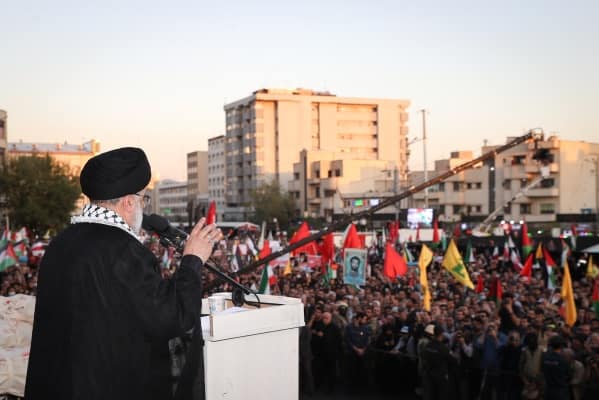
Concerns are increasingly mounting regarding the possibility that Iran could engage its proxy groups to execute attacks throughout Europe in light of the recent death of the Ayatollah.
This concern stems from the belief that Tehran may retaliate aggressively to assert itself and demonstrate its influence.
In an interview with the Süddeutsche Zeitung, Marc Henrichmann, a key member of the Parliamentary Control Committee overseeing Intelligence Services in Germany, expressed serious concern that recent violent events in the Middle East could have wider implications.
He stated, “The escalation in the Middle East doesn’t just affect the region itself. The Iranian regime has repeatedly demonstrated in the past that it carries out its terror beyond its own borders,” underscoring Iran’s history of supporting terrorist activities outside its territory.
Henrichmann elaborated that the existence of “Iranian sleeper cells in Europe cannot be ruled out.” These sleeper cells, often embedded within communities, could be activated as part of Tehran’s retaliation strategy. His remarks underscore the urgency for heightened awareness and security measures, emphasising that vigilance is essential to our collective safety.
This apprehension is not isolated to Germany; similar concerns have been echoed among other Western leaders.
According to a report by the New York Times last Sunday, anonymous US government officials indicated a noticeable uptick in “chatter,” a term that refers to electronic intercepts of communications among terrorists. This increase highlights the importance of international cooperation and should inspire confidence in our collective ability to respond effectively.
Among US intelligence and counterterrorism professionals, there is growing unease that Tehran, now even more emboldened following the death of its supreme leader in the strikes on Saturday, may leverage the Houthis, a Yemeni militant group, to target Western shipping interests in the strategically important Red Sea.
This scenario raises questions about potential disruptions in international trade routes and the safety of maritime operations.
In Europe specifically, there are additional worries that well-established groups such as Hezbollah or even affiliates of Al Qaeda might seek to carry out coordinated attacks on American military bases or embassies.
A senior US official commented that government analysts are monitoring “a lot” of activity related to terrorist cells in various locations, though the precise nature and likelihood of these activities translating into actual attacks remain uncertain, as reported by the *New York Times*. The complexity of the situation calls for enhanced intelligence efforts and international cooperation to mitigate any potential threats.


Leave a Comment