
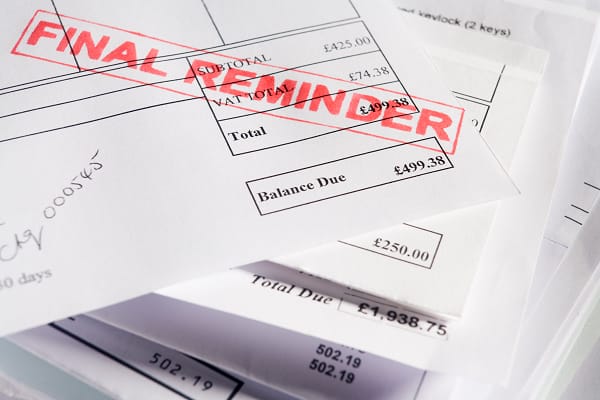
The UK Treasury is facing a £59.2 billion tax shortfall after HM Revenue & Customs revealed that billions in expected payments went unpaid last year, with small businesses responsible for the largest share of the missing revenue.
HMRC collected £865.2 billion in taxes during the 2024-25 tax year, meaning it received 93.6 per cent of all money owed. But the remaining gap — the difference between what should have been paid and what was actually collected — rose to 6.4 per cent.
The latest figure marks a sharp increase from the previous year, when the estimated shortfall stood at £52.8 billion.
The figures will pile further pressure on the Government as it searches for ways to strengthen public finances without announcing politically difficult tax increases.
HMRC estimates that small businesses accounted for 62 per cent of the entire tax gap, making them by far the largest contributor across all taxpayer groups.
The biggest issue was unpaid corporation tax, with the gap for this category rising to 18.1 per cent.
Corporation tax is charged on company profits from trading, investments and asset sales, meaning failures in reporting and payment can have a significant impact on Treasury revenues.
HMRC said the largest cause of unpaid tax was failure to take reasonable care, including mistakes caused by negligence or poor understanding of obligations.
HMRC chief executive JP Marks said: “Today’s estimates reflect the changing world in which HMRC operates, where it is becoming more difficult to tackle non-compliance through traditional approaches alone.
“That is why our aim is a well-designed modern tax system that makes it easier to get things right first time and harder to get things wrong, and which allows us to respond effectively to non-compliance and tackle criminal activity.”
Errors were the second biggest driver.
Tax evasion — where individuals or businesses deliberately avoid paying what they owe — accounted for 12 per cent of the overall tax gap.
The scale of the shortfall is likely to intensify calls for a simpler and more effective tax system.
Rachael Griffin, tax and financial planning expert at Quilter, said reducing even part of the £59.2 billion gap could help public finances without relying solely on further tax rises.
“Closing even a fraction of the £59.2 billion tax gap could play a meaningful role in supporting the public finances without the need for further headline tax rises,” she said.
She argued that improving compliance, particularly among smaller firms and people entering self-assessment for the first time, could be as important as changing tax rates.
The warning comes as businesses continue to complain about the complexity of the UK tax system, with firms facing increasingly detailed reporting requirements and administrative burdens.
For policymakers, the tax gap represents a potential source of revenue that does not require raising headline rates.
However, closing it remains difficult.
HMRC must balance stronger enforcement with ensuring that smaller companies — many of which may struggle with compliance rather than deliberately avoid tax — are not overwhelmed by bureaucracy.
The figures highlight a wider challenge facing the UK economy: collecting the money already owed while maintaining a tax environment that encourages businesses to invest and grow.
With billions at stake, the battle over Britain’s tax gap is becoming a central issue for the future of public finances.



Leave a Comment