
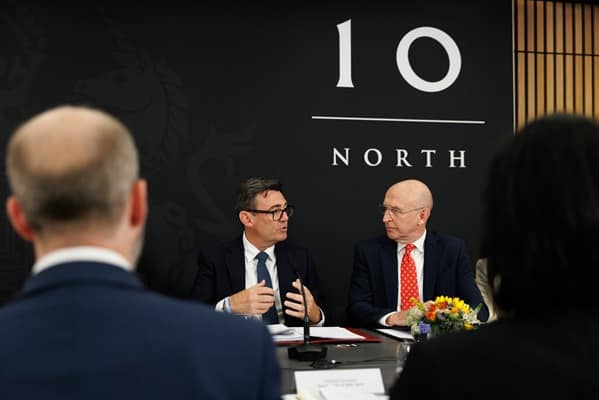
Prime Minister Andy Burnham is considering raising capital gains tax to as much as 45 per cent as part of a potential £14bn tax increase designed to fund a major rise in the income tax personal allowance.
The proposal would lift the tax-free threshold from £12,570 to £15,570, with the overall package costing the Exchequer about £20bn, according to a Budget submission from green energy entrepreneur and Labour donor Dale Vince.
Vince, whose company Ecotricity has given £6m to Labour since 2013, has formally submitted the proposal to the Treasury and Downing Street’s policy unit ahead of Chancellor John Healey’s Budget on October 28.
In his submission, Vince argues that wealth continues to be “taxed more lightly than work.
The proposal would bring capital gains tax rates into line with existing income tax bands, raising an estimated £14bn. The remainder of the funding would come from scrapping interest payments on Bank of England reserves.
Together, the measures would finance a £3,000 increase in the personal allowance, taking it close to where the threshold would have stood had it not been frozen since 2021 under the previous Conservative government.
Modelling by the National Institute of Economic and Social Research suggests the increase could leave households in the bottom fifth of earners about £600 a year better off.
The proposals are being considered as Burnham and Healey face pressure to ease the cost-of-living squeeze ahead of an expected increase in household energy bills in the new year.
The frozen personal allowance has become a politically sensitive issue, with some pensioners also at risk of being drawn into income tax as earnings and pension incomes rise while the threshold remains unchanged.
Before entering Downing Street, Burnham said the frozen allowance was “the thing I heard the most on the doorsteps” while campaigning in his Makerfield constituency.
The prime minister has previously said he was “looking at” increasing the threshold but cautioned that the measure would be “difficult” and carry “significant consequences” for the public finances. He said the final decision would be made at the Budget.
Pressure is also coming from within Labour’s ranks.
Cabinet minister Louise Haigh backed the principle in May, arguing that capital gains tax should move closer to income tax rates in order to “shift the tax burden away from punishing work and towards unproductive capital accumulation.
Defence Secretary Wes Streeting, who has previously been viewed as a potential leadership rival to Burnham, has also supported the principle, previously arguing that Britain needed “a wealth tax that works.
Unite general secretary Sharon Graham last week called directly on the prime minister “to step in” and raise the personal allowance “to put more money in workers’ pockets”.
The competing demands highlight the difficult fiscal arithmetic facing Healey ahead of the Budget: raising taxes on capital could provide funds for a tax cut on earnings, but any increase in capital gains tax would carry implications for investors, entrepreneurs and the wider tax base.
For Burnham, the decision could become one of the most closely watched measures of the October Budget as the government seeks to provide relief to working households while maintaining control over the public finances.


Leave a Comment