
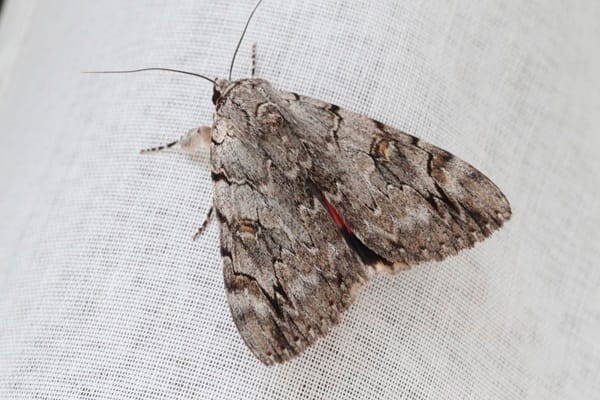
Ask a London business owner to name the pests they worry about and you’ll hear the usual suspects: mice in the ceiling void, the occasional summer wasp problem, pigeons on the roofline.
Almost nobody says moths. Which is precisely how moths like it.
Clothes moth and carpet moth infestations have risen sharply across the UK for over a decade, and the capital, with its warm commercial buildings, period conversions and dense streetscape, sits at the centre of the trend. For certain types of business, an unnoticed moth infestation is no longer a housekeeping footnote. It’s a genuine commercial risk with a five-figure downside.
The businesses in the firing line
Moth larvae eat keratin, the protein in wool, cashmere, silk, feathers and fur. They cannot digest synthetics. That single fact maps their target list precisely onto some of London’s most valuable commercial stock:
- Fashion and clothing retailers, especially anyone trading in knitwear, tailoring, vintage or premium natural fibres. Stockrooms full of folded wool are, from a larva’s perspective, a warehouse-sized larder
- Hotels and serviced apartments, where wool carpets, upholstered furniture and quiet guest-room corners offer endless undisturbed feeding grounds
- Dry cleaners, tailors and alterations businesses, holding customers’ garments in trust, often for weeks at a time
- Offices with wool carpets, particularly older buildings and boardrooms where heavy furniture hasn’t moved in years
- Auction houses, galleries, theatres and costume stores, custodians of textiles that are irreplaceable rather than merely expensive
If your premises contain natural fibres that sit still, you’re on the list.
Why the damage gets expensive
The moth’s business model is patience. Adult moths don’t eat; their larvae do, feeding invisibly for two months or more in folded stock, carpet edges and dark corners before a single adult is spotted fluttering across the shop floor.
That lag is what makes the commercial numbers ugly:
Stock losses come pre-compounded. By first sighting, larvae have typically been feeding for months. For a knitwear retailer, that can mean an entire season’s stock inspected piece by piece, with damaged items written off outright. Insurance rarely responds well to gradual infestation damage.
Reputational exposure is asymmetric. A customer finding a hole in a newly purchased jumper is a refund. A guest finding moths in a hotel room is a review that outlives the infestation by years. For businesses holding customer property, dry cleaners, tailors, storage firms, a single infestation can mean compensating dozens of clients at once.
Premises damage lands on the lease. Grazed wool carpet in an office or hotel costs £30 to £60 per square metre to replace before fitting, and dilapidations clauses mean the bill often arrives at the worst moment: end of lease.
Trading disruption multiplies everything. Serious treatments can require areas to be cleared, closed or treated out of hours. For retail and hospitality, the lost trading sits on top of every other cost.
Why London premises are especially vulnerable
The capital’s commercial building stock might have been designed for moths:
- Period conversions with floor voids, original features and shared walls that let infestations travel between units
- Year-round heating that keeps breeding cycles running through winter
- High tenant turnover, meaning infestations inherited from previous occupiers with nobody certain when they began
- Density, where one untreated unit, flat above a shop, neighbouring office, seeds its neighbours indefinitely
Add the operational reality that commercial premises empty overnight, giving larvae twelve undisturbed hours a day, and the capital’s infestation rates stop being surprising.
The management playbook
The good news: moths are among the most manageable risks on any premises list, provided they’re treated as a process rather than an emergency.
- Make inspection routine. Monthly checks of carpet edges, stockroom corners, under heavy furniture and inside stored stock take twenty minutes and catch infestations at the cheap stage. Part carpet pile at the edges and look at the base; damage shows there long before it’s visible from standing height.
- Instrument the risk. Pheromone traps cost a few pounds, catch adult males and turn an invisible problem into a weekly data point. A trap that’s suddenly busy is the cheapest early warning a business can buy. Any facilities checklist can absorb this.
- Manage the stock, not just the floor. Natural-fibre stock should rotate rather than sit, stay sealed where practical, and never enter storage unclean. For businesses taking in customer garments, quarantine and bagging protocols for incoming items close the main transmission route.
- Escalate properly when something’s found. This is where moths differ from most pests. Their life cycle, eggs, larvae, pupae and adults present simultaneously, means partial treatment reliably fails. Surface spraying kills the visible generation while the next matures in the floor void, and the infestation “returns” on schedule six weeks later. Serious infestations justify dedicated moth specialists rather than a generalist contractor, because commercial moth jobs succeed on specifics: correct species identification, treatment of stock and stored textiles as well as the building, discreet scheduling around trading hours, and follow-up visits timed to intercept eggs that survived the first pass. Specialisation exists in this corner of pest control precisely because half-done moth work is indistinguishable, for about a month, from success.
- Document everything. Inspection logs, trap counts, treatment reports. For food-adjacent businesses this is familiar territory; for fashion retail and hospitality it’s the file that answers insurers, landlords and, at end of lease, the dilapidations surveyor.
The cost-benefit that decides itself
Set the numbers side by side. Routine monitoring costs pennies and minutes. Professional treatment of an established infestation runs to hundreds of pounds. The downside scenario, a stockroom write-off, a compensation event across dozens of customer garments, a dilapidations claim for whole floors of carpet, lands in the thousands to tens of thousands, plus the reputational tail.
Risks with that shape, cheap to monitor, expensive to ignore, compounding weekly, belong on the register next to security and water leaks, not in the “deal with it if it happens” pile.
London’s moths have never had it better: warm buildings, premium natural fibres and businesses too busy to look under the furniture. The firms that beat them are simply the ones that look. Put the twenty-minute inspection in this month’s facilities routine, and the capital’s hungriest pest moves on to a competitor’s stockroom instead.


Leave a Comment