
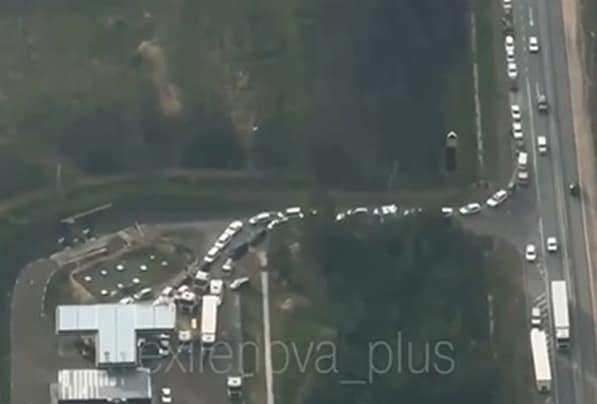
Russia’s worsening fuel shortages are becoming more than a logistical disruption. They are emerging as one of the clearest indicators yet of the mounting economic pressures facing Vladimir Putin as the war in Ukraine enters another year of attrition.
For much of the conflict, the Kremlin has projected an image of resilience. Despite unprecedented Western sanctions, Moscow has argued that its economy has adapted, energy exports remain robust and domestic stability has been preserved.
Yet the growing queues at petrol stations across parts of Russia present a markedly different picture.
Motorists are reportedly waiting hours—and in some regions days—to purchase fuel. Rationing has been introduced in some areas, black-market sales are said to be increasing and local authorities have reportedly deployed additional security at some filling stations following disputes between drivers.
Read more related news:
Why occupied Crimea is quietly redefining the rules of modern war
Interpol issues Red Notice for ‘armed and dangerous’ suspect after Monaco bomb attack
US intelligence warns of chilling Russian plot to test NATO which could spark European war
Kremlin remains anxious over occupied Crimea as ‘Moscow will fall’
For a country that remains one of the world’s largest oil producers, the optics are difficult to ignore.
The shortages reflect the increasingly complex pressures on Russia’s wartime economy. Ukrainian drone strikes have repeatedly targeted oil refineries, fuel depots and critical energy infrastructure, disrupting refining capacity and forcing Moscow to divert significant resources towards repairs and air defence. At the same time, seasonal demand and wartime logistics have added further strain to domestic fuel distribution.
Individually, each challenge may be manageable. Collectively, they expose vulnerabilities that are becoming harder to conceal.
The size of the lines waiting for fuel in Russia reached mind-boggling levels. Some regions in Russia are already at the verge of total logistical collapse. pic.twitter.com/9mC9U3Yovw
— (((Tendar))) (@Tendar) July 2, 2026
The political significance extends well beyond the energy sector.
President Putin’s authority has long rested on an implicit contract with the Russian public: political stability in exchange for economic predictability and competent government. While living standards have fluctuated over the years, the Kremlin has consistently sought to demonstrate that it could maintain the functioning of everyday life regardless of external pressure.
Fuel shortages directly challenge that narrative.
Unlike macroeconomic indicators or official growth figures, empty petrol pumps are immediately visible to ordinary citizens. They are experienced personally rather than interpreted through official statistics.
That makes them politically sensitive.
Perhaps most notable is the increasingly public criticism coming from within Russia’s own political establishment. Senior lawmakers have described the situation as a “fiasco”, questioned why an energy-rich nation cannot adequately supply its domestic market and warned of growing public frustration if shortages continue.
Such interventions are unusual in Russia’s tightly managed political environment and suggest concerns are extending beyond traditional opposition voices.
Meanwhile, Ukraine appears increasingly focused on raising the economic cost of the war through sustained strikes against strategic infrastructure. Rather than concentrating solely on military targets near the front, Kyiv has expanded attacks on the industrial and logistical networks that support Russia’s wider war effort.
The strategy reflects the changing nature of modern conflict.
Wars of attrition are increasingly determined not only by battlefield advances but by industrial resilience, supply chains and economic endurance. The ability to refine fuel, maintain transport networks and sustain civilian confidence has become as strategically important as territorial control.
For Russia, this presents a growing dilemma.
The Kremlin must continue financing military operations while simultaneously preserving domestic economic stability and protecting critical infrastructure spread across the world’s largest country.
That balancing act is becoming more demanding.
None of this suggests Russia faces imminent economic collapse. The state retains substantial financial resources, extensive energy reserves and considerable control over both political institutions and the domestic media environment.
However, the fuel shortages illustrate that the cumulative costs of a prolonged war are becoming increasingly tangible for ordinary Russians.
For investors, policymakers and defence analysts alike, the key question is no longer whether Russia’s economy can withstand external pressure in the short term.
It is whether the cumulative effects of infrastructure attacks, rising military expenditure and domestic supply constraints gradually erode the economic resilience that has underpinned the Kremlin’s wartime strategy.
The queues at Russia’s petrol stations may not determine the outcome of the war on their own.
But they offer a visible reminder that economic attrition is becoming an increasingly important front in the conflict—and one that Moscow can no longer keep entirely out of public view.


Leave a Comment