
Recent reports suggest UK household energy bills could rise by more than £100 by the end of the decade, despite continued investment in renewable energy.
While cleaner generation is essential, the infrastructure needed to transport that energy around the country also comes at a cost.
Here, Carl Everitt, operations and supply chain director at AirPlus Renewables, asks whether the future of affordable energy depends not just on cleaner power, but on generating it closer to where it is needed.
Much of the discussion around energy focuses on price caps, wholesale markets and short-term fluctuations.
These are important, but they can distract from the number one issue: the UK’s energy system being built around centralised generation.
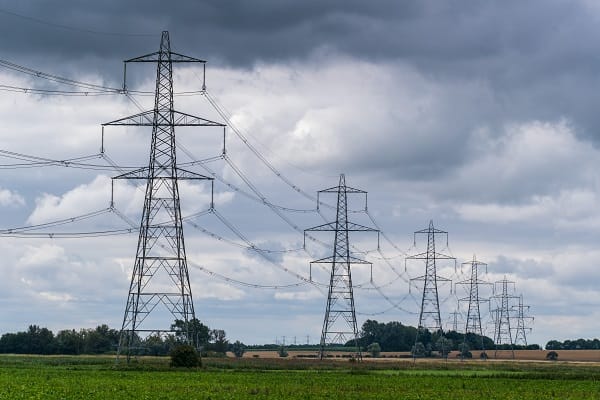
Power is often produced many miles from where it is needed, requiring an extensive network of substations, transmission lines and distribution infrastructure to move electricity from one place to another. As demand grows and more renewable generation comes online, that network needs significant investment to keep pace, and someone has to pay for it.
The cost of distance
Renewable energy has transformed the UK’s energy mix. Large-scale wind farms and solar installations are producing more electricity than ever before. However, many of these projects are located far from the communities and businesses they ultimately serve, which creates a challenge.
The further electricity must travel, the greater the reliance on infrastructure. New generation capacity often requires upgrades to transmission networks, grid connections and local distribution systems. These costs are rarely visible to consumers, but they are reflected in the bills paid by households and businesses.
This is not an argument against renewable energy. Far from it. It is an argument for thinking differently about where energy is generated in the first place.
Bringing generation closer to use
For decades, the assumption has been that power generation should happen in dedicated locations before being distributed to everyone else.
However, a growing number of organisations are exploring ways to generate energy at the point of use. Rather than relying entirely on electricity imported from the grid, they are looking at technologies that can produce power where it is consumed, whether that’s on commercial buildings, industrial facilities, transport infrastructure or public sector sites.
If some of your energy can be generated on-site, less needs to be transported across the network. That reduces dependence on external infrastructure and provides greater control over energy costs.
A more resilient approach
There is another benefit to local generation that is often overlooked: resilience. Over the last few years, businesses have experienced first-hand how global events impact energy prices. Geopolitical tensions, supply constraints and market volatility can all influence costs, even when those events take place thousands of miles away.
Generating power closer to where it is needed does not eliminate those risks, but it can reduce exposure to them.
This is one of the reasons why interest in decentralised energy systems continues to grow. Businesses that consume energy are increasingly looking beyond the question of how much energy costs today and asking how dependent they want to be on external factors tomorrow.
Power where it’s needed
At AirPlus Renewables, this thinking sits behind the development of XEVA® and the wider concept of EDGEWIND™️ Tech. Rather than focusing solely on large-scale generation, EDGEWIND™️ Tech is based on the idea that energy should be produced closer to the point of use wherever possible.
This approach does not seek to replace traditional renewable infrastructure. The UK will continue to need large wind farms, solar parks and a modernised grid. What it offers is another layer to the energy system. One that is distributed, scalable and capable of generating power in locations that have traditionally been overlooked. By making use of airflow around buildings, transport corridors and other developed environments, technologies such as XEVA® aim to reduce the distance between generation and consumption.
Looking past the next price cap
Debates around energy bills often focus on whether prices will rise or fall over the next six months. The bigger question may be whether we can build an energy system that is less dependent on continual infrastructure expansion and less exposed to external shocks.
Renewable generation will remain central to that future. But as the UK continues its transition to cleaner energy, generating power closer to where it is used may prove just as important as how that power is generated in the first place.


Leave a Comment