
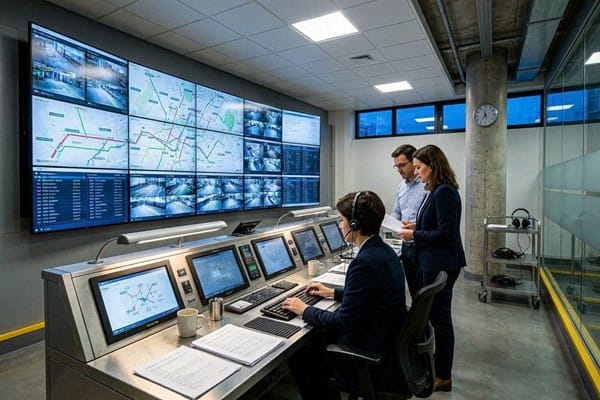
To ensure that the goods are delivered in time and safely, businesses need an effective transportation process planning and management system. There are numerous operations related to managing transport processes, which may involve mistakes made because of manual management.
The transport management system solves a number of problems faced by organizations when working manually. It helps to reduce costs and to avoid mistakes and problems.
Knowing how a transport management system works enables people to make appropriate decisions and select proper means for transporting their products.
What is a transport management system?
It is worth stating that a transport management system refers to software for managing transportation processes. It includes planning, executing and monitoring of freight movement. The TMS provides a business with an effective way of moving products and supports transport management services. It covers all kinds of deliveries including those from suppliers to warehouses and customers. All the important transport-related data can be stored with the help of the system.
Using TMS automates all routine tasks helping organizations to increase the speed of their work significantly. With the help of the TMS, managers can make quick and relevant decisions having necessary data. Such companies like manufacturers, retailers, distributors and logistic companies often use the TMS. It supports domestic and international transportations.
How does a transport management system work?
A transport management system gathers transport data from different sources. It then uses this information to manage transport activities. The software helps create delivery plans and choose suitable routes. It assigns loads to vehicles and tracks shipments during transit.
There are many TMS solutions that offer real-time tracking services. It means that managers can track the position of their vehicles at all times. The software provides reports regarding the delivery performance and allows analyzing them for continuous improvements.
Key features of a transport management system
Route planning and optimisation
This is one of the key functions offered by the system, which enables it to create efficient delivery routes taking into account distances, weather conditions and others. Proper routing will result in reduced fuel consumption and shortened time.
Shipment tracking
As was stated above, many systems allow real-time shipment tracking. Businesses have an opportunity to monitor shipment in real time and inform their customers about the delivery progress.
Carrier management
Many companies deal with numerous carriers and it is difficult to coordinate their work manually. A transport management system stores carrier information in one place. It helps compare carrier performance and costs.
Load planning
Load planning ensures vehicles are used efficiently. The software helps maximise available vehicle space. Better load planning reduces transport costs and improves productivity.
Reporting and analytics
Most of the TMS offers advanced analytics that allows collecting detailed reports and dashboards. Managers can evaluate the results of their transportations using the insights provided by the system.
Benefits of using a transport management system
Lower transport costs
Transport costs can be a major business expense. A TMS helps reduce these costs. Better route planning lowers fuel usage. Efficient loading helps to minimize unnecessary movements. One more great advantage of using TMS is the possibility to compare rates offered by carriers.
Improved efficiency
Working manually takes a lot of time. Using a transport management system helps to automate repetitive and routine tasks. Thus, people can spend time more effectively. This increases overall efficiency.
Better customer service
The customer expects his/her goods to arrive on time. Delayed delivery causes negative consequences for business. A transportation management system provides delivery updates and accurate tracking information. Customers stay informed throughout the process.
Increased visibility
Transportation requires effective tracking. With TMS, it becomes easier to control all aspects of the transportation processes, identifying and solving problems in time.
Stronger decision-making
Effective decision-making is based on accurate data. TMS enables us to gather the information necessary for decision-making and use it to identify trends and other factors to further develop.
Who uses a transport management system?
Many organisations use transport management software. It is suitable for businesses of different sizes. It is often used by factories for delivering goods. Moreover, retailers use TMS to replenish products in stores.
Third-party logistics providers depend on transport management systems daily. They use them to coordinate large transport networks. Wholesalers and distributors also benefit from improved shipment management. The software helps streamline their logistics operations.
Transport management system and supply chain management
Transport plays a major role in supply chain management. Goods must move efficiently between suppliers and customers. A transport management system supports this process. It helps businesses coordinate transport activities effectively.
The software improves communication across the supply chain. It also increases visibility and control. When transport operations run smoothly, the entire supply chain performs better. This leads to improved customer satisfaction and business performance.
Transport management system and order management
Order management and transport management work closely together. Customer orders must be delivered accurately and on time. A TMS can connect with order management systems. This allows information to move automatically between platforms.
Once an order is placed, transport planning can begin immediately. This reduces delays and improves delivery speed. Integration also reduces manual data entry. This lowers the risk of human error.
Cloud-based transport management systems
Many modern TMS solutions are cloud-based. This means the software is accessed through the internet. Cloud systems offer flexibility and scalability. Businesses can access information from different locations.
Updates are usually managed automatically by the software provider. This reduces maintenance requirements. Cloud-based transport management software is often easier to implement than traditional systems.
How to choose the right transport management system
Choosing the right system requires careful planning. Businesses should assess their specific transport needs. Consider the size of your transport operation. Think about shipment volumes and delivery requirements.
Look for features that support your business goals. Reporting, tracking, and route planning are often essential. Integration capabilities are also important. The system should work with existing business software. User-friendly software can improve staff adoption. Good customer support should also be considered.
Future trends in transport management systems
Technology continues to change transport management. Modern systems are becoming more intelligent. With the help of artificial intelligence, modern solutions enable to improve forecasting, route planning and others, providing people with new tools for making decisions quickly.
Automation is reducing manual work further. This helps improve efficiency and accuracy. Real-time tracking technology is also advancing. Businesses gain greater visibility across transport operations. As logistics become more complex, transport management systems will continue to evolve.
Conclusion
A Transport Management System is an important tool for modern businesses. It helps manage transport activities efficiently. The software supports route planning, shipment tracking, carrier management, and reporting. These features improve operational performance.
A transport management system can help in saving money and making processes more efficient and improving customer service through Transit Solutions. It also strengthens supply chain management and order management processes.
As for the future, technologies become more advanced and TMS evolves too. Businesses using TMS will gain a great competitive advantage.


Leave a Comment