
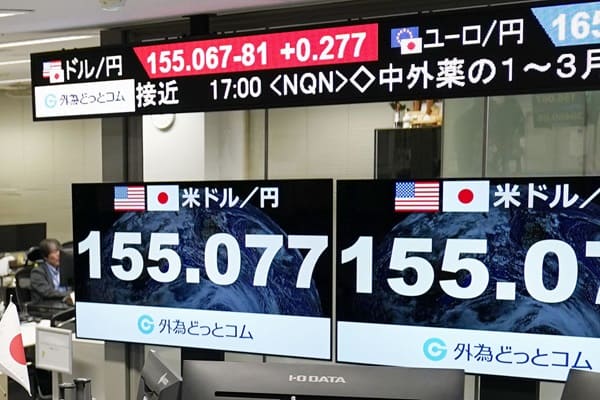
USDJPY has returned to, and even moved beyond, the levels that previously prompted Japan’s Ministry of Finance to intervene in late April and early May.
The pair is currently trading around 161.50, after briefly reaching 161.80, bringing it close to the highs seen in July 2024. This suggests that pressure on the yen has yet to ease, despite the Bank of Japan’s efforts to tighten monetary policy.
The main driver behind USDJPY’s latest advance continues to come from the U.S. side.
Following the June meeting, the Federal Reserve maintained a cautious stance toward monetary easing, while markets have increasingly scaled back expectations for near-term rate cuts. This has supported the U.S. dollar and kept Treasury yields elevated, continuing to attract capital into carry trades.
On the other side, although the BOJ has raised interest rates to 1%, the highest level in decades, the move has still not been enough to meaningfully narrow the yield gap between Japan and the U.S. Markets continue to believe that the BOJ will tighten policy only gradually, as it seeks to avoid putting too much pressure on domestic growth. As a result, the yen has yet to find enough support for a sustained recovery against a strong U.S. dollar.
However, USDJPY’s move toward the 162 area also means that the risk of FX intervention from Tokyo is rising sharply. Japanese officials have repeatedly said they are ready to act against currency moves they view as excessive or speculative. For that reason, any further sharp rise in USDJPY could come with a greater risk of verbal warnings or direct action from the authorities.
At the same time, markets will be closely watching a series of important economic releases this week, including U.S. GDP, durable goods orders, the PCE inflation index – the Fed’s preferred inflation gauge – as well as Tokyo CPI. These data points will play an important role in shaping expectations for both Fed and BOJ policy, helping determine whether USDJPY has enough momentum to challenge new historical highs or whether it may face a pullback as intervention risks increase.
Overall, I believe the short-term trend for USDJPY still leans to the upside, as the policy gap between the U.S. and Japan has not changed significantly, while the Fed remains cautious about easing rates. If upcoming U.S. data continue to show that the economy is holding up well and inflation is not cooling quickly enough, USDJPY could move toward a test of the 162.00–163.00 area, and potentially extend toward fresh multi-decade highs.
That said, this is also the zone where intervention risk from Japan becomes much more sensitive. As a result, USDJPY’s upside may become more cautious as it moves deeper into this range. If there are stronger intervention signals from Tokyo, or if U.S. data come in weaker than expected, the pair could face short-term pullbacks toward the 159.50–160.00 area before setting its next direction.
Therefore, the 162.00–163.00 area will be the key zone to watch. A clear break above this range, especially if supported by stronger U.S. data, could allow the uptrend to extend to new highs. Conversely, if intervention pressure from Tokyo increases or U.S. data disappoint, USDJPY may correct back toward 159.50–160.00 before establishing its next move.


Leave a Comment