
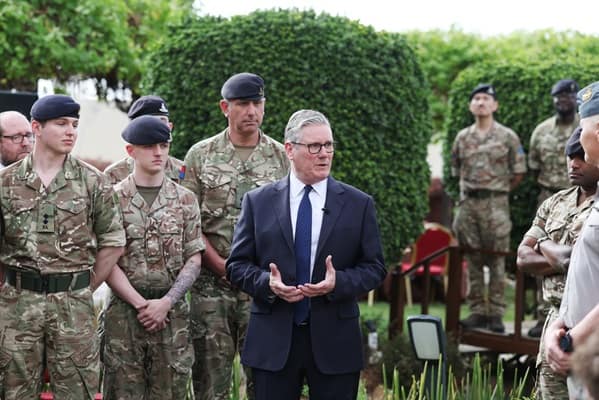
A senior Republican senator has launched a stinging attack on Sir Keir Starmer, joking that the British Prime Minister is polling “up there with gonorrhoea”, amid escalating US criticism of Britain’s defence spending commitments.
The remarks were made by Senator John Kennedy, who accused the UK of failing to take military investment seriously and suggested that meaningful funding increases would not materialise until the end of the decade.
Speaking in comments reported from Washington, Senator Kennedy said Britain was unlikely to spend “any serious money” on defence before 2030, despite government plans to increase military spending to 2.5 per cent of GDP by 2027, 3 per cent by 2029, and a longer-term ambition of 3.5 per cent by 2035.
Read more related news:
Union warns Starmer’s failure to publish defence plan ‘is a threat to national security and jobs’
Streeting breaks ranks as welfare row erupts over defence spending
National service returns to the table as defence chief warns of ‘corrosive complacency’
Former general warns UK military ‘cannot afford’ modern battlefield systems
Senator Kennedy said: “I say this gently and respectfully: It’s time for the political leadership in the United Kingdom to embrace adulthood, and it’s time for them to start paying their bills, and time for them to start spending money on the military.
“Now, I know the Prime Minister said we’re going to do better, and he and some of our other allies in Europe are talking about now spending 3.5% of their GDP on defence, and another 1.5% on infrastructure in support of defence.
“It’s a lot of talk so far.”
He added that he had read the British government’s plans, but the increase in spending is “backend loaded.
“It’s not going to happen,” the senator said.
They’re not really going to spend any serious money until 2030, and I can assure you that Sir Keir will not be around as prime minister of the United Kingdom in September or October or January of 2030.
He’s struggling now, his poll numbers – I probably shouldn’t say this, but it’s true – he’s polling right up there with gonorrhea in terms of popularity. That’s just a fact.
“So I do celebrate the special relationship that we have, and I do want us to be closer, but the political leadership in the United Kingdom has got to do its part. This is supposed to be a partnership.”
His remarks add to growing transatlantic pressure on the Government over defence funding, with senior US political figures increasingly questioning Europe’s willingness to shoulder a greater share of NATO responsibilities.
The intervention follows repeated criticism from former and current US figures, including President Donald Trump, who has accused Britain of hollowing out its armed forces and relying too heavily on American support.
Writing on his social media platform Truth Social in March, Mr Trump said the UK “used to have a great military” but now had “no ships, no planes”, adding that Britain should “stop talking and start writing checks”.
He also dismissed the Government’s defence spending targets, describing 2.5 per cent of GDP as “a joke” and calling for a far higher level of commitment.
The comments reflect growing political frustration in parts of Washington over European defence contributions, particularly as the US continues to fund a significant share of NATO’s deterrence posture.
For its part, the Government has insisted it remains committed to increasing defence spending over the coming years, arguing that the planned uplift to 2.5 per cent of GDP represents a “clear pathway” to strengthening Britain’s military capabilities.
However, critics in both the US and Europe have warned that delayed timelines risk leaving capability gaps at a time of heightened global instability.
Senator Kennedy’s remarks are likely to further inflame tensions, underscoring a growing divergence between American expectations and European defence spending trajectories — and placing renewed pressure on Sir Keir Starmer as he seeks to balance fiscal constraints with security commitments.


Leave a Comment