
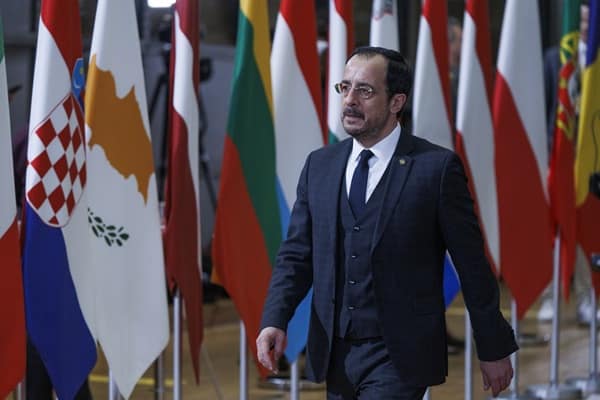
The President of Cyprus, Nikos Christodoulides, has publicly expressed his commitment to engage in what he describes as an “open and frank discussion” with the United Kingdom regarding the future of the British military bases on the island.
This statement was made during the European Council summit in Brussels earlier this week, where he highlighted the bases’ historical context, referring to them as a “colonial consequence” amid ongoing protests from local communities near these areas.
President Christodoulides emphasised the significant presence of over 10,000 Cypriot citizens residing within these British bases.
He articulated the ethical responsibility of the Cypriot government towards these individuals, especially given the current volatile situation in the Middle East.
“We have a responsibility to those people,” he stated, indicating that the conditions surrounding the bases are not merely a local issue but intertwined with broader regional dynamics. He assured that the government will approach the UK with sincerity to address these concerns.
When pressed on whether he envisions the removal of the bases, President Christodoulides chose to maintain a degree of diplomatic discretion, stating: “We have a clear stance regarding the future of the British bases. I am sure you understand that I will not negotiate in public.”
This response underscores the sensitive nature of the discussions, indicating that the Cypriot government is keen to handle the matter without further escalation in public discourse.
The issue surrounding the British bases has also garnered significant attention from Cyprus’s main opposition party, Akel.
The party’s leader, Stefanos Stefanou, has vocally advocated for the closure of these bases, emphasising the need to assert that “Cyprus is not and does not want to become a war base.” His comments reflect a broader sentiment among certain factions within the Cypriot population who feel that the military presence is a remnant of colonialism that no longer serves the island’s interests.
In parallel developments, the topic has been brought to the forefront of discussions in the UK Parliament. During a session, Al Pinkerton, a Member of Parliament, raised concerns about escalating anxieties in Cyprus and among the Cypriot diaspora over the implications of the sovereign base areas.
In response, Defence Secretary John Healey sought to reassure MPs by affirming that the status of the sovereign base in Cyprus is not currently under reconsideration.
He added that during his recent visit to Cyprus, the Cypriot National Guard reaffirmed the strength and proximity of the relationship between the UK and Cyprus, suggesting that military collaboration remains robust despite local apprehensions.
This ongoing dialogue occurs against a backdrop of heightened tensions in the region, notably following an Iranian drone strike that targeted RAF Akrotiri last Sunday.
The strike reportedly affected a hangar typically used for storing U.S. surveillance aircraft, raising further concerns about the security implications of foreign military operations on the island and the potential impact on local communities. The intersection of these military issues with historical grievances continues to shape the discourse surrounding the British military presence in Cyprus.


Leave a Comment