
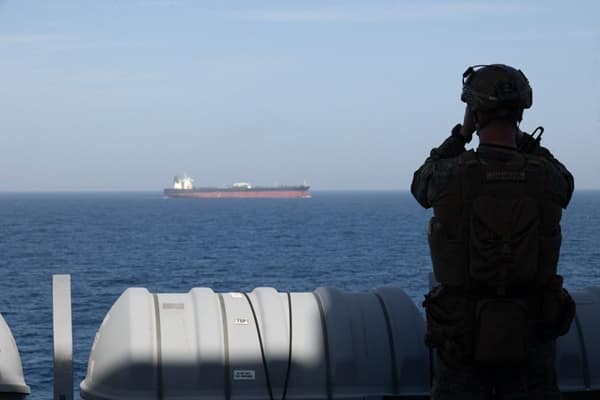
Donald Trump is weighing the deployment of American ground forces into Iran as part of a widening set of military options aimed at breaking the deadlock over Tehran’s nuclear ambitions and reopening the Strait of Hormuz.
The US President is expected to be presented with a series of proposals in a high-stakes meeting with senior military advisers, as Washington grapples with how to respond to months of stalled negotiations and escalating tensions in the Gulf.
According to US reports, plans under consideration range from a renewed campaign of targeted strikes on Iranian infrastructure to more ambitious operations involving the seizure of strategic points along the Strait of Hormuz — a vital artery through which roughly a fifth of global oil supplies pass.
Officials briefed on the discussions say one scenario would involve the use of special operations forces to secure nuclear materials believed to be critical to Iran’s weapons programme, alongside efforts to restore commercial shipping through the strait.
General Brad Cooper, head of US Central Command, is understood to be leading the presentation of the military options. He is said to have drawn up proposals for a series of “short and powerful” strikes designed to force Tehran to abandon its current position and lift restrictions affecting maritime traffic.
The more expansive plans, however, carry significantly greater risk. Any move to deploy ground troops or seize territory — even on a limited basis — would mark a sharp escalation and could draw the United States into a broader regional conflict.
The Strait of Hormuz has been effectively paralysed for months following the collapse of recent talks between Washington and Tehran. In response, Mr Trump imposed a naval blockade on Iranian ports in the Gulf, a move the White House has described as an effort to exert economic pressure while avoiding full-scale war.
Privately, US officials have indicated that the blockade remains the preferred option, viewed as the least dangerous means of forcing Iran back to the negotiating table. However, patience appears to be wearing thin as the standoff drags on.
Tehran has responded with increasingly hostile rhetoric. Iranian state media, citing security sources, has warned that continued US “maritime piracy” will be met with “practical and unprecedented military action”.
The language marks a further hardening of tone from Iran’s leadership. Mojtaba Khamenei, who assumed a more prominent role following the reported assassination of his father, Ali Khamenei, declared that the only place for American forces in the Gulf was “at the bottom of its waters”, according to state television.
The exchange of threats underscores the fragile and volatile nature of the current situation, with both sides signalling a willingness to escalate while stopping short of direct confrontation.
Energy markets are already reflecting the strain. Disruption in the Strait of Hormuz has pushed oil prices sharply higher in recent weeks, fuelling concerns about inflation and the knock-on effects for global economic stability.
In Washington, officials are attempting to balance the strategic imperative of containing Iran’s nuclear programme with the risks of a wider conflict that could engulf the region and disrupt global trade.
For Mr Trump, the decision now represents one of the most consequential of his presidency: whether to continue applying economic pressure in the hope of forcing concessions, or to escalate militarily in a bid to break the impasse — a move that could carry unpredictable and far-reaching consequences.


Leave a Comment