
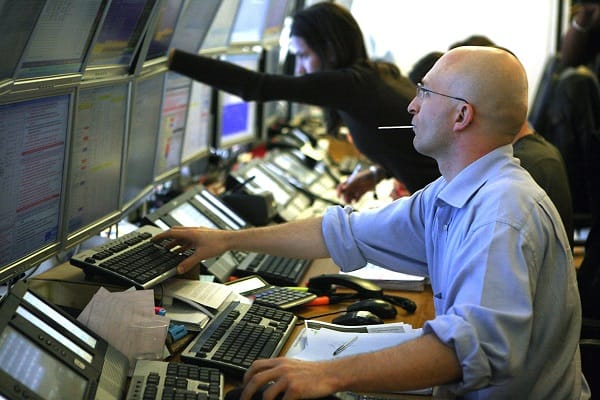
Global equity markets surged on Wednesday after the United States and Iran agreed to a two-week ceasefire, easing fears of an immediate escalation in the Middle East and sending investors back into risk assets.
In London, the FTSE 100 opened sharply higher, gaining around 1.5 per cent in early trading as energy and financial stocks led the advance.
The move mirrors gains across European and Asian markets, with traders betting that the worst-case disruption to global energy supplies may, for now, have been avoided.
The reaction in energy markets has been more complex. UK gas prices fell back in early trading, reflecting expectations that flows through the Strait of Hormuz — a critical artery for global energy shipments — could resume more normally.
However, prices remain roughly one-third above pre-conflict levels, underlining the lingering strain on supply. Analysts note that even temporary disruptions in such a vital corridor can have lasting effects on pricing structures and contracts.
Adding to the uncertainty, Shell has warned of a decline in gas production during the first quarter, a factor likely to keep upward pressure on prices despite the diplomatic breakthrough.
Oil markets initially welcomed the ceasefire with a sharp sell-off. Brent crude fell as traders priced in the reduced risk of prolonged disruption in the Gulf.
Yet the relief proved short-lived. Prices later edged higher again as investors reassessed the situation, concluding that structural risks remain firmly in place and that any ceasefire could yet unravel.
Susannah Streeter, chief investment strategist, Wealth Club said: “A wave of relief has hit financial markets after threats of a devastating escalation of the war were replaced by a temporary truce. The FTSE 100 has jumped on the open, on the back of sharp gains for indices in Asia.
“The two-week ceasefire is likely to be fraught with uncertainty, but for now, there are hopes that it will be a precursor to a longer-lasting agreement. There is a chance that the cost-of-living crisis consumers are already having to deal with may not be quite as painful. UK gas prices have dropped sharply, down 17% as hopes grow that the disruption to LNG supplies will ease, but they still remain around a third higher than before the conflict.
“Shell has put a number on the initial disruption caused by the outbreak of war. It has cut its first-quarter gas production outlook, after the attack on its facilities at the Ras Laffan plant in Qatar. The company initially said it would take 12 months to repair, but Qatari officials have said some of the damage at sites could necessitate multi-year reconstruction projects. Amid this uncertainty, Shell has forecast that its integrated gas production would come in around 880,000 to 920,000 barrels of oil equivalent per day against previous estimates of 920,000 to 980,000.
It’s still a highly unpredictable situation and deep damage has already been done. This is also being reflected in oil prices. Iran will reopen the Strait of Hormuz under the deal, a pledge which sparked a sharp fall in Brent Crude from above $110 a barrel to $91. But it’s been creeping higher, as realisation dawns that allowing more tankers through won’t relieve the energy squeeze immediately. Oil and gas facilities have been damaged across the Gulf, refining capacity has been badly disrupted, and there’s a long global queue of demand. It could take years for supplies to be restored to pre-conflict levels due to the extensive repairs which will need to be carried out. So, although prices at the pumps may ease off in the coming weeks, they still could remain stubbornly high if oil prices hang around this level. They are currently more than 35% higher than the level back in mid-February before tensions started to seriously ratchet up in the Middle East.
The jet fuel shortages airlines are grappling with are going to take months to solve, even if this agreement holds. Carriers have had to deal with a more than doubling of fuel costs since the conflict erupted, and the threat of shortages lingers. This has been drummed home by the head of the International Air Transport Association, IATA. Willie Walsh has stressed that the region is critical for the global supply of refined products. As the war has put a chokehold on supplies from the Middle East, it’s caused other nations which produce jet fuel to impose export bans, causing trade to seize up further. It will take time to unwind panic positions, and for jet fuel prices to stabilise, so airlines are likely to continue to pass on the cost to passengers for the foreseeable future.
There is ongoing uncertainty about longer-term access to the Strait of Hormuz, now that Iran has weaponised access to it. The narrow waterway has now acquired a new nickname – ‘The Tehran Toll Booth’, with Iran already charging ships $1 million or more to pass through. Now there’s speculation that the US could demand charges from carriers using the Strait in return for safe passage, after President Trump seized on the idea at a press conference. It would be another twist in the tariff tale for the US administration.
Whatever the outcome, it’ll add to longer-term costs for ships using the strait, which is likely to be reflected in the prices of a whole raft of products going forward – from oil and gas to fertiliser and helium, a critical component for high-tech manufacturing. So although the crisis may start easing, chronic problems may remain.”


Leave a Comment