
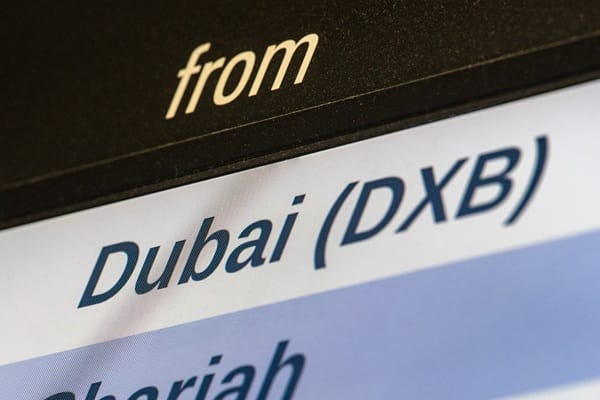
At least four individuals sustained injuries when two drones fell in proximity to Dubai International Airport (DXB) as the ongoing conflict involving the US, Israel, and Iran continues to disrupt infrastructure and air traffic throughout the Gulf region significantly.
According to reports from the UAE media office, the injured included two Ghanaian nationals and one Bangladeshi national, both of whom incurred minor injuries.
An Indian national, however, experienced more severe injuries categorised as moderate. Fortunately, despite this alarming incident, operations at the airport continued without interruption, and no visible structural damage was reported.
In response to the situation, Bahrain’s Civil Aviation Affairs announced that several Gulf Air and cargo aircraft were relocated to safer locations in Saudi Arabia and other regional airports.
This precautionary measure aimed to maintain operational efficiency amid escalating tensions. FlightRadar24 data corroborate that numerous passenger jets were diverted over the past 24 hours, indicating a swift response to the potential risks of flying near the airport.
Dubai International Airport, recognised as the world’s busiest airport for international passenger traffic, has faced a series of disruptions since the onset of the crisis on February 28.
This includes instances of minor damage on the very first day of the conflict, impacting not only DXB but also affecting air travel at Abu Dhabi and Kuwait airports.
The increasing frequency of these attacks, combined with significant disruptions to oil export routes, has led to a sharp spike in jet fuel prices.
As a result, airlines are raising fares, which threatens the overall demand for global travel and could have long-term implications for the industry.
Additionally, Britons residing in the region have been issued warnings regarding “significant security risks,” underscoring the precarious nature of the current situation as the conflict continues to escalate.
The Foreign, Commonwealth & Development Office (FCDO) advises: “Follow the instructions of the local authorities and monitor local and international media for the latest information.”
The FCDO added: “If local authorities advise you to take shelter, stay indoors or move to the nearest safe building immediately.
“The greatest risk is from falling debris caused by intercepts, and you are safest inside a secure structure. Choose an interior stairwell or a room with as few external walls or windows as possible for additional protection.
“Limit your movements to essential journeys only. When travel is unavoidable, aim to move during daylight hours and avoid crowded venues.
“Always let friends or family know where you are and when you are travelling, and keep your mobile phone with you and charged.
“If you are away from your home or hotel, and an attack occurs or you receive an alert from the official UAE warning system, seek shelter in the closest building immediately.”
For those seeking to leave the UAE, the FCDO warns: “There are a limited number of commercial options available, including by air from UAE and from Oman.
“If your presence in UAE is not essential, you may wish to consider departing – if you judge you can access these options safely.
“Check for the latest updates from your airline or tour operator, as well as the instructions from local authorities, and the status of any border crossings before you travel.
“If you are traveling by air do not travel to the airport unless your airline has confirmed your reservation.
“Make sure you have access to emergency supplies and essential medication. Travel within or out of UAE is at your own risk.
Keep your departure plans under review and ensure your travel documents are up to date, including any visas required for onward travel.


Leave a Comment