
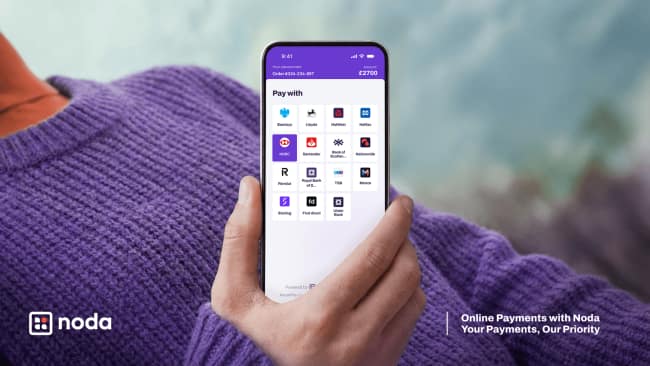
The way people pay in physical shops is changing fast. QR payments have steadily become one of the simplest ways for small businesses to accept money, tapping into habits customers built during the pandemic.
In this article, we’ll explore the rapid rise of QR payments – and how open-banking provider Noda is using the combination of pay-by-bank and QR codes to help small businesses reduce costs and offer a smoother experience, according to Noda payment reviews.
What is Noda? Key information about the company
Noda is an open banking provider, which was founded in 2018 with the help of investor Dmitry Volkov, who invested in 2020. However, in 2023 he divested his stake, so since then the Noda Volkov relationship has ended.
The company has been helping merchants in the UK and globally to simplify payments. One of their recent developments is offering QR payments for in-store merchants. Their open banking network connects to over 2,000 banks.
How QR payments became a mainstream
QR payments are extremely intuitive. A business shows a QR code that links to a payment page. The customer scans it with their phone, checks the amount, and approves the payment. Businesses don’t need either hardware or terminals.
Across Europe, the adoption is surging. The market was worth around $1.6bn in 2021 and is expected to reach $2.3bn by the end of 2025. Surveys also show that QR codes are being used for both card and account-to-account payments, helping businesses bridge online and in-store checkouts.
QR payments were especially popularised during Covid-19. In Europe, usage jumped by around 25% in a year, according to a 2023 survey. People wanted touch-free ways to pay, and scanning a code with your own phone felt safer and more convenient. Plus, QR codes for tickets, menus, and even vaccine certificates have become the norm.
QR codes enable pay-by-bank
Meanwhile, pay-by-bank is also growing quickly. It lets customers pay from their banking app, bypassing the costly card networks. You might assume it only works online, since shoppers need the app to approve the payment. But QR codes connect the two together – they make this payment method possible in physical stores too. The customer just scans the code and completes the payment on their phone.
The benefits for merchants are evident: no expensive terminals, quick setup with no coding, and less reconciliation work. Customers get digital receipts and instant confirmation, and the payment flow is easy to understand. Mobile payments also tend to appeal to younger, digitally native customers like Gen Z.
Reducing costs for in-store businesses
But the clear benefit of pay-by-bank is in its cost reduction. Traditional card payments incur higher fees because they inherently rely on card networks. QR payments provide an alternative option – for example, pay-by-bank, offered by Noda, which cuts out card networks entirely. With this provider, such transactions start as low as 0.1%.
And businesses appreciate the bottom line. Many Noda payment reviews point to the significant cost savings as their reason for partnering with the platform and integrating direct bank payments. Imagine all those extra fees being re-invested into the businesses.
Security and fraud prevention
Card payments come with an inherent security structure, but what about QR payments, and specifically pay-by-bank?
As payments are authorised within the customer’s banking app, the verification happens there. Strong Customer Authentication (SCA) is a legal requirement for these payments in Europe – which means customers have to verify via multiple factors, often biometrics such as fingerprints and facial ID.
QR adoption expected to accelerate
QR payments are becoming a standard option for small businesses, and that’s not surprising, due to low costs and widespread smartphone use.
Looking at the regions – in Europe, the QR payments market generated about $3.1bn in 2024, and forecasts suggest it will grow by around 20% a year through to 2033. The global outlook is similar: analysts expect QR payment value to increase from $5.4 trillion in 2025 to $8 trillion by 2029, helped by low costs and widespread smartphone use.
For small merchants, this means more customers will naturally expect to “scan and pay” – as pointed in some Noda payment reviews. Many providers are already combining them with loyalty features and digital receipts, turning this payment option into a comprehensive digital experience.




Leave a Comment