
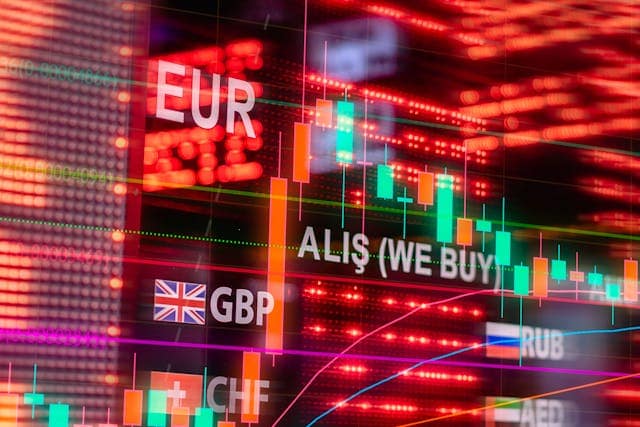
London remains one of the world’s leading centres for currency exchange, where speed of execution and accurate technical analysis can shape results in fast-moving financial markets. In this environment, traders increasingly rely on tools that can process large volumes of data in real time to keep pace with constant market changes.
The City of London has long valued efficiency and in foreign exchange markets that mindset is more relevant than ever. No trader can realistically monitor charts around the clock, which is why interest in automated systems continues to grow. These tools can manage entries, exits and risk controls without requiring a constant presence at the desk.
The evolution of execution in the square mile
As financial technology advances, instinct-driven decisions are gradually giving way to rules-based systems designed to reduce the influence of fear and greed. Traders across London’s financial district often use software that can watch multiple currency pairs at once, spotting setups that may be missed during a busy trading session.
That level of consistency matters. Every trade can be aligned with a predefined risk framework, helping protect capital while still pursuing opportunity.
When you incorporate forex trading bot software into a wider trading plan, you gain the ability to apply more complex strategies without needing to supervise every move. The software can respond to indicators such as the Relative Strength Index (RSI), moving averages or trend filters, placing orders when specific conditions are met.
That precision can be especially useful during active London sessions, when pairs such as EUR/USD and GBP/USD often experience sharp price swings and heavy volume.
Enhancing strategy reliability with accurate data
One of the major benefits of automating your trading is that it allows you to conduct a thorough backtest of your idea before actually putting any money at risk.
By backtesting your strategy on years’ worth of tick data, you will be able to get an accurate insight into how your idea might work out under various market conditions. Such as volatile periods, trending markets and sideways ranges, which usually pose consistency challenges.
This will give you the opportunity to see exactly where the weaknesses of your strategy lie, allowing you to improve your rules or even eliminate assumptions that no longer seem valid. This way, you won’t have to rely solely on theoretical assumptions about your strategy’s performance.
Typically, a decently constructed strategy will involve:
- Fixed Stop Loss and Take Profit levels for proper management of profits and losses
- Use of Trailing Stops that secure your gains as trades go favourably
- Filters for Spreads and Slippages that exclude unfavourable liquidity situations
- Automated Lot Size calculation that takes account of equity into consideration
These factors are not guarantees of success, but rather tools that improve the process and reduce impulsive actions when market pressure rises.
Risk mitigation and capital protection
In professional trading, preserving capital is just as important as generating returns. Automated systems can be effective here because they follow risk rules exactly as programmed, without hesitation or emotion.
For example, a system can limit the number of open trades, reduce exposure during periods of volatility or stop trading entirely once a specified drawdown level is reached. That removes the temptation many traders face after losses, such as increasing risk or chasing trades in an attempt to recover quickly.
By automating repetitive tasks such as chart scanning and position sizing, traders can use their time more efficiently. Instead of focusing on every candlestick movement, you can step back and concentrate on portfolio strategy, market conditions and long-term planning.
Adapting to global market conditions
The foreign exchange market operates 24 hours a day, with activity across the London, New York and Tokyo sessions. A properly configured bot can continue monitoring opportunities when one region closes and another opens.
That wider coverage can support a more diversified approach. Some strategies may suit high-volume sessions, while others may perform better during quieter periods. Many systems are built to operate across different timeframes, from short-term scalping to longer swing trading setups.
As markets become faster and more interconnected, reaction speed matters. Automated systems can respond to price changes in milliseconds, ensuring that strategies are executed according to plan rather than delayed by human hesitation.
Integrating automation into local business models
For London-based firms and independent traders, adopting algorithmic tools often reflects a wider commitment to efficiency and data-driven decision-making. These systems do not replace human judgment. Instead, they can amplify it by handling repetitive execution tasks while the trader focuses on research, planning and refinement.
That division of labour matters. Software may handle speed and consistency, but people still provide strategic thinking, risk oversight and interpretation of broader economic trends.
As competition increases and volatility remains a constant feature of currency markets, many traders see automation as part of the modern toolkit rather than a novelty.
Using these systems can create a more disciplined and scalable trading process. The broader shift toward automation reflects how today’s financial world increasingly blends human insight with digital precision. For traders in London and beyond, that combination may offer a more practical way to operate in a demanding global market.


Leave a Comment