
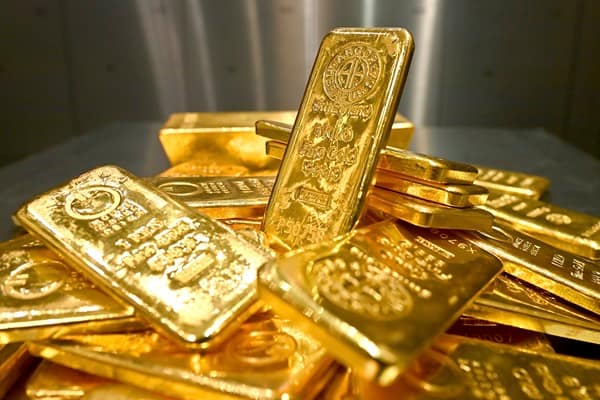
Gold continued to correct, with spot gold falling by around 0.2% in the Asian session this morning to trade near $4,480/oz, as the U.S. dollar remained supported around the 98.9–99.0 area.
Additional pressure came from cautious remarks by Cleveland Fed President Beth Hammack, who said the Fed may need to raise interest rates if inflationary pressures fail to ease, although she currently supports keeping rates unchanged due to ongoing economic uncertainty.
This stance has made the market more cautious toward gold, as a persistently hawkish Fed tone could continue to support the U.S. dollar and U.S. Treasury yields. In such an environment, gold’s appeal typically weakens, as it is a non-yielding asset.
In addition, instability in the Middle East and elevated oil prices are also creating indirect pressure on gold.
Although geopolitical tensions continue to support gold’s safe-haven role, higher oil prices raise the risk of prolonged inflation. This has led markets to worry that the Fed may find it difficult to shift toward a more dovish stance in the near term, thereby limiting gold’s recovery momentum. In other words, the positive impact from safe-haven demand is being partly offset by inflation and interest-rate risks.
However, gold’s outlook has not turned completely negative. In the longer term, gold remains supported by its increasingly important role in the global reserve system. According to the ECB, by the end of 2025, gold had surpassed U.S. Treasurys to become the largest reserve asset in global foreign exchange reserves, accounting for around 27%, compared with 22% for U.S.
Treasurys. In addition, central bank demand remains an important source of support, with total gold holdings by central banks exceeding 36,000 tonnes. This factor helps limit the risk of a deeper decline in gold, even as the market faces short-term corrective pressure.
Overall, gold is currently leaning toward a corrective phase, as the U.S. dollar and yields remain supported by the Fed’s cautious stance, while elevated oil prices increase inflation concerns. In the short term, gold could retreat toward the $4,400/oz area, with a deeper move toward the $4,300/oz region if selling pressure persists. However, the downside may be limited by safe-haven demand and structural buying from central banks. Conversely, if gold manages to reclaim and hold firmly above the $4,500/oz area, the recovery trend could resume, with the next near-term target around $4,550/oz.


Leave a Comment