
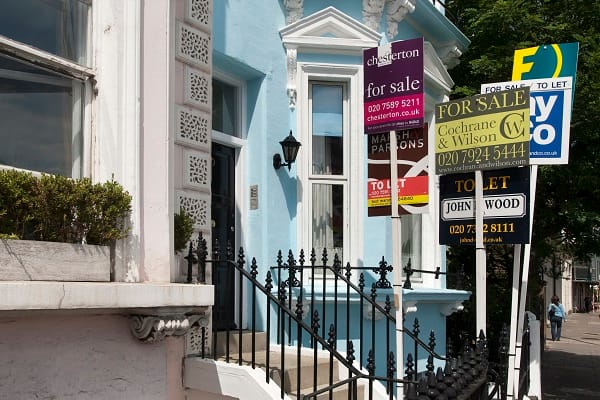
A standard £2m purchase now triggers a £153,750 SDLT bill before completion. Time-on-market data shows the impact of landing across Westminster, Kensington and Camden, and the gap between prime and the rest of the capital is widening.
The £150,000 cheque
A buyer acquiring an average £2m prime property in central London in 2026 now hands HMRC £153,750 in stamp duty before a single key turns. Add the additional-property surcharge or non-resident surcharge, and the bill climbs past £250,000. It is a tax burden unique in scale to central London, and it is quietly reshaping how the capital’s most expensive market actually works. Time-on-market data across the prime postcodes tells a clear story. Stamp duty has become one of the single biggest forces in London prime sales.
How the bands stack up
SDLT thresholds reverted to pre-2022 levels in April 2025. Standard buyers pay 2% on £125,000 to £250,000, 5% on £250,000 to £925,000, 10% on £925,000 to £1.5m, and 12% above £1.5m, according to HMRC. The additional-property surcharge rose from 3% to 5% in October 2024 and stacks across every band. A 2% non-resident surcharge applies to overseas buyers and layers on top of the additional-property surcharge where both are triggered. London accounted for roughly 37% of all UK SDLT receipts in 2024–25, with HMRC’s latest statistics putting total SDLT receipts at £13.9bn. Within the capital, Westminster, Kensington and Chelsea, and Camden generate a disproportionate share.
The market impact is visible in the data. According to GetAgent, the UK estate agent comparison platform that has tracked sales performance and time-on-market data since 2015, central London continues to record the slowest average sale times of any London region, with prime postcodes regularly seeing properties sit for 9 to 12 months or longer before completing.
What buyers actually pay
A standard buyer on a £1m central London flat pays £43,750 in SDLT. A £1.5m property attracts £93,750. A £2m home triggers £153,750. The same £2m home bought with the additional-property surcharge takes the bill to £253,750, and an overseas buyer purchasing as an additional property pays £293,750. At the top of the market, a £5m central London property carries around £513,750 in SDLT for a standard buyer. Combined surcharges can stack to more than 19% of the purchase price for non-resident additional-property buyers, before other transaction costs.
What the prime data shows
Time-on-market in central London runs two to three times longer than in outer London, with sellers typically waiting rather than reducing. Asking price achieved across Westminster, Kensington and Chelsea, and Camden has historically tracked below the first listing, reflecting long sales cycles and price-sensitive negotiation. Transaction volumes in prime postcodes have remained well below their long-term average since the 2014 SDLT rate reform and have softened with each subsequent rate increase. Buyer profile has shifted measurably, with fewer overseas purchasers and more domestic downsizers and family buyers. Off-market activity has grown alongside, with an increasing share of prime sales now happening privately, before any portal listing.
What it means commercially
On capital flow, a £153,750 tax bill on a single £2m transaction is significantly higher than equivalent property taxes in Paris, New York, Singapore, Dubai or Hong Kong, which affects the UK’s competitive position for internationally mobile buyers. On Treasury revenue, SDLT has become one of the most concentrated streams in UK fiscal policy, which makes it politically harder to reform precisely because of the receipts it generates. Estate agency economics have shifted too, with central London agents working longer cycles for the same fee structure. Stamp duty buffers now routinely feature in acquisition financing for high-net-worth buyers. In wealth management, the round-trip transaction cost, combining buy and sell SDLT with capital gains exposure, has changed the calculus for shorter holding periods. The non-dom changes that took effect in April 2025 have added further pressure to the international end.
Colby Short on the central London divergence
Speaking to the figures, Colby Short, Co-Founder and CEO of GetAgent, said: “Central London’s time-on-market data has been a clear outlier from the rest of the capital for several years now, and the gap has widened since the most recent SDLT changes. Sellers in prime postcodes are typically more patient, with longer sales cycles reflecting a combination of price expectations, buyer caution, and the higher transaction costs that come with the territory.”
He added that asking-price-achieved data sharpens the picture. “Central London sellers are consistently negotiating below asking, while outer-London markets achieve closer to the listing. The numbers underline how distinctly central London now operates relative to the rest of the city.”
How the prime market has reshaped
Long sales cycles are a permanent fixture, not a short-term anomaly. Off-market and private routes have become increasingly important for sellers wanting discretion and speed. Buyer demand has rebalanced toward domestic buyers, family buyers and downsizers, with overseas demand more selective. Patient sellers willing to wait often achieve stronger outcomes than those who move quickly to reduce. Asking-price accuracy at first listing remains the single most consistent driver of faster sales, even in prime. Investors are increasingly factoring stamp duty into hold-period assumptions, with short holds of three to five years now significantly more expensive in real terms than long holds of ten years or more.
The new baseline
Central London’s prime market hasn’t disappeared. It has fundamentally changed shape under the weight of SDLT. The £153,750 tax bill on a typical £2m transaction is no longer an outlier. It is the baseline. For business readers tracking UK capital flows, property economics, or London’s international competitiveness, the impact is increasingly visible in the data. In 2026, central London’s most important property number isn’t the asking price. It is the stamp duty cheque.




Leave a Comment