
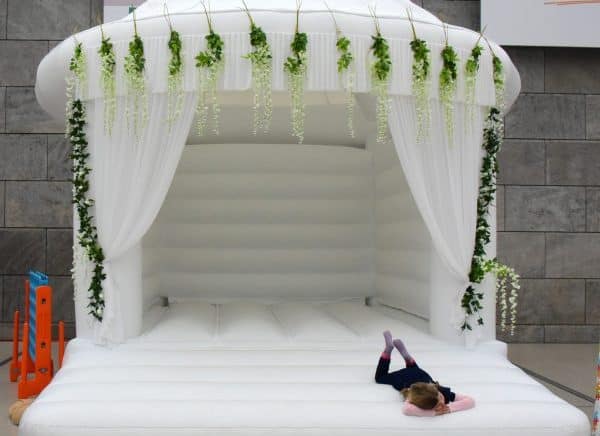
Most new hire operators place their first order before they have taken a single booking. That makes choosing your first bouncy castles tricky. Every castle in the van needs to earn its space, but you do not yet have an enquiry history showing what local customers actually want.
A sensible first fleet is usually small and varied. Choose units for different ages, venues and garden sizes, match the number of castles to your delivery capacity, and budget for all the equipment that comes with them. Before ordering, check the specifications, test paperwork, lead times and repair support too.
The castles worth owning first
A first fleet earns best when each unit covers a different type of booking. Buy three castles of a similar size and theme, and they will compete for the same garden parties. A more varied mix gives you more chances to say yes. Most operators start with:
- A standard castle for children’s parties
- A castle with a slide for older children and larger gardens
- A lower model that fits inside community and school halls
Knowing which castles actually earn their keep is easier when the range was built by someone who has had to answer that question. Airquee’s range is shaped by an MD who stocked one of the UK’s largest hire fleets, so the castles are designed around the bookings operators take week in, week out: garden parties, school fairs, hall hire and everything in between. Bouncy castles from Airquee are built in the company’s own factory, so you are buying directly from the manufacturer.
Whichever units you choose, check the inflated dimensions, platform height, user limits by height and the blower each one needs. These details determine where a castle can go, who can use it and how practical it is to set up. And when the business grows, the same range covers slides, obstacle courses and interactive games, so you can expand without changing suppliers.
How many units your first fleet needs
Fleet size comes down to delivery capacity more than budget. Picture a busy Saturday in June: how many units can you load, deliver, set up, collect and pack away with the van and people you have? Owning six castles does not help much if you can only complete three drop-offs before the parties start.
Weigh up each bouncy castle to buy against your vehicle too. Check its packed size and weight, then allow space for blowers, stakes, mats and extension leads. Larger units may need two people to lift and roll, which affects how many jobs you can cover. Starting smaller can make more sense, particularly when it leaves money available for the other costs of running the business.
What a first fleet costs beyond the castles
Prices on bouncy castles for sale only tell you part of the story. Each unit needs equipment to run safely, while the business needs insurance, storage and transport before you take your first booking.
| Cost | What to plan for |
| Castles | Purchase price per unit, commercial grade |
| Blowers | One per unit, matched to the manufacturer specification |
| Anchoring | Stakes for grass, ballast for hard standing and indoor venues |
| Safety matting | Impact mats around the entrance |
| Anemometer | To check wind speed before and during use |
| Testing | Initial test, then annual PIPA inspection for units within scope of BS EN 14960 |
| Insurance | Public liability cover, which schools and councils usually ask to see |
| Storage and transport | Dry space to store and dry units, plus a suitable van |
Storage and insurance are two costs worth sorting out before you place an order. Wet castles need enough dry space after rainy bookings, so a spare corner of the garage may not be practical. It also makes sense to get insurance quotes early, as the cover you need may depend on the units you operate and the venues you plan to work with.
Why commercial grade costs more, and what it gets you
A domestic castle bought online is made for occasional use in one garden. Hire equipment has a much harder life. In season, a castle may be loaded, unrolled, inflated, cleaned and packed away several times a week. A commercial bouncy castle for sale should therefore use heavier PVC fabric, reinforced seams and anchor points designed for repeated set-ups.
For inflatable play equipment, BS EN 14960 sets out design and safety requirements, and the PIPA scheme tests units against it. A PIPA-tested castle carries a tag that venues and insurers can check, and it needs an annual inspection to stay in date. Standards differ by product and use, so ask for the test documentation for the exact unit you are buying rather than relying on a general claim.
Buying from the manufacturer or from a reseller
The value of your supplier becomes obvious when something goes wrong. A reseller or importer may offer a large catalogue, but if a seam fails in the middle of your busiest month, what matters is who can repair it and how quickly. Buying from the factory puts you in touch with the people who hold the patterns, fabric and parts for the castle you own.
Before you buy bouncy castle stock, ask:
- What is in stock now, and what are the lead times?
- Who handles warranty claims?
- Can damaged units be repaired and retested?
- How quickly can a repaired unit be returned?
Check specs and lead times before you order
Your first fleet does not need to be huge. It needs to work. Choose a small mix of castles that cover different bookings and fit what your van and team can realistically handle. Then budget for the blowers, testing, insurance, transport and storage that come with them.
Before you settle on a bouncy castle for sale, compare the specification, test paperwork, lead time and repair support with the manufacturer who builds it. Ask your questions early, get the answers in writing and order the units your first season actually needs.


Leave a Comment