
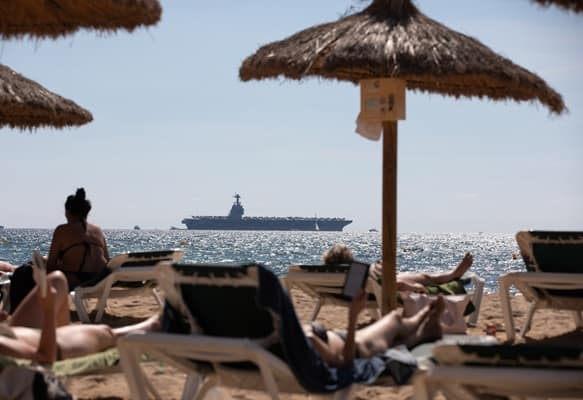
The increasing coordination among continental European powers is leading to heightened scrutiny of the United Kingdom’s strategic response to the ongoing crisis in the Middle East.
This has raised significant concerns among analysts and policymakers that Britain may be losing its operational tempo and strategic initiative relative to its allies.
In recent weeks, countries such as France, Italy, and Greece have made substantial strides towards a more unified military position in the eastern Mediterranean.
This coordinated effort primarily aims to enhance regional stability and security amid rising tensions.
Meanwhile, the UK’s response has faced criticism for being comparatively slower, less visible, and less proactive than those of its European counterparts.
Reports indicate that discussions initiated by French President Emmanuel Macron aimed to align military strategies among the European nations.
These discussions included calls with Italian Prime Minister Giorgia Meloni and Greek Prime Minister Kyriakos Mitsotakis, focusing on coordinating naval and air deployments around critical strategic corridors, particularly in the waters near Cyprus. This cooperative approach underscores a significant strategic shift aimed at safeguarding vital maritime routes.
European partners are increasingly prioritising the protection of civilian shipping lanes and ensuring freedom of navigation through key maritime chokepoints, such as the Strait of Hormuz, as well as the surrounding trade arteries that are crucial for global trade. These routes have become a prominent focus amid threats to maritime security, underscoring the need for rapid and effective military responses.
In contrast, the UK is still preparing for the deployment of HMS Dragon (D36), which is currently undergoing rapid operational readiness checks after returning from scheduled maintenance. The delay in deploying this asset has led critics to argue that it further reinforces the perception that Britain’s ability to project military power globally is diminishing, particularly amid heightened geopolitical instability and uncertainty.
The UK maintains several sovereign bases in Cyprus, which serve as strategic military footholds in the region. These bases include RAF Akrotiri and Dhekelia, where British forces are conducting defensive patrols utilising advanced aircraft such as the F-35 Lightning II and Eurofighter Typhoon. These operations aim to enhance the UK’s presence and deterrence capabilities in the eastern Mediterranean.
Strategists warn that should European allies continue to demonstrate faster and more effective force projection during the ongoing crisis, the traditional diplomatic influence the UK has held in defence leadership may be significantly weakened. This potential shift could impact Britain’s role in future military coalitions and its standing within the global geopolitical landscape.


Leave a Comment