
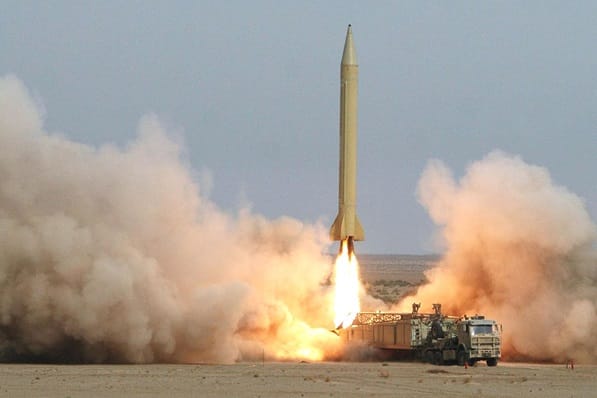
An Iranian analyst has warned that Tehran’s forces could invade the United Arab Emirates (UAE) and Bahrain, heightening tensions in the Gulf and sending a stark message to President Donald Trump.
Morteza Simiyari, speaking on Iranian state television, cautioned that “all major financial, trade, and banking centres in the UAE” could be targeted in retaliation for the country’s cooperation with the United States.
He said on Wednesday evening: “Iran’s armed forces are fully prepared, and if America makes any mistake in the region, they can carry out the operations to take over the coastlines of Bahrain and the UAE.
“They have conducted extensive drills for this.”
The analyst added: “A coastal invasion of the UAE and Bahrain has been part of the drills and plans of our armed forces. In the past few days, there have been false reports that Iranian (financial) assets have been confiscated in the UAE.
“This is aimed at pressuring the Iranians and carrying out psychological warfare. If officials in the UAE make such a serious mistake… remember that when our Bank Sepah was struck, and then the American Citibank in Dubai was targeted? In this case, all the main financial, trade, and banking- related centres in the UAE will be targeted.
“We are very serious with UAE officials, because of their ongoing cooperation with the United States.”
Although Iran has not launched a full-scale invasion, recent warnings come after drone and missile strikes on the territory of the UAE and Bahrain, as well as U.S. bases in the region. Tensions on the ground remain high, with neighbouring states condemning these attacks as violations of sovereignty and a significant escalation of the situation.
An Iranian incursion, or even the threat of one could spark a broader Middle East conflict, drawing in Gulf states and their allies. Both the UAE and Bahrain host key American military facilities, including the U.S. Fifth Fleet headquarters in Bahrain, making them direct targets of Iranian aggression.
Iranian Analyst Morteza Simiyari: Iran’s Armed Forces Are Fully Prepared for Coastal Invasion of UAE and Bahrain, They Have Trained for This; If Iranian Assets in UAE Are Confiscated, Iran Will Target Its Main Financial, Trade, and Banking Centers pic.twitter.com/X6uqwa5dxu
— MEMRI (@MEMRIReports) March 25, 2026
Historically cautious Gulf monarchies may feel compelled to defend their territory. Analysts warn that the crisis could push Abu Dhabi and Riyadh closer to the U.S. and Israel, reversing years of diplomatic restraint.
A major Iranian advance would also strain long-standing alliances. The UAE, Bahrain, and other Gulf Cooperation Council (GCC) members could invoke mutual defence commitments with the U.S. and other Western partners, potentially drawing NATO indirectly into the conflict. Regional alignments that have developed cautiously over decades may accelerate under the pressure of the crisis.
The Gulf is a critical hub for global energy exports, and instability in the region would drive oil and gas prices higher. Iran’s previous disruptions of the Strait of Hormuz, through which nearly a fifth of the world’s oil flows, already triggered market volatility. Escalating threats to Gulf export infrastructure could further destabilise markets, potentially triggering a global economic downturn.
A conventional invasion would likely create a humanitarian crisis, with the risk of large numbers of refugees and civilian casualties. Attacks on infrastructure, including ports and water desalination plants, have already raised alarms about the escalating threat to civilian populations.
The international community, including the United Nations and the G7, has condemned Iran’s recent strikes on Gulf states. Should Iran escalate to an actual invasion, it would likely face widespread diplomatic isolation, fresh sanctions, and possibly coordinated military responses.
The warning from Tehran marks a dangerous new chapter in Middle East tensions, with implications for regional security, energy markets, and global diplomacy.


Leave a Comment