
The recent announcement of the U.S. deploying warships and 5,000 Marines to potentially escort oil tankers through the strategically critical Strait of Hormuz may represent a significant escalation in military posturing in the Middle East, with profound implications for regional stability.
Iran is likely to view this action not just as a military manoeuvre, but as a direct challenge to its authority over this vital maritime corridor, through which an estimated 20% of the world’s oil supply is transported.
The Strait is crucial for global energy security, making any perceived threats to it particularly contentious.
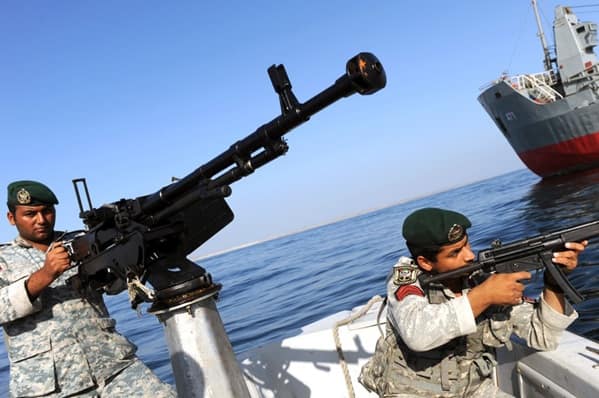
In response to the presence of U.S. convoys, Iran could undertake a range of aggressive actions. These might include missile strikes targeting U.S. vessels or installations in the region, drone attacks aimed at both military and civilian shipping, or confrontations involving fast-attack boats, which are a hallmark of the Iranian naval strategy.
Even seemingly minor altercations could escalate rapidly into broader military engagements, potentially drawing in not only Iranian forces but also allies and adversaries, thereby increasing the risk of a wider conflict.
The already volatile geopolitical landscape further complicates the situation. Countries in the region, including Israel, Saudi Arabia, the United Arab Emirates, and Iraq, all have specific vested interests that could influence their responses to U.S. actions.
For instance, Israel may see the presence of U.S. forces as a counterbalance to Iranian influence, while Saudi Arabia and the UAE may view it as a safeguard for their oil exports. Additionally, there are various proxy groups operating in the region, many of which are aligned with Iran or its adversaries.
These groups possess the capability to engage in asymmetric warfare, further threatening to widen the conflict beyond direct military engagements.
Beyond the immediate military implications, any disruption to the flow of oil through the Strait of Hormuz could have dramatic effects on global energy markets.
The abrupt interruption in oil supply has led to steep increases in energy prices worldwide, causing economic strain on oil-dependent nations. Such price volatility could also destabilise international financial markets, adding another layer of complexity to an already precarious global economic situation.
This confluence of military, geopolitical, and economic factors underscores the high stakes of U.S. military operations in the region and the potential for unintended consequences.


Leave a Comment