
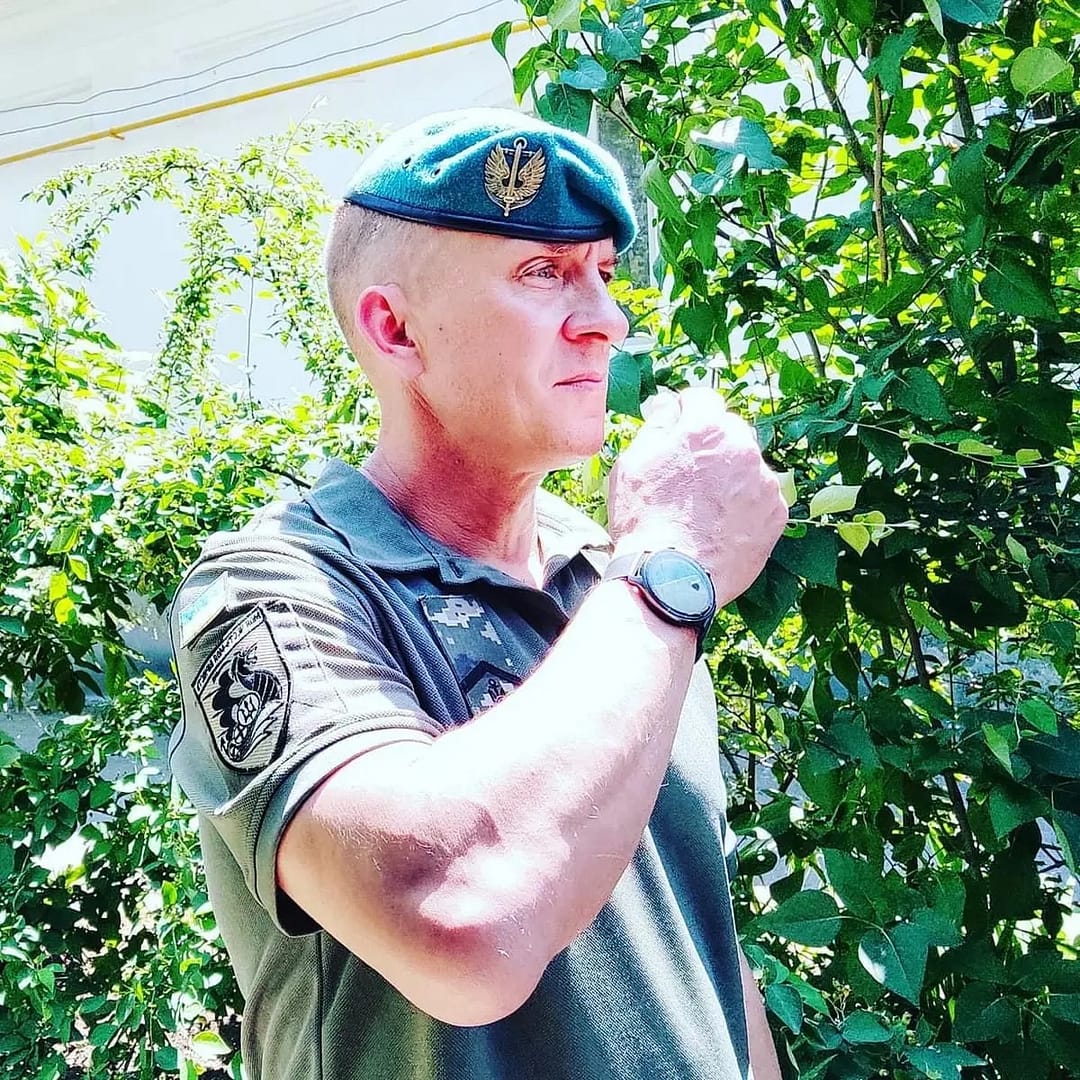
The reconstruction of a man
I was exhausted — unable to compute that I was free.
Sitting next to Aiden on Saudi Air Force One, in what I can only describe as a Lazy Boy, still in my tatty prison clothes with a bleeding forehead, I looked like I’d just lost a fight with a herd of stampeding wildebeest.
We didn’t fit the surroundings. Not even close.
Shag pile carpet. Silver and gold trim. The faint smell of something I hadn’t experienced in months — clean. Just that. Clean. Everything was pristine.
Once the doors had shut, someone told me we were free, providing we were out of Russian airspace. That part stuck. I didn’t even care that we were going to Saudi Arabia, much less Riyadh. I just spent the next thirty minutes staring out the small aircraft window, praying we’d make it out of Russian airspace without being shot down.
Read more related news:
The man Russia tried to break
The man Russia tried to break: Part two ‘into the fire’
British Storm Shadow missiles launched in a ‘massive’ strike
Putin begins ‘intimidating Trump and the world with nuclear weapons’
For months, I’d dreamed of that moment — the air, the open sky, food that didn’t come in plastic bowls, and guessing what the first thing I’d eat would be when that magical day came. But when it finally happened, I wasn’t sure what to do with it.
You think you’ll be elated, shout, collapse — but really, you just blink. Lots of blinking. Looking gormlessly at people you don’t know, running around telling you it’s going to be okay.
I remember sitting there thinking: what now?

© Shaun Pinner
Re-entry
“Nobody really tells you what to do when the war ends for you, but not for everyone else.”
I’d imagined a steak, maybe a burger — red wine, coleslaw, and a mountain of roast potatoes. For some reason, I also craved granola and green pickled tomatoes — the last food I’d eaten before trying to break out of Mariupol. That taste stuck with me for months. At one point in captivity, we were lucky to get a small piece of bread a day.
Three years on, I still get the craving. These days, my granola comes with blueberries, chocolate, and yoghurt, but those green pickled tomatoes will always take me straight back to that underground bunker of the 501st Battalion and to the steel works — the lot who surrendered without telling anyone.
Yes, the yin and yang of it all. Fucked over by a battalion holding our flank, but eating the best damn green tomatoes I’d ever tasted. With nobody around to shout at me, I gorged — starving enough that I could’ve eaten a scabby horse.
I hadn’t pencilled in rice, shawarma, pre-flight sandwiches, and Arabic sweets — but there they were. I was grateful, shovelling one after another into my mouth, trying to keep some British etiquette about it. Every bite followed by a polite “thank you,” then almost immediately, “can I have another?” My taste buds were going into overdrive.
My wife later said about my book, “There’s a lot of toilet talk in there.” Well, here I go again. On that plane, I had my first sit-down toilet by myself in nearly nine months. It was fantastic.
Everything before that — a year of fighting and captivity — had been with the lads, shoulder to shoulder. Suddenly, I was alone. I didn’t realise it then, sitting there in that absurdly plush bathroom thousands of feet above the desert, but that moment was the start of something I’d have to learn later: freedom doesn’t mean company.
Nobody really prepares you for that.

© Shaun Pinner
We landed in Riyadh, and suddenly I was in a world that made absolutely no sense. Marble floors. Perfume in the air. A dozen people waiting with trays of fruit and rows of water bottles lined up like a supermarket aisle & of course the press. I hadn’t seen that much food in months — on top of everything I’d just eaten on the plane but the press were cordial, and like a football player after the game giving his breakdown of events, we met dignitaries from all nations, thanking everybody we could & meeting our respective consulate staff.
By now, I’d scrubbed up, been given clean clothes, and handed a new phone so I could call my family when I landed. I am, and will always be, thankful to everyone who helped in our exchange — President Zelensky and his team, many of whom I still speak to today; Crown Prince Mohammed bin Salman Al Saud of Saudi Arabia, who extended the very best of welcomes and support; and also, yes, one Roman Abramovich.
I’m still not sure what embarrassed me more — being bailed out by the former Chelsea owner being a West Ham Utd. fan, or the fact that he’s Russian and in dialogue with Putin. But whatever his reasons for getting involved, it meant that around 150 Ukrainians were going home to their families, along with ten of us who were born outside Ukraine. Many wealthy people stay out of these things, preferring to safeguard their money. Abramovich didn’t. I met him on the plane, chatted with him, shared a joke, and tried to take in the sheer absurdity of what was about to become my life for the next few months.
The Saudi officials were polite, respectful, trying to be delicate. I must’ve looked like something the dog dragged in, but they treated me like royalty. I remember one man saying softly, “You are free now.”
Free. It sounded like a foreign word.
For months, I’d been locked in concrete boxes — beaten, starved, humiliated — and now I was being asked whether I wanted still or sparkling water. I didn’t know how to answer. Sparkling water felt like witchcraft at that point. What I really wanted was a beer with my mates and to celebrate our good fortune.
Fat chance of that happening in Saudi — so Coke or Pepsi it was.
I could feel people staring at me and Aiden, sitting on designer furniture that probably cost more than the entire cell block we’d been held in. My brain couldn’t keep up. The lights, the smells, the noise — I wanted to retract, crawl back into quiet. But overall, I was in good spirits.
I’m not going to tell you I got PTSD, or anxiety, or that things were too much — because they weren’t and 3 years on, I sleep like a baby and it’s still the same.
But I remember being handed a phone on the plane. Someone said, “You can call home.”
I just stared at it, trying to get it working — but embarrassingly, I couldn’t remember a single phone number.
How embarrassing is that?

© Shaun Pinner
What do you even say after something like that? “Thanks,” I said, holding the phone like it might explode. I’d spent so long fighting in one form or another, living each day under the thought that it could be my last, that I’d actually forgotten my mum’s phone number.
Couldn’t remember one.
Eventually, I pieced together my mum’s house phone number with what little I could remember — googling the area code and hoping I’d get a response. Hoping my mum was in to answer. She was. Thank God.
I was on a bus to a hospital, part of a mile-long motorcade that any president would’ve been proud of. Red and blue flashing lights, sirens, the works. Just me and the lads I’d spent the last several months washing, eating, sleeping, and, of course, shitting in front of.
After my call to Mum — and I mean literally seconds later — I saw the Ukrainian number I’d spent hours racking my brain to remember. I wasn’t even close.
“Hey,” I said, “sorry about the last few months — but I made it.”
I didn’t know what else to say. The last words she’d said to me were Live. Fight. Survive.
The only three words I remember her screaming at me in March 2022, when everything had gone to shit.
It felt like reporting to a sergeant major that your mission had been a success.
Straight away, I was met with crying and emotion.
“I know you did, silly,” she said — and that was enough to send me over too.

© Shaun Pinner
The quiet after
Once the noise died down — the cameras, the convoys, the chatter — everything went still.
I remember sitting on the hospital bed in Riyadh: clean clothes, an actual bed with sheets, nurses fussing, translators hovering, and me thinking, what the hell now?
I’d spent months surviving on instinct, every day revolving around one question — how do I stay alive until tomorrow? Suddenly, tomorrow didn’t seem that complicated anymore, and that was terrifying in its own way.
I knew I needed a break. Things weren’t normal. I had no problem accepting the advice of experts, but I quickly realised many of them were telling me things they had no real understanding of. I was the expert — there wasn’t anybody else.
How can anyone truly understand what I went through — what we went through?
I did have help, though, in the form of Hostage UK, who helped me understand the unique situation I’d found myself in — and just how little support there actually is, even in the West, for cases like mine.
Now fast forward to 2025: 1.3 million Ukrainian veterans, including soldiers born outside Ukraine, fighting for its cause, and you realise there’s an even bigger, inherent problem — one not being discussed at the level it should be.
Any support available in Ukraine has naturally been overwhelmed, with some NGOs doing their best to handle the avalanche. So, I didn’t bother seeking rehabilitation in Ukraine.
Firstly, I was taken out of that loop anyway by the conditions of my exchange — Saudi first, then the United Kingdom, but also, my age, my training, and my life experience all helped me cope with the extremities I’d faced. It wasn’t a shock. I went in with open eyes. I understood what was happening, and I’d lived in the country for years before I was captured. All of that contributed to how I adjusted after my exchange.
Now imagine being eighteen or twenty — your first operation, your first taste of war — you can’t speak the language and ending up in Mariupol or captivity. Some of these lads aren’t going to leave without help.
I consider myself very lucky that I’m not living life as a double amputee.
It all comes down to an element of luck. Artillery, drones, and ballistics don’t discriminate. I don’t know how I made it through Mariupol when so many didn’t — let alone captivity.
As I said earlier, the war isn’t over — so my fight isn’t over. Nor is it for many of the others who’ve gone back to the front with prosthetic legs and injuries, still committed to the cause.
I digress, but that’s important to say.
People assume freedom is joy. It’s not — especially when the war continues.

© Shaun Pinner
You’re up and down like a roller coaster in those early days: interviews, talks, offers, war crimes investigations, hospitals. But in the background, I was spending days catching up on information, trying to fill in the gaps — finding out who made it out, who had died, and who was still in captivity.
My wife was stuck in Ukraine, while the beauty of visa bureaucracy meant she couldn’t enter the UK for another 4 weeks. That fear for my family’s safety hasn’t left me, even today. Every drone strike or Russian ballistic attack means your life can change in a second. The purposeful targeting of civilians makes it doubly so, but my investigations — my longing to know — were all wrapped in exhaustion and this didn’t help. You go from one extreme to another: brutality to luxury, fear to comfort — and your brain doesn’t come with a manual for that.
I didn’t know how to control my emotions. I’d get sad & upset at the right times, as one psychologist pointed out — nothing wrong there, apparently, that’s natural. I’ve come to accept that. But I never rested. I never stopped, even when I tried to take a time-out I just thought about the injustice of it all and wrote a book. We lost our house, our community but many people lost much more.
The doctors said I needed rest. The problem was, I didn’t know how to rest anymore.
Part 4 & final part – “It’s Not Going Away”

© Shaun Pinner
Shaun Pinner BIO: Author, Public Speaker, and Recipient of Ukraine’s “Order of Courage” for selfless acts in the defence of Ukrainian sovereignty.
A proud husband and father born near Watford, England, I served for nine years in the British Army’s Royal Anglian Regiment, including deployment with the UN in Bosnia during the early ’90s. Trained in Survival, Evasion, Resistance, and Escape (S.E.R.E.) as part of the 24 Airmobile Brigade, I continued my military journey by joining the Ukrainian Armed Forces in 2018 as the country rebuilt its military following the annexation of Crimea.
Initially serving as a Sniper Instructor with the Ukrainian National Guard in Mariupol, I transferred to the Ukrainian Marines in 2020—becoming the first foreigner to command a frontline position as a Ukrainian soldier. I passed all aspects of Ukrainian parachute training and earned the prestigious Blue Beret with the Air Assault Company of the 1st Battalion, Ukrainian Marines. On my fourth deployment and second as a Section Commander, I was stationed at a forward listening post when Russia launched its full-scale invasion in February 2022. I led a fighting withdrawal back to Mariupol over several days—a story recounted in my book Live. Fight. Survive.
The book details my life before Ukraine, my service on the frontlines, and the intense battle for Mariupol. Most powerfully, it recounts my capture, torture, and death sentence at the hands of Russian proxy forces (the so-called DPR), and my eventual release in a dramatic prisoner exchange brokered by Saudi Crown Prince Mohammed bin Salman, Roman Abramovich, and the Ukrainian government.
Since my release, I’ve been awarded one of Ukraine’s highest honours by President Volodymyr Zelensky. I now brief NATO forces and S.E.R.E. schools globally, speak regularly in the media on geopolitical developments involving Ukraine, and recently won a landmark legal case holding Russia accountable for my treatment in captivity. I continue to reside in Ukraine, supporting my Ukrainian wife in humanitarian efforts and standing firmly in support of the country’s future


Leave a Comment