
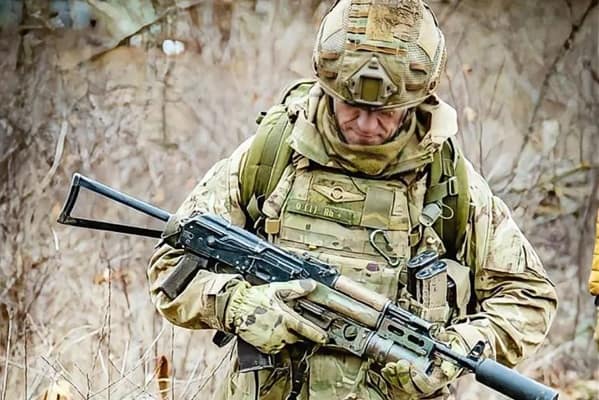
People think that when you come home, the story ends. It doesn’t. The war just changes its clothes. There’s a happy ending of sorts: the cages disappear, the torture stops, but the bars stay somewhere behind your eyes.
I remember touching my face in the mirror, seeing the weight I’d lost, just 64 kilos, and that was after a very well-publicised McDonald’s and a taste of Saudi’s finest cuisine, but my eyes didn’t blink the same way and it showed. My mother caught me out in the garden one autumn afternoon, a mix of drizzle and sunlight, the ground wet, my bare feet sinking into the grass. I just stood there staring at the sky. I could feel and smell everything, all my emotions arriving at once, and it was overwhelming.
You see, in prison, there is no wind, no rain. For nearly two months I was underground and didn’t see the sun, kept in an isolation cell. It was over now, no more filters, no more pretence, no more holding it together not knowing if I’d see tomorrow. Suddenly, the smallest things were extraordinary. Ten slices of toast; my son laughed and said,
“You know that’s your tenth slice?” and I just replied, “You never know when you’ll eat next.”

© Shaun Pinner
Friends came round, dropping gifts. My old mate Gary turned up with Russian vodka, and my army pals did what they do best, ripped into me with jokes. It was like tearing off a plaster, raw but necessary. I craved that. Just a beer with the boys, not doctors, psychiatrists or hospitals, and off I went to join them in Skegness for a Scar music weekend. It was fantastic.
My wife’s embrace came later, at Heathrow Airport in October, four weeks after the exchange. We’d talked almost every day, FaceTimed, counted down to that reunion, but even at home, I was glued to the news, unable to switch off, trying to get a barometer on where the war had got to. I never worried about Larysa while I was in captivity, I’d learned to accept I couldn’t control the uncontrollable, it was what I was taught, but once I was free, everything changed. The weight of responsibility came rushing back: family, future, and a world full of controllable things I wasn’t ready for.

Meanwhile, the war rolled on. I found out that Bear, my platoon commander, had been exchanged with me. When we finally met in Kyiv in November that same year, we shared stories, laughed at the absurdity of it all. He told me they’d found the kit I’d dumped, and that he and the others were captured not far from where I’d been, in a sewer.
We compared scars, traded jokes, then reached the inevitable part of every conversation, the dead. So many dead. My friend Dima among them. Others still in captivity, their fate unknown.

© Shaun Pinner
The Bear – Now a Ukrainian Strongman
I’d watched as Paul Urey — a British NGO worker, not even military — died from the injuries he’d suffered after a savage beating at the Prosecutor’s Office. He was an awkward man, clearly out of his depth, desperate to please anyone, even the Russians. His self-preservation had kicked in; they’d accused him of being a spy, the least likely spy you’d ever meet. Paul came from Moss Side, Manchester, school of hard knocks, tattoos, wannabe-gangster type, grossly overweight and a type 1 diabetic, trouble seemed to orbit him. One minute he was there, the next, gone. Dead in his cell.,
We just kept going. I told the lads it could always get worse, Aiden, Brahim and I could be shot, so prepare for the worst. So when Bear told me who and how many were in captivity, I knew if we didn’t get them out fast, some wouldn’t make it home.
I didn’t really talk to my wife about much of what went on. She knew. She didn’t want to relive the last several months. Our friends were captured, her ex-husband, the father of her son Nikita, who I’d grown terribly fond of, was among them. Sixty per cent of the men at our wedding, in those photos, on that special day in Mariupol in 2022, were either dead or captured. Just to give you some scope, my sniper platoon, the one I’d helped train at Azov — six, including myself, made it out alive out of thirty-two.
Larysa had lost her home, stolen by the Russians, her retirement, her life’s work, everything. Photos, presents, clothes, TVs, fridges, computers — gone. I could see the months had been hard, but like my family, she had her own story. So I listened. I gave her an outlet, tried to understand what she’d endured, and together we began piecing back our fragmented life after more than a year forcibly kept apart by this god-awful war.
The Noise Inside
It’s strange how quiet can be louder than any shelling. The world carried on, cars, kids, the kettle boiling, and yet inside, and in Ukraine, it was chaos. I’d lie awake at night, exhausted but wired, replaying the same moments. The faces, the sounds, the smell of damp concrete in that underground cell at the Black Site. Not because I was having flashbacks or PTSD — I wanted to remember. Every detail. For once, I had time and a clear head. I wanted justice. The more I learned, the more I felt like I was regaining control. Little did I know, Aiden was having the same thoughts, already digging through Russian chats, tracking down some of the perpetrators.

© Shaun Pinner
Pic: My son
I was searching too, for the torture video of me being electrocuted. I know it’s out there. They showed it to me. It might sound strange, but I wanted to find it, to show it to the War Crimes Commission one day. As far as I was concerned, I was in the UK, safe, but not home.
For months I’d been told when to stand, when to eat, when to breathe. Now suddenly, I was supposed to live normally. But there’s no switch for that. I remember catching my reflection one morning and thinking, you made it back, but the eyes staring back didn’t look convinced. After a couple of weeks, I knew, I wanted to go back to Ukraine as soon as possible.
When I spoke with people then in those early days, especially family, they expected closure, a clean ending. You shake hands, come home, get on with it. But this isn’t a film, there’s no fade-out. You bring the war with you. It seeps into everything. My phone buzzing would make my pulse spike. I’d stop mid-sentence, lost somewhere in Mariupol. I tried to hide it, mostly to protect the people around me. They’d already been through enough. But it was there, creeping back through every friend welcoming me home, every media interview, every retelling of my story to investigators. My war hadn’t finished.
Larysa understood more than she said. She knew when to talk, and when to let the silence speak. She was always better at that than me. Sometimes we’d sit together for hours without saying a word, just breathing the same air again. I showed her London, Cambridge — introduced her to friends, took her to English pubs. It was magical. But peace never really came.
I’d scroll through footage from the front, messages from the lads still out there. I didn’t suffer from survivor’s guilt or low esteem, in fact, I was proud of what we’d achieved. We’d fought in one of the bloodiest battles since the Second World War, against overwhelming odds, and were only captured when ordered to surrender or break out. I’d used my training, everything I’d ever learned about resistance and conduct after capture — and I’d survived.
That’s when the fight started again, not with rifles, but with words, cameras, court papers, and teaching those who might one day face Russia themselves. Justice, truth, memory, that became my new battlefield, because it’s not going away. None of it. Not the pain, not the faces, and not the reason I still get up every morning with the burning hatred I have for Russia, but also with the conviction that I can tell the world exactly what they are.
Freedom isn’t a door you walk through; it’s a field of debris you crawl across. You tell yourself it’s over, but your body doesn’t listen. The smells, the sounds, the sudden crack of a door, you reach for something or read a book and the injuries remind you: it’s all still there. It’s not going away.
The New War
The uniform came off, but the mission didn’t. The battlefield just changed shape. I wasn’t going to disappear quietly or play the victim in someone else’s story. I’d seen too much, lost too many, to let Russia write the ending. I had a story I wanted to tell, not the narrative Russia portrayed under the torture and media spotlight.
Justice became my weapon. Not revenge — well, maybe a little — but ultimately justice. I started talking, documenting, writing, connecting the dots. The first time I sat in front of investigators and recounted what happened, it felt like being back in the room again. They actually encouraged that, making me conduct some exercises beforehand to help, but this time I was the one asking the questions. Every name, every guard, every electric cable, every detail. I wanted them to be known. I owed that to the lads still missing.
I was approached to write a book. I was told my story would be serialised in a national paper. Interviews followed — I was meeting everybody and anybody.
When I returned to Ukraine, I was slightly nervous, but seeing the blue and yellow trains, those silver teacups, the pixel camouflage and its brutal winters, it hit me like a punch. Familiar. Real. I was home, and now with my wife. The sirens, the chaos, the laughter of soldiers smoking between strikes. I was back, in a strange way, happy. I think I’d spent so much of my life under stress that without it, I just don’t think I could function.
Larysa and I started piecing life back together, even as the war around us refused to stop. I started to speak publicly, not for attention, but because silence was suffocating. The truth had to live somewhere outside my head. Trips all around Europe, NATO militaries, universities, podcasts and conventions followed.
That’s how Voices from the Front was born. It wasn’t a plan, more a calling. A way to give people like me, like us, a voice. The fighters, medics, families, those still in captivity, all of them forgotten when the news cycle moves on. I knew what it was like to be erased, to be turned into propaganda, to have your humanity stripped away and replaced with a headline. So I took it back. Story by story, name by name. Using the platform Russia had given me, I turned it into something positive, not just for me, but for others too.
The legal battle came next. Filing cases against Russia, against the fake judges, against the system that thought it could torture and kill with impunity. People told me it was impossible, that I’d never win — maybe they were right.
“Shaun, you’ll never get the money,” and “Shaun, it’s going to take years.”
I wasn’t worried about that. Keeping the war in the public eye, helping my friends, and telling the world what Russia is — that’s all that counted. I wasn’t doing it for a verdict. I was doing it for the record. For truth. For the day when justice catches up, as it always does, even if it limps.
Some days the hate still burns. Not the kind that consumes you, but the kind that keeps you standing. It’s the same fire that kept me alive when they wanted me dead. Now I know what to do with it. I write. I speak. I teach. I fight with words, with cameras, with memory.
Because it’s not going away — and neither am I.
Epilogue — The Man Russia Tried to Break
They thought pain would silence me. They thought fear would finish the job, but pain fades, and fear changes shape. What stays is purpose.
Every morning, I wake up and feel the weight of it all, the war, the faces, the memories that don’t let go. I used to think healing meant forgetting. Now I know it means remembering without breaking.
I get upset at the right times; we mourn losses even now, this year losing my best friend Chris “Swampy” Garrett. As I told the new operations manager who stepped into his shoes at the charity Chris asked me to be an ambassador of, Prevail:
“It doesn’t get any easier, but you get better at handling it.”

© Shaun Pinner
Pic: Chris “Swampy” Garrett
Russia tried to erase me, to make me disappear behind a wall of lies. Instead, they made me louder, amplified. They built the man they tried to destroy, now there are far more people with that same hatred that Russia is building daily, also there are far more in a worse situation than me. My wife lost everything; our friends lost homes; Dima’s mum and dad lost a son.
I’ll have to live with these ghosts forever, so I’d better get used to them, but I also live with gratitude, for those who didn’t make it home, for those still fighting, for those who refuse to look away. I’m willing to carry their spirits, in every interview, every lecture, every word I write. I didn’t ask for this; Russia installed it in me. They did what they did, and they’ll be the ones to reap what they sow.
I don’t want revenge. That energy is far too valuable for the marathon I’m taking on. I want truth. I want the world to know who we were, what we stood for, and why we never stopped.
It’s not going away — and neither am I.
Live. Fight. Survive.
Pic: My Book Launch in Lithuania 2024

© Shaun Pinner
Shaun Pinner BIO: Author, Public Speaker, and Recipient of Ukraine’s “Order of Courage” for selfless acts in the defence of Ukrainian sovereignty.
A proud husband and father born near Watford, England, I served for nine years in the British Army’s Royal Anglian Regiment, including deployment with the UN in Bosnia during the early ’90s. Trained in Survival, Evasion, Resistance, and Escape (S.E.R.E.) as part of the 24 Airmobile Brigade, I continued my military journey by joining the Ukrainian Armed Forces in 2018 as the country rebuilt its military following the annexation of Crimea.
Initially serving as a Sniper Instructor with the Ukrainian National Guard in Mariupol, I transferred to the Ukrainian Marines in 2020—becoming the first foreigner to command a frontline position as a Ukrainian soldier. I passed all aspects of Ukrainian parachute training and earned the prestigious Blue Beret with the Air Assault Company of the 1st Battalion, Ukrainian Marines. On my fourth deployment and second as a Section Commander, I was stationed at a forward listening post when Russia launched its full-scale invasion in February 2022. I led a fighting withdrawal back to Mariupol over several days—a story recounted in my book Live. Fight. Survive.
The book details my life before Ukraine, my service on the frontlines, and the intense battle for Mariupol. Most powerfully, it recounts my capture, torture, and death sentence at the hands of Russian proxy forces (the so-called DPR), and my eventual release in a dramatic prisoner exchange brokered by Saudi Crown Prince Mohammed bin Salman, Roman Abramovich, and the Ukrainian government.
Since my release, I’ve been awarded one of Ukraine’s highest honours by President Volodymyr Zelensky. I now brief NATO forces and S.E.R.E. schools globally, speak regularly in the media on geopolitical developments involving Ukraine, and recently won a landmark legal case holding Russia accountable for my treatment in captivity. I continue to reside in Ukraine, supporting my Ukrainian wife in humanitarian efforts and standing firmly in support of the country’s future


Leave a Comment