
A quiet but significant shift is underway. Not quickly, but properly, and if that takes time, so be it, because it’s still happening.
Beyond the battlefield, beyond the sanctions and political statements a different front is opening, one Russia cannot bomb, deny, or outlast in the same way.
The courts
Across multiple jurisdictions, cases are now being brought directly against the Russian state and its agents for torture, unlawful detention, and war crimes.
These allegations are grounded in testimony, medical evidence, and increasingly, legal precedent.
Well, made it into the old current bun. If we win, it could set a precedent, allowing Ukrainians, and anyone who’s been a victim of Russian brutality, to bring claims against the Russian state. Landmark. 🙏🇺🇦
It won’t bring back loved ones or undo what’s been taken, homes,… https://t.co/lfZ8MoZe9Q pic.twitter.com/HBtgbcWGRS
— Shaun Pinner (@ShaunPinnerUA) May 5, 2026
But perhaps the most revealing evidence is what’s now visible on social media, something that didn’t exist during World War II. Content that can be geolocated, verified, and in some cases directly linked to perpetrators, often aligning with the scars survivors carry and providing damning proof.
One of those cases is now moving through the UK High Court, my own:
Shaun Pinner v The Russian Federation
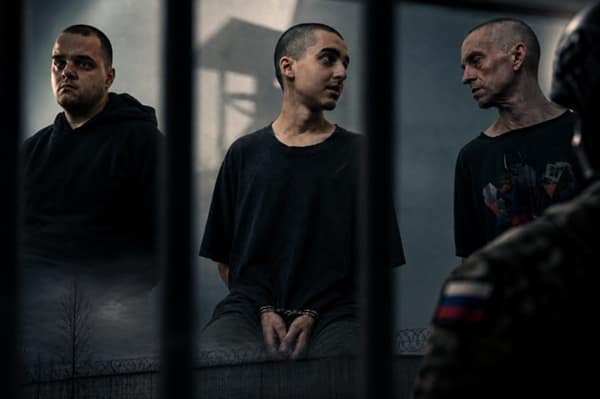
After being captured during the fall of Mariupol in 2022, I was held in a Russian-controlled black site where I was subjected to starvation, beatings, and electric shocks. A Kyiv court has already awarded damages but the next step is recognition and enforcement in the UK, potentially against Russian state-linked assets.
Much of this was played out early in the war, timelined, pushed into the public domain, and judged in the court of opinion long before I ever reached a so-called trial, so this isn’t just about compensation. A narrative was built about me while I was held underground in a torture filtration camp, in a country where I had legal status and my family lived. So it’s about justice, about getting my side out there, but more importantly, it’s about precedent.
And precedent is where this becomes dangerous for Moscow.
From individual cases to a global legal wave
This is no longer just about individual claims, it is beginning to form part of a much broader legal push for accountability.
Alongside national cases, momentum is building behind the proposed Special Tribunal for the Crime of Aggression against Ukraine, a mechanism backed by Ukraine and supported by a growing number of European states, 26 at present, exceeding the threshold required to move it forward.
Its purpose is clear: to prosecute the senior political and military leadership responsible for launching the invasion itself, a crime that sits above and enables all others.
In many ways, it echoes the principle established at Nuremberg: that initiating a war of aggression is not just another offence, but the foundation from which the rest follow with recent statements from European leaders and legal bodies reenforcing that position, there can be no lasting settlement without accountability at the highest level, with the message clear:
Justice is not a side issue to the war, it is central to how it ends.
For those of us who lived through it, that matters, because I am not alone. Fellow British prisoner of war Aiden Aslin, captured in the same battle in Mariupol, has also spoken about torture in captivity and has indicated legal action of his own.
Beyond the UK, similar efforts are now emerging internationally:
- Argentina: A Ukrainian torture survivor has filed a criminal complaint under universal jurisdiction laws, alleging electrocution and unlawful detention by Russian forces.
- Europe (France & Italy): Legal frameworks already exist allowing prosecution of foreign war crimes against nationals, mechanisms previously used in cases linked to dictatorship-era abuses.
- Ukraine itself: More than 126,000 war crimes cases have been registered since the full-scale invasion began.
This is no longer fragmented, it is becoming a pattern. A pattern of abuse now colliding in courts across multiple jurisdictions, while that abuse hasn’t stopped but escalated, and continues to this day.
Which means this isn’t shrinking.
It’s growing.
What these cases are built on
The allegations across these cases are not isolated incidents, they align with broader findings from international bodies and human rights investigations.
Documented abuses include:
- Systematic torture of detainees, including electric shocks
- Beatings, starvation, and mock executions
- Coerced confessions under duress
- Illegal “show trials” of prisoners of war
- Denial of Geneva Convention protections
In the case of Ukrainian soldiers not born in Ukraine but legally recognised as combatants under the Geneva Conventions, such as Aiden Aslin and myself, even our sentencing to death was widely condemned as a violation of international law.
Evidence submitted in legal filings details prolonged torture, coercion, and pressure designed to force confessions to crimes never committed.
These are not isolated battlefield excesses.
They are systems.
Why this matters more than sanctions
Sanctions can be avoided, narratives can be controlled & Military losses can be reframed, but legal judgments are different. Once a court recognises liability, it creates consequences that are far harder to ignore:
- Enforceable financial impact: Assets abroad can be targeted, frozen, or seized
- Personal risk: Those implicated face potential arrest under universal jurisdiction
- Diplomatic pressure: Every unresolved judgment becomes a barrier to normalisation
We have seen elements of this before in cases stemming from conflicts such as Chechnya, international courts repeatedly ruled against Russia for torture, unlawful killings, and disappearances, forcing compensation and formal recognition of wrongdoing.
But the difference now is scale.
Not just in the volume of cases, but in the growing alignment of legal action across multiple jurisdictions, supported by documented evidence, survivor testimony, and open-source verification. In that sense, the trajectory begins to echo the post-World War II approach to accountability, where individual acts were no longer treated in isolation, but as part of a wider system, ultimately leading to the principles established at Nuremberg, to the victims, that really matters.
Because once systems are recognised in law, and the mechanisms are built to pursue them, responsibility moves beyond individual incidents and toward those who enabled, directed, and sustained them and at that point, it’s not going anywhere.
That’s the point where legal pressure stops being symbolic
and starts becoming structural.
Russia’s dilemma: deny, ignore… or eventually settle
For now, the Kremlin’s position remains predictable: denial.
Russia continues to reject allegations of war crimes and dismiss legal action as politically motivated, but history suggests denial is not a long-term strategy. States that seek reintegration into the global system, economically, politically, diplomatically, eventually face a reckoning with outstanding legal liabilities.
These cases do not disappear, they accumulate.
They follow assets, officials, and governments across borders and if Russia wants to return to what it considers “normal” relations with the international community, it will not just be negotiating ceasefires or trade agreements.
It will be negotiating liability.
The broader narrative: Victory Day and the distortion of history
This legal wave cuts directly into the narrative Russia projects about itself. Vladimir Putin is already an ICC-indicted figure, facing charges related to the unlawful deportation and transfer of Ukrainian children from occupied territories, and as explored in a previous LLB analysis on Victory Day, a commemoration once centred on defeating Nazism is becoming increasingly difficult to separate from the actions being carried out in its name today.
What was once about remembrance is now being repurposed, projected strength masking documented abuse, historical victory used to legitimise present-day conduct that mirrors the very crimes it claims to have defeated.
And as these cases begin to move through courts across the world, that contradiction is no longer just political rhetoric but being examined, tested, and recorded in law
When a state celebrates the defeat of tyranny while being accused repeatedly of torture, unlawful detention, and systemic abuse, the contradiction becomes harder to ignore.
Not just politically, but also Legally.
More than compensation, this is about record
For many victims, these cases are not about money, but about recognition. Torture is designed not just to inflict pain, but to erase identity, truth, and agency while legal proceedings reverse that process.
They document, verify, and record, they say, this happened and someone is responsible, and for survivors, that matters, for those who did not survive, it matters even more.
Closure is a part of moving forward, not forgetting, but being able to live with what happened. Compensation will never replace those lost, or what’s been taken, but for many, it can help rebuild something, anything, after everything has been stripped away.
My own family knows that reality, my wife now losing two homes to Russian invasions.
What comes next
The outcome of cases like Pinner v The Russian Federation could open the door for:
- Other prisoners of war to file claims
- Civilians detained and tortured in occupied territories
- Families of victims of extrajudicial killings
- Coordinated international legal action across jurisdictions
What begins as a handful of lawsuits could become a legal front as significant as any battlefield, targeting assets, draining billions, and hitting those responsible where it matters most.
Because wars eventually end, “nothing stays bad forever” as my mum said, but legal liability doesn’t.
If these cases succeed, they will ensure that accountability, however delayed, is not optional.
It is inevitable.


Leave a Comment