
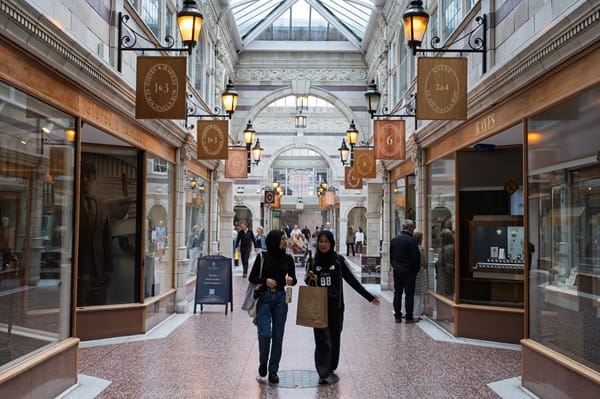
Consumers may be tightening their belts amid the cost-of-living crisis, but new analysis suggests spending patterns on Britain’s high streets continue to follow predictable seasonal rhythms rather than collapsing under economic pressure.
Insurance and business risk experts at Everywhen say that while economic pressures are shaping overall household budgets, the timing of consumer spending remains broadly consistent year to year — with clear peaks and troughs driven by weather, holidays and social behaviour.
Their findings suggest that although footfall may rise in warmer months, it does not always translate into higher spending, challenging assumptions that summer automatically delivers stronger retail performance.
“Seasonal trends remain central to high street performance, but the data shows that timing, value and relevance are more important than ever,” a spokesperson for Everywhen said.
“Businesses that understand when customers are most likely to spend, and what they’re wanting to spend their money on, are better placed to manage staffing, promotions and stock levels throughout the year.”
The analysis highlights a steady rise in spending during spring, when longer days and improving weather typically boost demand in clothing stores, garden centres and food retailers. Key calendar events such as Mother’s Day and Easter also provide regular uplifts in footfall, driven by gifting and dining.
Summer, meanwhile, is increasingly defined by leisure and experience-based spending rather than traditional retail growth.
Cafés, restaurants and entertainment venues tend to benefit from warmer evenings and increased social activity, but this is offset in some areas by rising travel costs, which can divert household spending away from local high streets during the school holiday period.
As a result, some town centre retailers face uneven trading conditions, with hospitality proving more resilient than discretionary retail.
Autumn is typically a period of stabilisation, with consumers refocusing on essential purchases such as clothing and household goods ahead of colder months.
However, the most significant surge in high street activity continues to come in late November and December, when Christmas spending drives a sharp rise across retail, hospitality and entertainment sectors.
Clothing, gifts, food and digital subscriptions all benefit from the festive period, alongside a notable increase in social spending driven by work events and family gatherings.
The start of the new year then brings a predictable downturn, as consumers prioritise budgeting and reduce discretionary spending. Retailers often rely heavily on promotions and discounting during this quieter period to maintain footfall.
Despite economic uncertainty, the data suggests consumers are not abandoning seasonal habits — but are instead becoming more selective in how they allocate spending.
Wellbeing, health and entertainment categories are emerging as relatively resilient even during tighter financial conditions, reflecting a shift towards prioritised, value-driven consumption.
“Seasonal rises in spending are still happening but they’re increasingly targeted,” the spokesperson added.
“If you run a high street business, it is vital to understand and plan for seasonal spending trends to ensure that consumer demands are met through appropriate stock and staffing levels, and cashflow is consistent.”


Leave a Comment