
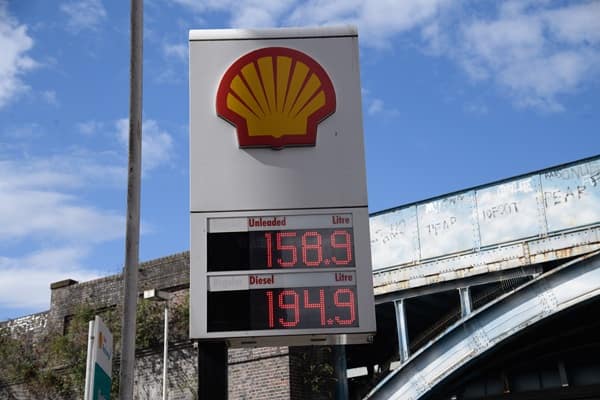
Drivers are facing the prospect of renewed fuel price rises after a jump in wholesale oil costs driven by escalating tensions in the Middle East, raising fears that months of relative stability at the pumps could quickly unravel.
New figures from RAC Fuel Watch show average UK petrol prices at 157.21p per litre, with diesel at 188.26p. While movements over the past week have been modest — petrol up 0.21p and diesel down 0.15p — experts warn that the underlying market trend is now pointing sharply upwards.
Diesel remains 32.3 per cent more expensive than it was before the outbreak of conflict in Iran on February 28, 2026, underscoring the sustained pressure still bearing down on motorists despite brief periods of easing.
Prices peaked in mid-April at 158.31p for petrol and 191.54p for diesel, following a spike in global oil markets that sent shockwaves through forecourt pricing across the UK. Although those highs have not yet been revisited, analysts say the latest movements in wholesale markets suggest that respite may be short-lived.
Simon Williams, head of policy at the RAC, described April as a “month of two halves” — with early increases followed by a tentative easing later in the month — but warned that conditions have now shifted again.
“The outlook for the first couple of weeks of May is more ominous,” he said. “Wholesale petrol and diesel prices jumped by around 5p a litre last week, and are now at their highest since the war began.”
He cautioned that consumers had yet to feel the full impact of those increases. “Petrol is up by just a fraction of a penny so far this month, and diesel has continued to slowly drift downwards. But if oil prices remain elevated, further rises at forecourts are all but inevitable.”
The warning will add to pressure on household budgets already strained by persistent inflation in essential goods, with fuel remaining one of the most politically sensitive components of the cost-of-living crisis.
Drivers have been urged to shop around to soften the impact of rising costs, with research suggesting savings of up to £9 per tank can be achieved by comparing prices between forecourts.
Attention has also turned to efforts to improve price transparency. Labour’s proposed Fuel Finder tool is expected to allow motorists to identify cheaper stations more easily, with early modelling suggesting potential savings of between one and six pence per litre.
Northern Ireland continues to illustrate the impact of more transparent pricing data, with the Consumer Council Fuel Price Checker helping motorists routinely locate cheaper fuel. In Lisburn, petrol is currently averaging around 147.6p per litre, while diesel prices in several towns — including Newry, Ballycastle, Larne, Newtownards and Newcastle — remain below 175p.
For drivers elsewhere in the UK, however, the broader outlook is less reassuring. With geopolitical instability once again rippling through global energy markets, analysts warn that forecourt prices are likely to remain highly sensitive to any further escalation — leaving motorists exposed to yet another potential surge at the pumps.


Leave a Comment