
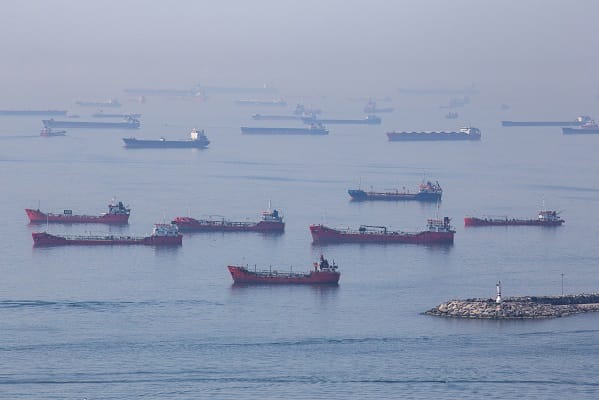
A deepening crisis in the Middle East could wipe as much as $1tn off the global economy, according to mounting warnings from analysts, as energy markets remain highly sensitive to any disruption in oil supply routes.
With tensions continuing to threaten key shipping lanes — including the Strait of Hormuz — economists warn that sustained instability could drive a prolonged surge in oil and gas prices, feeding through into inflation and slowing global growth.
Brent crude has already climbed sharply in recent weeks, with volatility driven by concerns over supply security and the risk of prolonged disruption to one of the world’s most important energy corridors.
Analysts say the impact of a sustained crisis would extend far beyond energy markets, hitting transport costs, manufacturing supply chains and consumer spending worldwide.
The International Monetary Fund has previously warned that large-scale energy shocks can have disproportionate global effects, particularly when inflation is already elevated and central banks have limited room to respond.
The current backdrop is especially sensitive, with many major economies still grappling with higher interest rates and subdued growth. A sustained spike in energy costs could complicate efforts to bring inflation back to target levels.
There is also concern that prolonged high prices could begin to erode demand, partially offsetting supply-driven gains but at the cost of weaker global activity.
While markets continue to price in uncertainty rather than a full-blown disruption scenario, analysts caution that even partial or temporary closures of key routes could trigger sharp economic spillovers.
Any diplomatic breakthrough, by contrast, could ease pressure quickly — but economists note that restoring normal energy flows and rebuilding supply chains would likely take time, limiting the speed of any recovery.
For now, the global economy remains tightly bound to geopolitical developments in the Middle East, with energy markets acting as the primary transmission channel for risk.
The Guardian reported that Anne Jellema, 350.org’s chief executive, said: “Over the next few days, oil majors will report astronomical first-quarter profits, much of it earned on the back of a war that has already killed thousands and impoverished millions.
“Even if the strait of Hormuz reopens tomorrow, an obscene amount of money will continue to flow to oil coffers at the expense of ordinary people already struggling to afford fuel, electricity, and food.”


Leave a Comment