
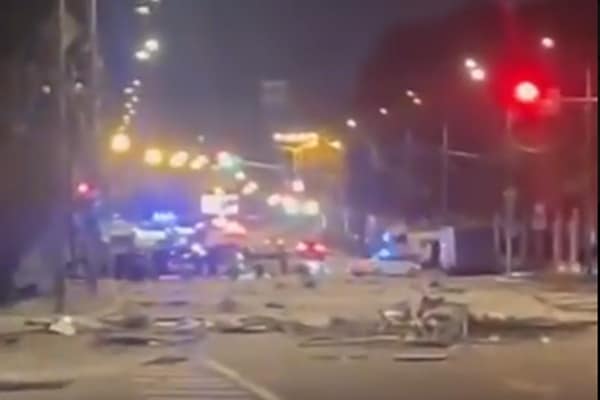
Despite the Kremlin’s introduction of stricter laws aimed at restricting reporting on Ukrainian strikes and damage inside Russia, efforts to control the narrative increasingly appear to be faltering.
Footage, eyewitness accounts, satellite imagery and local Telegram channels continue to circulate widely, alongside reports from residents describing the impact of attacks.
Together, they form a parallel stream of information that often diverges from official statements issued by Russian authorities.
The tightening of reporting rules was intended to limit the dissemination of operational details and reduce public exposure to the scale of Ukrainian long-range strikes. However, material from affected areas continues to appear online within hours of incidents.
With Putin’s new stricter laws introduced to suppress reporting on Ukrainian strikes and damage inside Russia, frankly, that effort already appears to be failing too.
Footage, eyewitness accounts, satellite imagery, local Telegram channels, and even panicked residents continue… https://t.co/QQb2HRrICg
— Shaun Pinner (@ShaunPinnerUA) May 17, 2026
Local Telegram channels, in particular, have become a key source of real-time reporting, frequently sharing images and residents’ accounts before official confirmation is provided.
The persistence of such reporting underscores the challenge facing the Kremlin as it seeks to manage both the operational and political impact of Ukraine’s expanding long-range strike capability, particularly as attacks reach deeper into Russian territory.
While authorities have moved to penalise the publication of unauthorised material from strike locations, the continued flow of unofficial reporting suggests that information control in the digital age remains difficult to enforce in practice.


Leave a Comment