
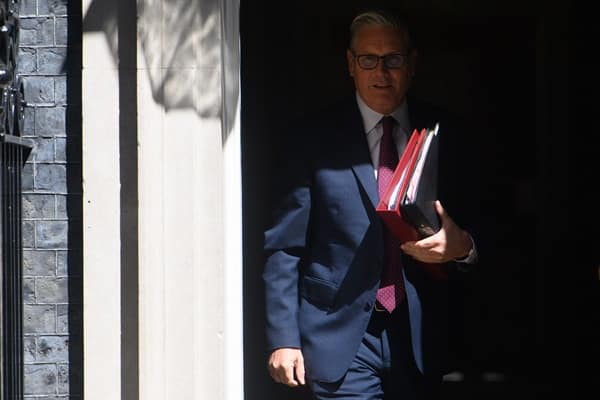
UK government borrowing costs rose on Monday despite Sir Keir Starmer’s attempt to reassure investors with a “reset” speech aimed at restoring confidence following a turbulent set of local election results.
Gilt yields moved higher as traders continued to price in political risk, with investors increasingly concerned that potential leadership instability could undermine the Government’s fiscal framework at a sensitive moment for the public finances.
Sterling also came under pressure as markets reacted to signs of sustained uncertainty at the top of government, with attention shifting from policy announcements to the durability of political authority within Westminster.
Market analysts said the reaction suggested investors were focusing less on rhetoric and more on the risk that continued political volatility could complicate efforts to maintain fiscal discipline and control borrowing costs.
The concern centres on whether any change in leadership — or prolonged internal party instability — could lead to a shift in spending priorities or a loosening of fiscal rules, at a time when UK debt servicing costs remain elevated.
Higher borrowing costs place additional strain on the Government’s ability to manage the fallout from weaker-than-expected electoral performance, tightening the fiscal headroom available to respond to economic pressures.
One market strategist said investors were effectively “reassessing political risk in real time”, with UK assets now trading more sensitively to developments in Westminster than in recent months.
The moves come as bond markets remain particularly alert to any signs of fiscal uncertainty, having been unsettled in recent years by periods of rapid policy change and heightened volatility in global interest rates.
While the Government has sought to project stability and continuity in its economic strategy, traders appear to be testing that message against the reality of rising political pressure and speculation over leadership direction.
For now, investors remain cautious — and the bond market response suggests that reassurance alone may not be enough to stabilise sentiment without clearer political certainty at the top of government.
Susannah Streeter, chief investment strategist, Wealth Club said: “Keir Starmer’s address to the nation hasn’t done the trick of calming bond markets. There is still a sense of jitters playing out as concerns about political instability collide with inflationary fears prompted by the ongoing conflict in the Middle East. His speech was designed to project a ‘keep calm and carry on’ message, but the worry is that it lacks the real substance needed to keep Labour MPs on side.
Ten-year gilt yields have crept higher, nudging 5% once more, while longer-dated government debt remains hovering above 5.6%. They have not been at this level for a sustained period since the late 1990s.
The concern is that a change of Prime Minister would prompt wider turmoil at the top of government. It could see the Treasury’s focus on adhering to fiscal rules derailed if a new guard is brought in to pacify Labour’s rank and file. Political turbulence is never a good look for a nation that needs to project stability in order to attract long-term investment.
Right now, with clamour for Starmer’s replacement continuing off the back of highly fractious local election results, the UK is back in the instability spotlight. The rise in gilt yields makes the government’s position even trickier, given that it further constrains its ability to support households in areas likely to be hardest hit by the Middle East conflict. Humber and South Wales look set to see stark job losses, according to the latest EY Item Club analysis. Both areas have seen a surge in votes for Reform UK, a trend which has helped fuel the latest crisis facing the Prime Minister. The political challenge is increasingly becoming an economic one, with markets demanding ever greater reassurance. The longer doubts persist over the government’s stability, the greater the risk that market anxiety perpetuates the problem.”


Leave a Comment